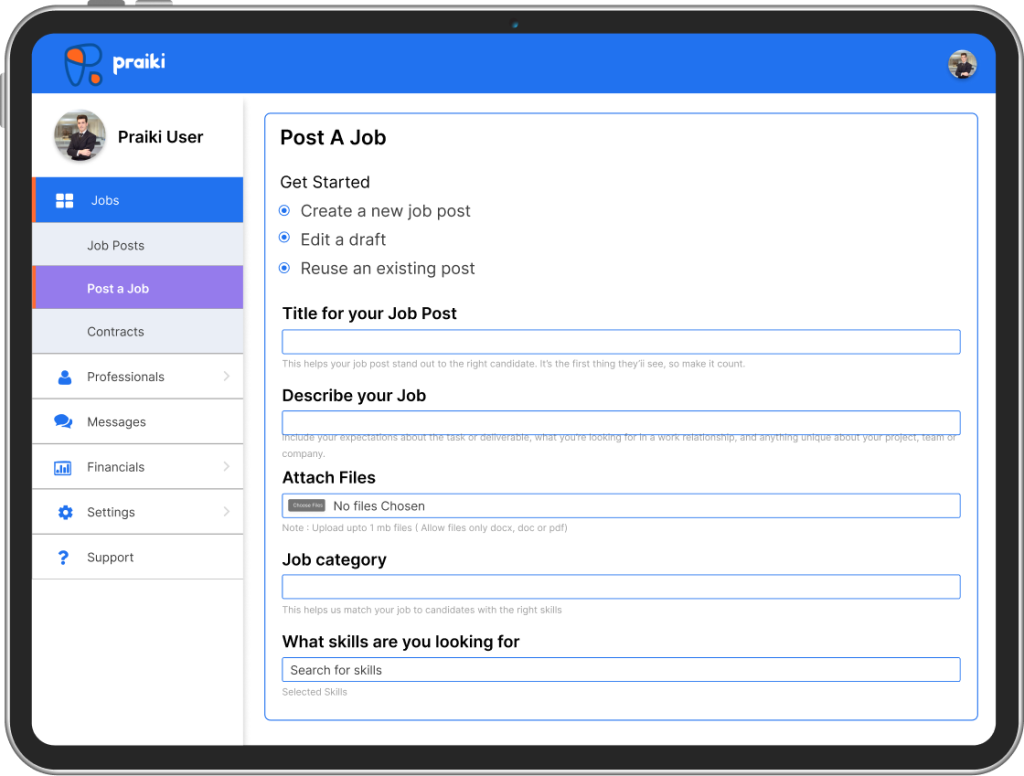
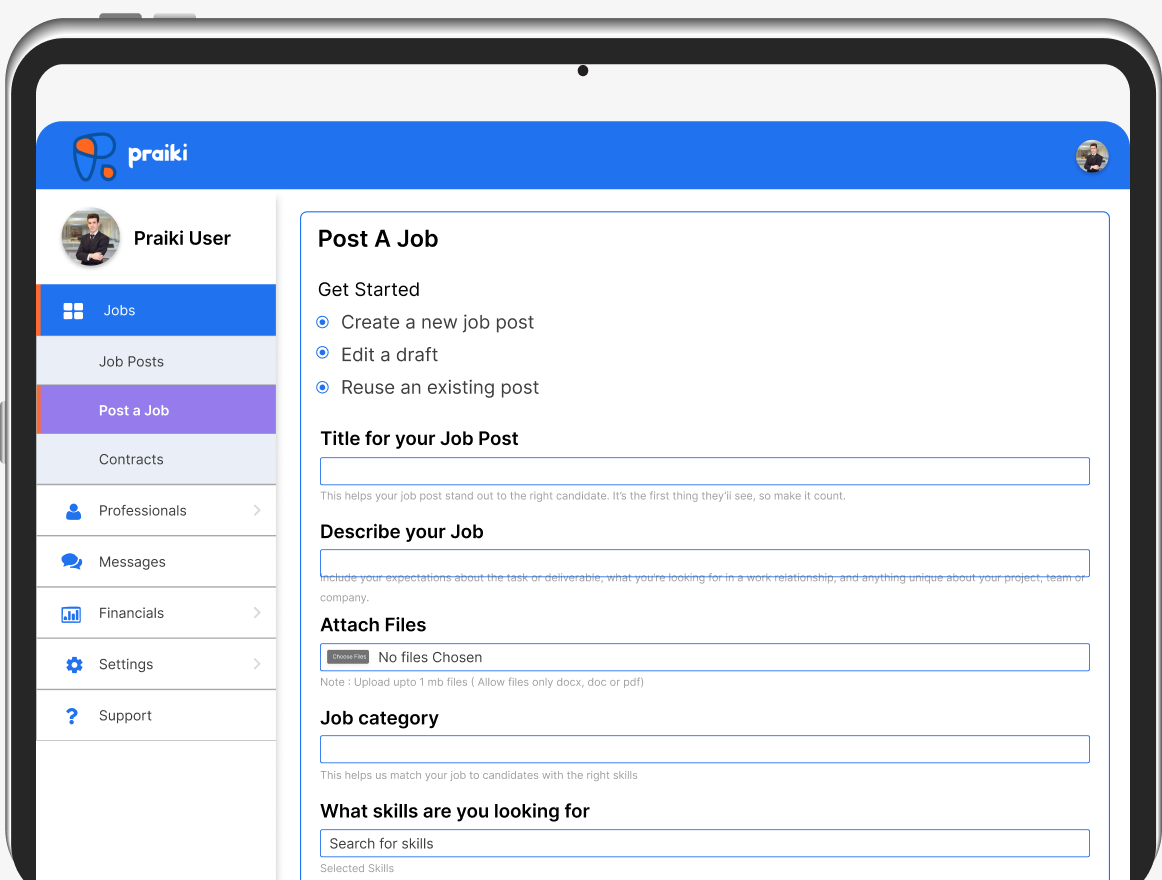
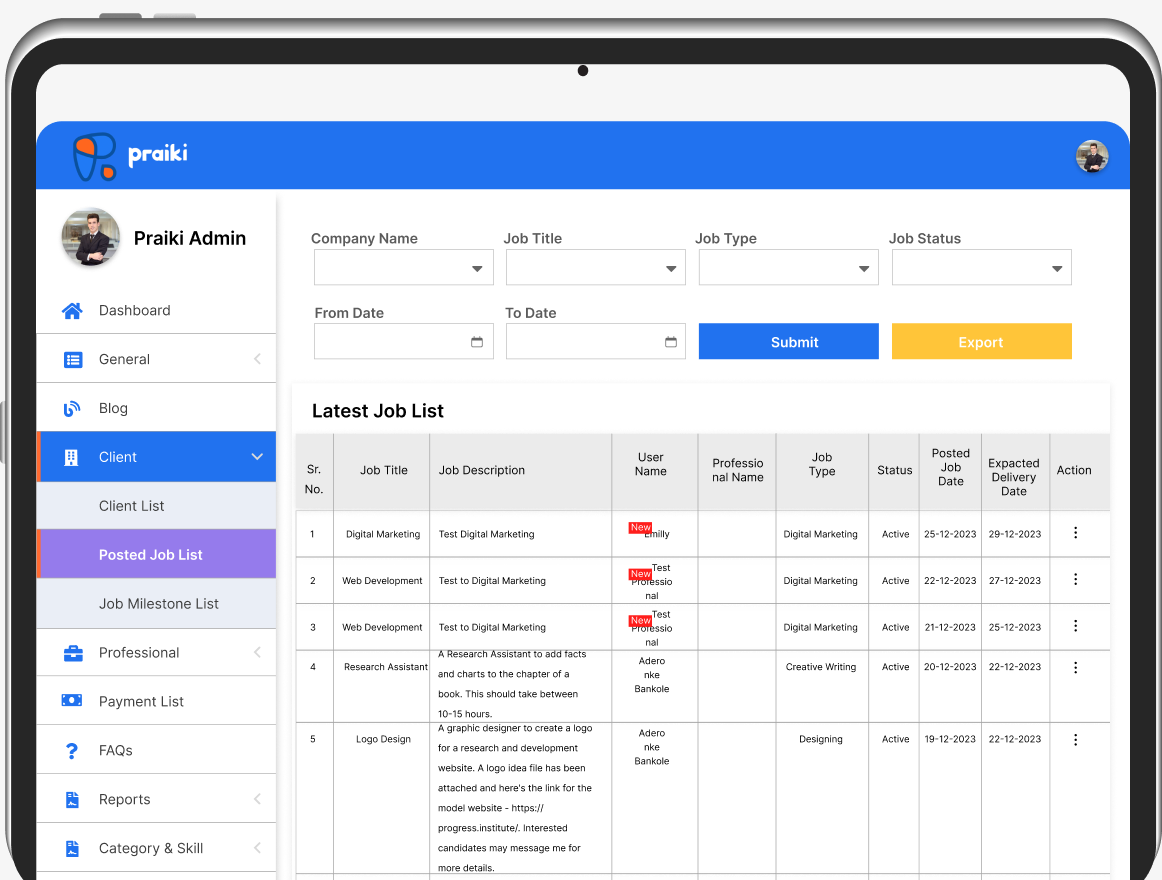
Praiki is a professional marketplace built for Africa. It connects verified clients with verified professionals across the region and manages the whole project journey on one platform, from the first job post to the final review. Projects can be one-time, timeline-based, or split into phases and milestones, and payment is released only once delivered work is approved.
The Challenge
Africa’s professional-services market is highly fragmented. Clients and freelancers mostly find each other through social media, messaging apps, and personal referrals, and global freelance marketplaces don’t fully address the trust and payment concerns of African businesses. A few specific issues compounded on both sides:
Clients could not easily tell whether a professional was genuine, qualified, and reliable before hiring them
Professionals struggled to find legitimate clients and to be sure they would be paid for finished work
Scope, budgets, timelines, and deliverables lived in scattered chats with no structure
Professionals had no dependable way to show their reputation or track record to win new work
Payment risk and quality assurance were left to trust alone, which exposed both sides
Our Approach
01
Trust Is the Product, Not a Feature
Neither side would transact without confidence in the other, so verification and profile credibility were planned before any job or payment logic.
02
Study What Informal Channels Get Wrong
Referrals and chat-based hiring were examined to see what they lacked (clear scope, proof of ability, safe payment), and those gaps became the requirements.
03
Let the Type of Work Shape the Workflow
Some jobs are a single deliverable, some run on a timeline, and some need phases. One rigid flow would have broken at least two of them, so the workflow flexes.
04
Protect Both Sides at the Payment Step
Professionals should not chase payment for approved work, and clients should not pay for work they have not accepted, so approval triggers payment.
05
Make Reputation a Two-Way Street
Trust has to be earned by clients as well as professionals, so ratings and reviews run in both directions.
FINAL OUTCOME
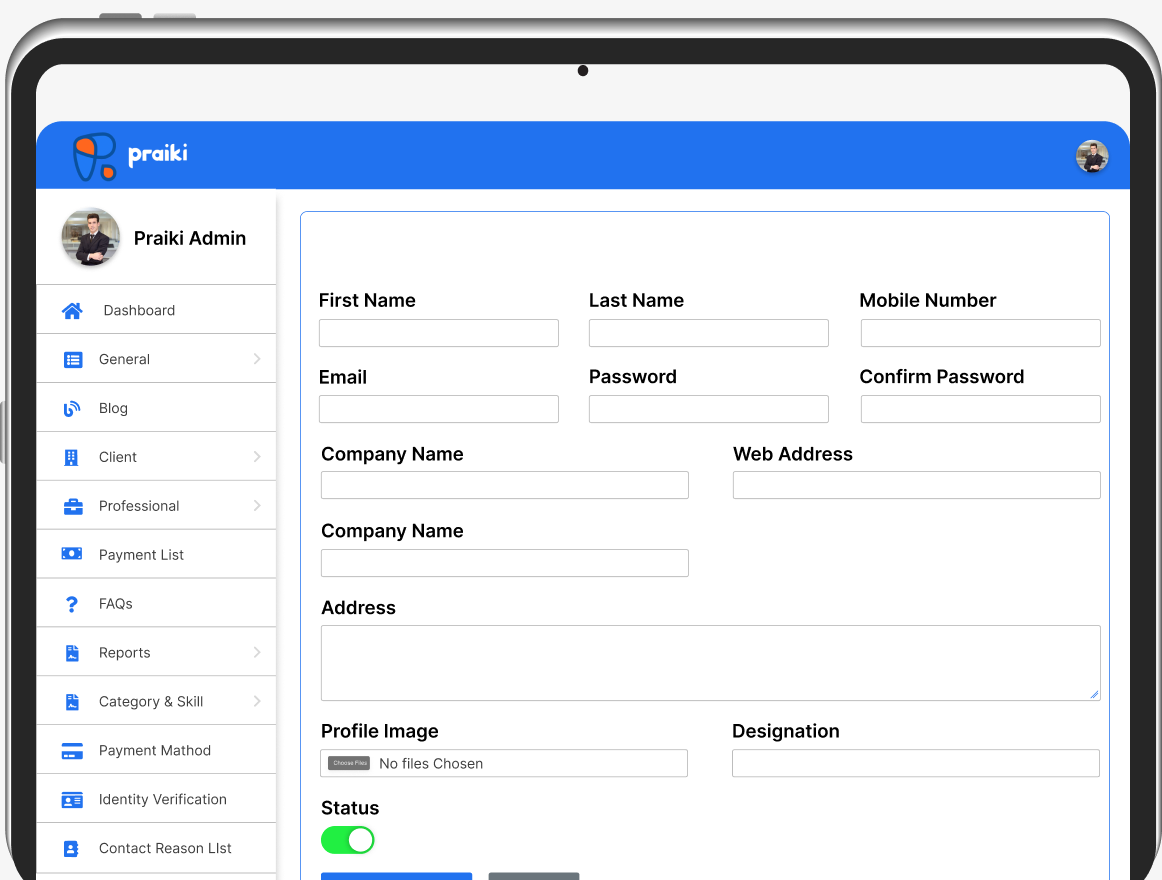
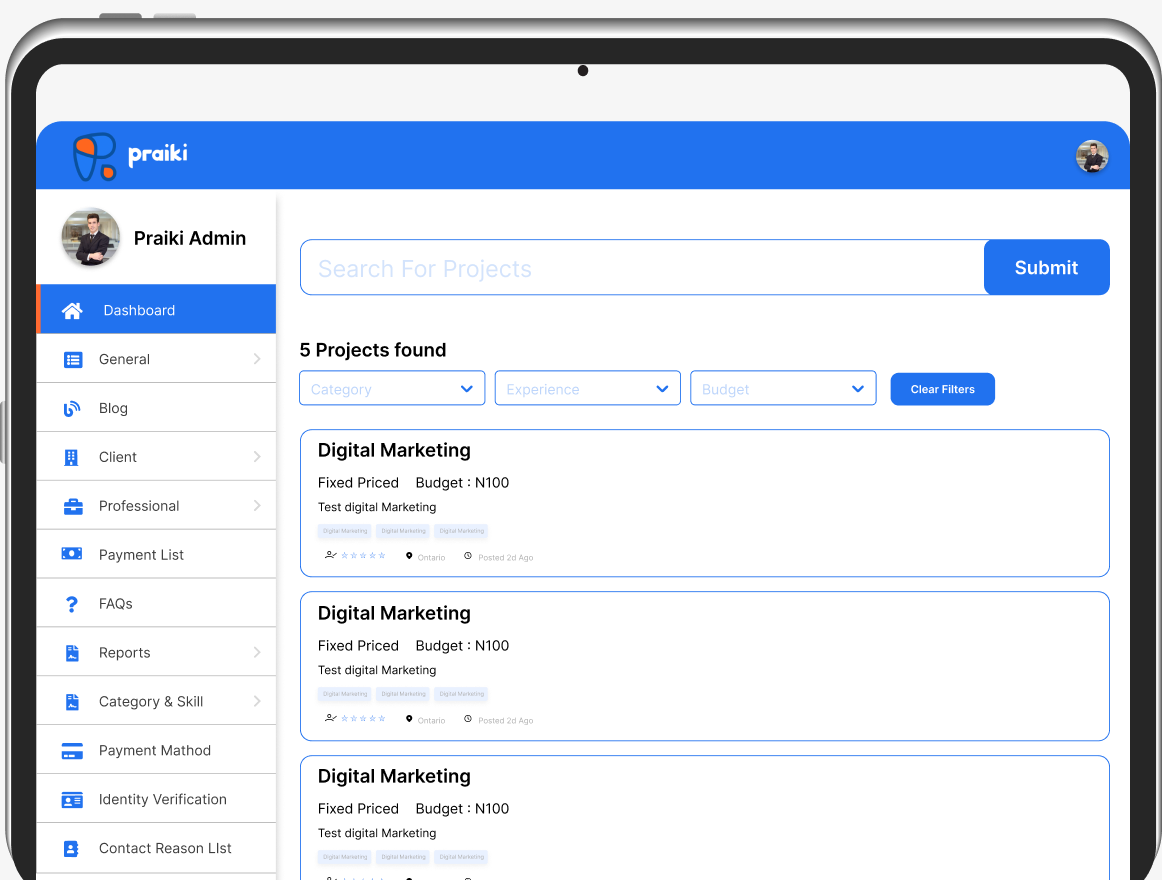
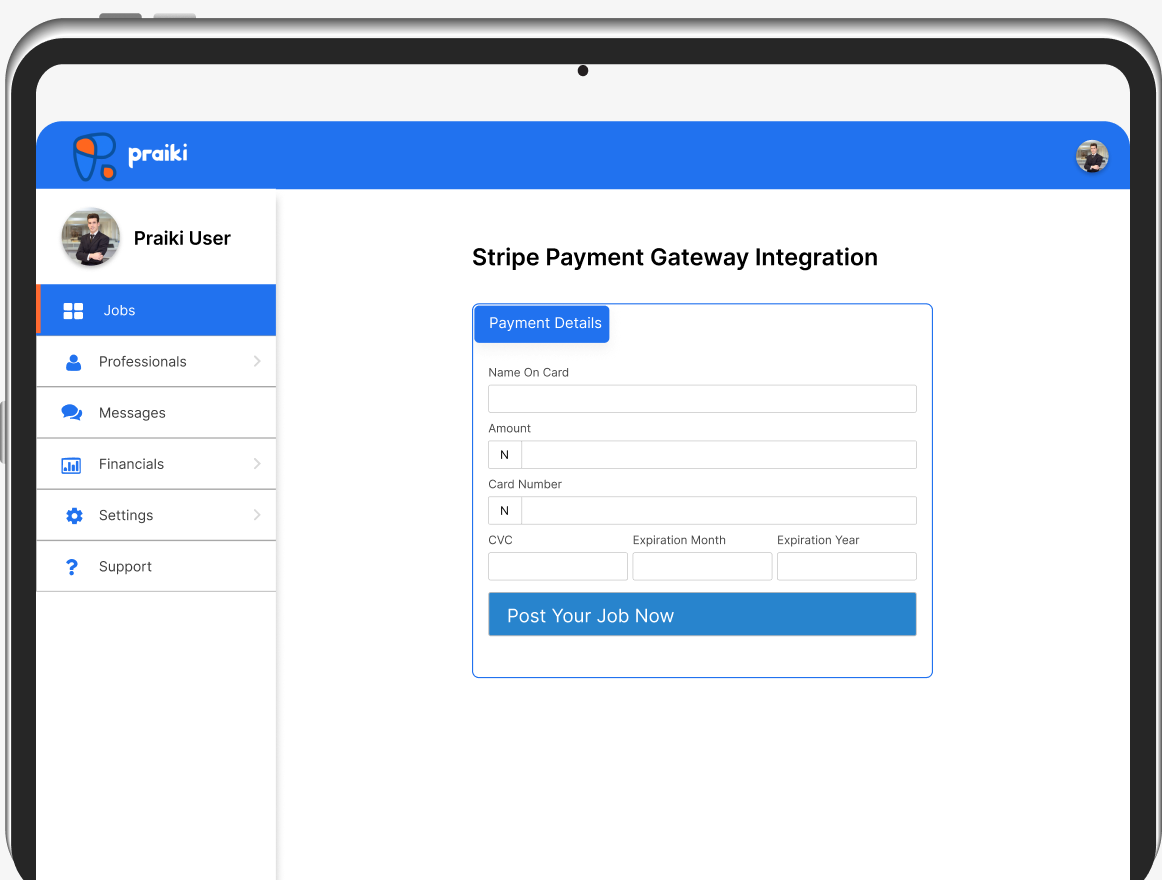
Web App Ui
Results & Impact
The visible outcome is one platform in place of scattered chats and referrals. Clients can find and manage verified professionals with a clear scope, budget, and timeline. Professionals get a legitimate route to find work, deliver it, and be paid for approved work, and ratings and reviews build reputation over time.
3
Project Workflows Supported
6
Lifecycle Stages Managed in One Platform
2
Verified User Types: Clients and Professionals
Core Features Delivered
✓
Client and Professional Verification
Both sides are verified and hold a reliable profile before they work together.
✓
Job Posting
Clients define requirements, budget, and timeline, then review applications from suitable professionals.
✓
Job Discovery and Applications
Professionals browse open jobs and apply through a structured flow.
✓
Three Project Workflows
One-time, timeline-based, and phase or milestone-based projects on one platform.
✓
Deliverable Submission and Approval
Professionals submit work on the platform and clients review and approve it.
✓
Approval-Based Payments
Payment is tied to client approval, so professionals are paid for approved work and clients only pay for work they accept.
Clients had no easy way to confirm a professional was genuine, qualified, and reliable, and professionals struggled to find legitimate clients and be sure of payment. Scope, deliverables, and payment lived in scattered chats with no structure, which is the gap Praiki was built to close.
Trust has to work in both directions. Professionals need to know a client is real before starting work, and clients need the same assurance about professionals, so both sides are verified and hold a reliable profile before they work together.
The platform supports three workflows: one-time projects, timeline-based projects, and phase or milestone-based projects. Larger work can be delivered in stages instead of being forced into one hand-off.
Payment follows client approval. The professional submits deliverables through the platform, the client reviews them, and payment is tied to that approval, so professionals are paid for approved work and clients only pay for work they accept.
After a project is completed, both the client and the professional can leave ratings and reviews. Over time these build each person’s reputation and help others decide who to work with.
Clients set the requirements, budget, and timeline for each job. That gives professionals a clear picture before they apply and gives clients a structured way to review applications from suitable professionals.
Traditional freelance marketplaces may not fully address the specific requirements and trust concerns of African businesses and professionals. Praiki was built around those concerns, with verification for both sides, structured project management, and payments tied to client approval.
Yes. Syndell builds two-sided marketplaces with verification, flexible project workflows, and approval-based payments, shaped around your industry and market.
Have a Marketplace Platform in Mind?
Whatever you use to connect clients and professionals today, describe where trust or payments break down and we’ll map what a verified marketplace would take.
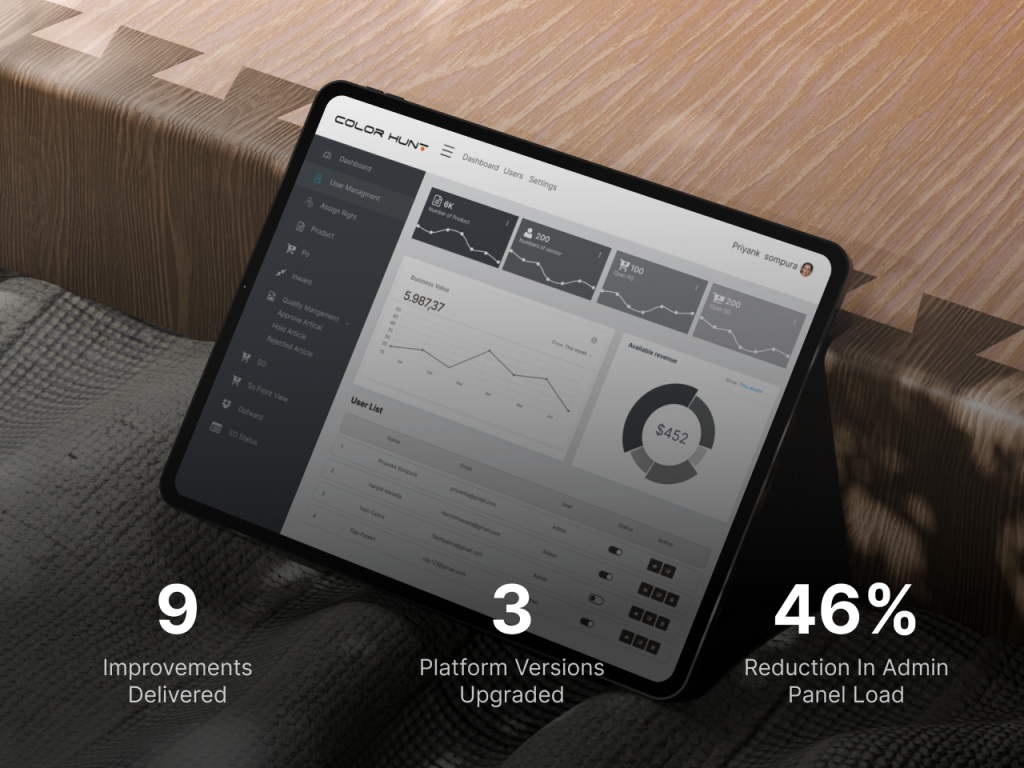
This clothing manufacturer does the hard part well – producing men’s apparel out of Ahmedabad, India, at real production scale. The existing system wasn’t carrying its weight: the Laravel and Angular codebase needed optimization, and inventory and sales features needed rebuilding for a more secure, user-centric experience.
Web Application DevelopmentUI/UX DesignInventory Management
Ecommerce / Premium Bedding and ERP Order Management
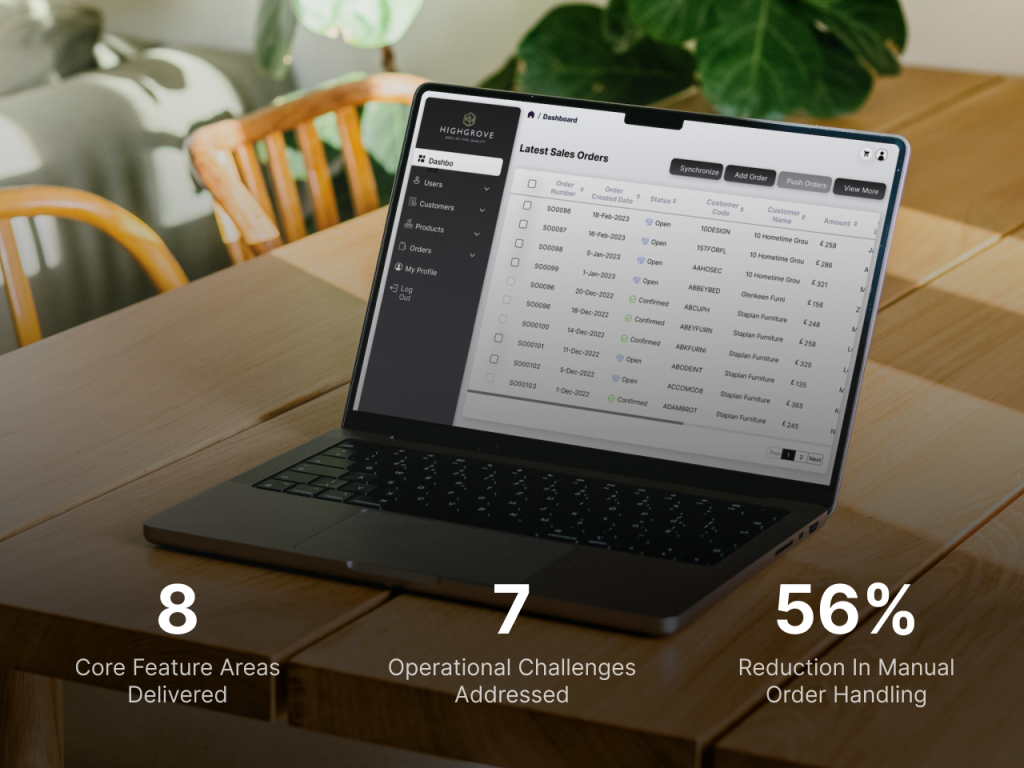
Highgrove is a UK premium bedding brand that ran sales and orders on a desktop ERP. Manual order handling, inconsistent pricing, and weak access control called for a secure web app connected to its existing Sage system.
Web Application DevelopmentSage IntegrationUI/UX DesignOrder Process AutomationDynamic Pricing Mechanisms
This data platform turns scattered fleet and driver information into something a sales team can actually use. Collecting it by hand wasn’t sustainable: public sources are unstructured and often outdated, so the work needed a single system that scrapes, cleans, and organizes records, then makes them easy to search, filter, and turn into leads.
Dispatcher-Driver CoordinationUI/UX DesignCompliance TrackingWeb Application Development
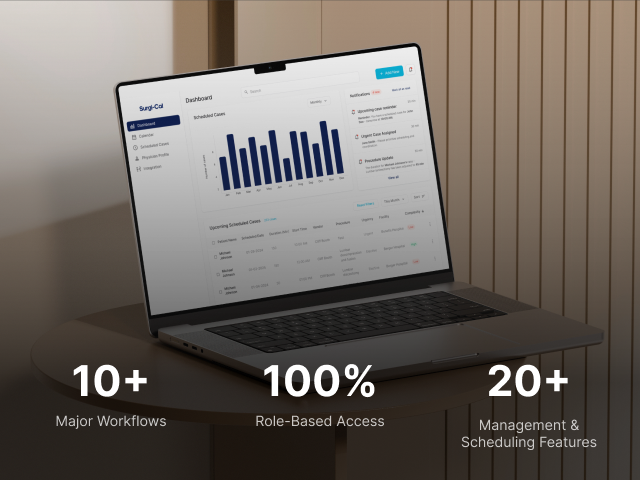
This scheduling platform brings physicians, facilities, and medical vendors into one place, with availability, OR rooms, and vendor requests all visible together. The old way wasn’t holding up: three groups working from separate calendars needed a single connected system that syncs with Google and Outlook and pulls patient data from major EHRs, deployed on AWS with DynamoDB.
Custom Web Application DevelopmentEHR/EMR IntegrationsRole-Based Platform DesignCalendar IntegrationsAI Chat Support
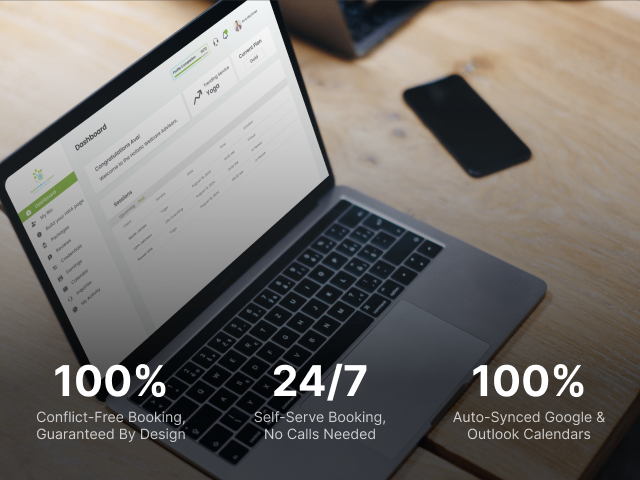
HWA does the hard part well – connecting clients with verified holistic practitioners across yoga, nutrition therapy, hypnotherapy, and chiropractic care. The old process wasn’t carrying its weight: practitioners and clients coordinated sessions through separate tools and manual communication, with no shared system for bookings, packages, or payments.
Custom Web Application DevelopmentAdmin DashboardDynamic Availability HandlingBooking & Package ManagementCalendar & Video IntegrationsAI Chat Assistant
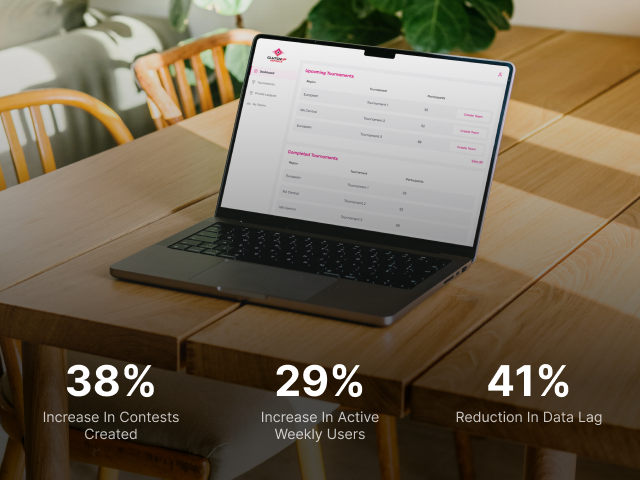
Clutch Up does the hard part well – bringing the fantasy sports format users already understand into competitive esports tournaments. The platform wasn’t carrying its weight yet: tournament and player data needed to stay accurate in real time, and esports rosters change mid-event in ways traditional fantasy models don’t handle.
Platform Design & DevelopmentTournament Data API IntegrationPlayer Drafting SystemDynamic Availability Handling
29%Increase in Active Weekly Users During Tournament Windows
41%Reduction in Data Lag
Book Your Notary
Legal / Notary Services
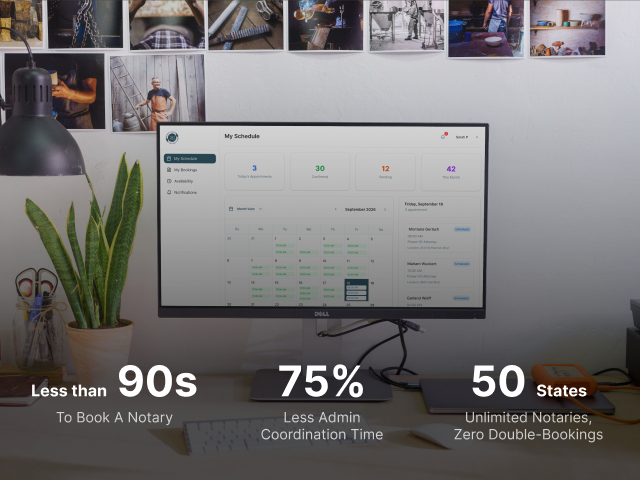
Book Your Notary does the hard part well – connecting customers with a bilingual notary team for documents that need remote notarization. The old process wasn’t carrying its weight: arranging in-person appointments turned a simple requirement into a recurring hassle, without cutting the corners that make notarization valid.
<span style="font-size:16px">Less than</span> 90sTO BOOK A NOTARY
75%LESS ADMIN COORDINATION TIME
50 <span style="font-size:16px">States</span>UNLIMITED NOTARIES, ZERO DOUBLE-BOOKINGS
A Brief Mate
LegalTech / Legal Operations
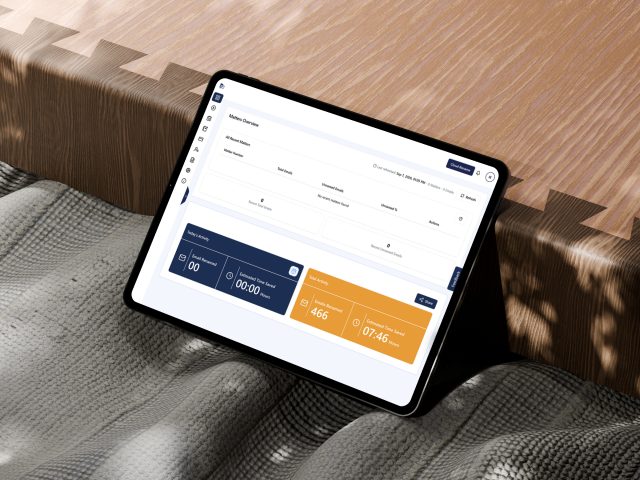
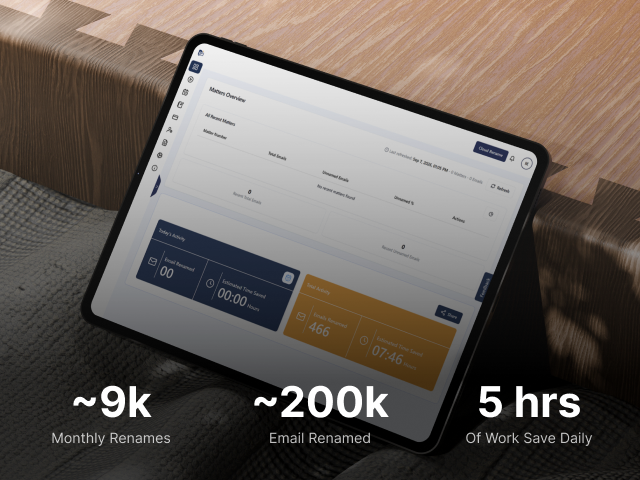
BriefMate does the hard part well – automatically renaming legal documents and assembling court-ready briefs for Australian law firms. The old process wasn’t carrying its weight: paralegals spent days downloading, converting, ordering, and indexing files by hand, with inconsistent naming that made documents hard to find later.
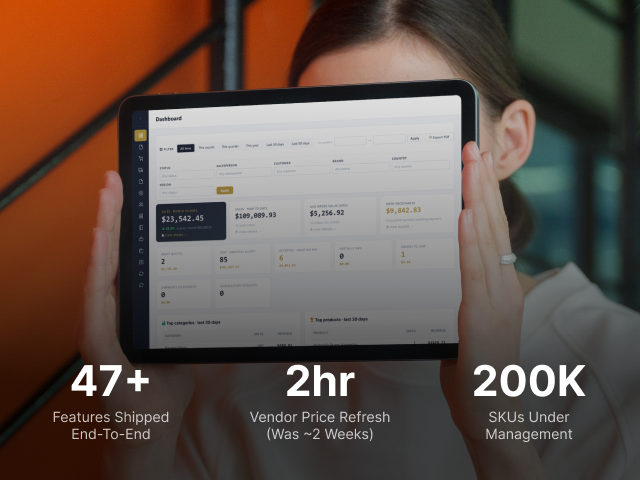
DHE Parts does the hard part well – distributing roughly 200,000 SKUs of heavy-equipment components to fleet operators and dealer networks. The ERP wasn’t carrying its weight: quote-to-order handoff lost information constantly, and vendor price updates were a two-week manual project run by hand across dozens of sheets.
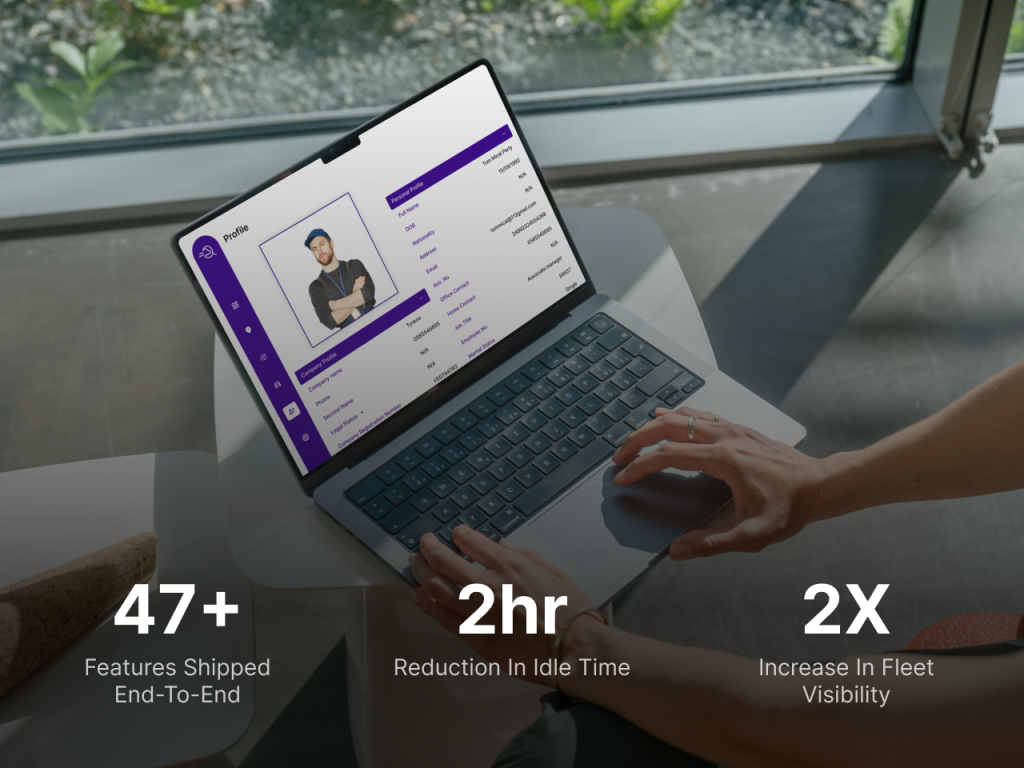
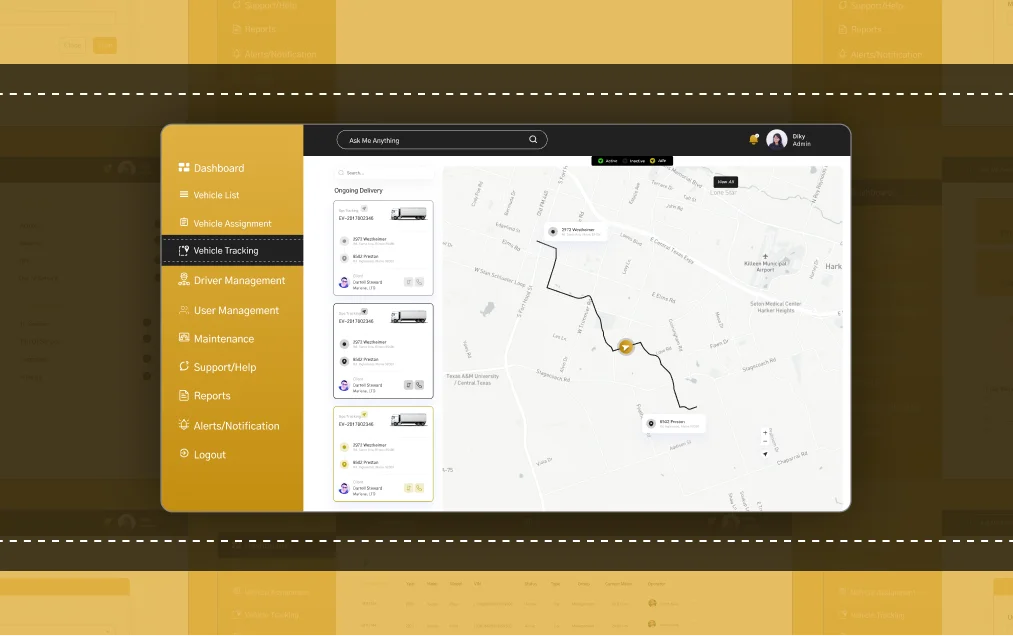
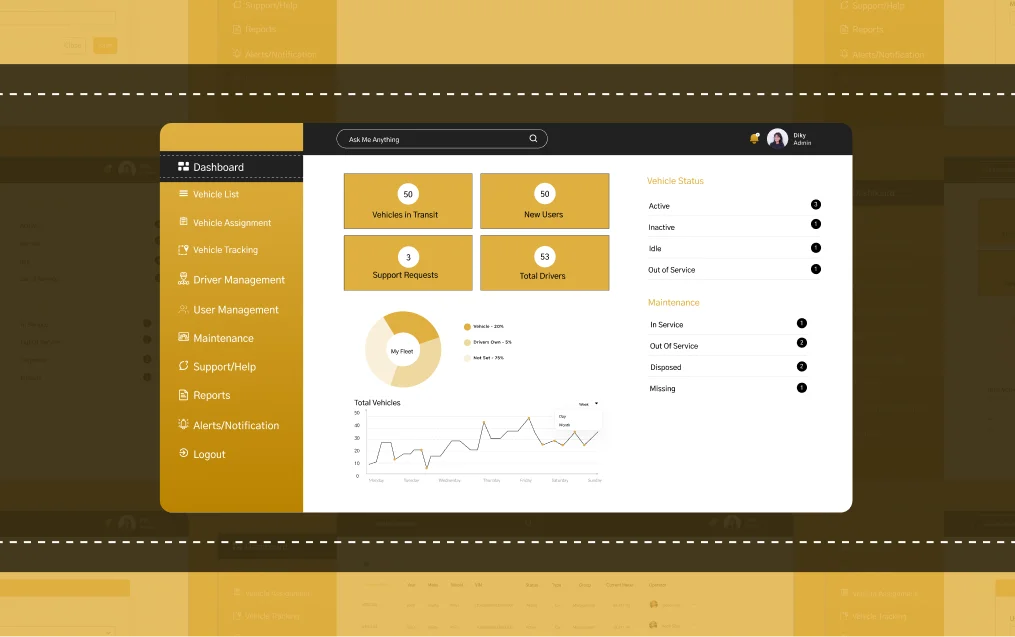
Tyreoo is a UK transportation business overseeing goods transportation and fleet operations for a diverse client base, from businesses with a single vehicle to those managing entire fleets. The platform now in place brings real-time analytics, centralized tracking, and consolidated tools into one place, replacing the fragmented view fleet managers had before.
Backend DevelopmentFrontend DevelopmentDatabase and StructureWebsite RedesignLoad Testing with Apache JMeter