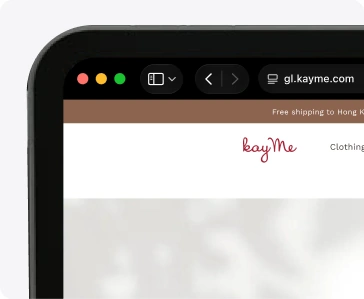
Kayme: Migrating From Magento to a Shopify Platform That Scales
How we moved Kayme off Magento onto Shopify, automated shipping file generation, and built a custom preorder and store credit system around how Kayme actually releases products.
Project Snapshot
CLIENT
Kayme
INDUSTRY
eCommerce / Fashion
WHAT WE DID
Magento to Shopify Migration, Custom App Development, Shipping Automation
Kayme is a fashion brand selling apparel through a direct-to-consumer online store, with a release pattern built around structured product drops rather than continuous, always-in-stock inventory.
The Challenge
Kayme was making genuinely good products, but running on a platform that couldn’t keep up with the business. A few specific problems needed solving:
The store was built on Magento, and every attempt to scale, however modest, seemed to invite a fresh problem
Orders headed to the shipping company had to be manually formatted by the customer service team, one by one, taking time that could have gone toward helping customers instead
Kayme’s release pattern – structured product drops rather than standard, always-available inventory – needed more structure than a default ecommerce setup could offer
Our Approach
01
Evaluate What Already Exists Before Building Anything Custom
Rather than assuming a full custom build was needed, we first mapped Kayme’s requirements against Shopify’s existing app ecosystem – POS, email marketing, preorder tools – and reserved custom development for the specific places those tools genuinely fell short.
02
Work Backward From the Shipping Company's Exact Requirements
The shipping problem wasn’t solved with a generic export feature. We started from the precise file format the shipping company actually required and built automation to match that format exactly, rather than building something generic and hoping it was close enough.
03
Treat POS, Inventory, and Shipping as One System, Not Three
Rather than integrating each piece separately, the three were designed to operate as a single coherent flow from the start – which is what made it possible for something like automated birthday store credit to run on its own, without a person triggering it.
04
Decide What Deserves Automation and What Still Needs a Person
Not every process should run itself. Recurring, rules-based tasks like birthday credit were automated, while the parts of the customer relationship that benefit from a human touch were left for the team to handle directly.
FINAL OUTCOME
Website
Results & Impact
The migration brought sales up by a good margin, made day-to-day management genuinely manageable instead of threatening to fall apart at scale, and – most importantly – let customers find the item they want and get it to their door without unnecessary friction. A good brand is no longer being held back by the machinery underneath it.
37k+
CUSTOMERS ON FILE
2.5k+
PRODUCTS IN CATALOG
10k+
ORDERS (PAST YEAR)
Core Features Delivered
✓
Shopify Migration
Moved off Magento onto Shopify, built on the Admin GraphQL and Storefront APIs
✓
Structured Preorder System
Supports Kayme’s specific release-drop pattern, letting customers commit to items ahead of restock
✓
Custom Size Charts
Tailored sizing information displayed directly on product pages
✓
Store Credit System
Custom logic for how credit is earned and spent, including automated birthday credit
✓
Customer Account Extension
Lets customers view their orders and store credit directly, without contacting support
✓
Automated Shipping File Generation
Auto-generates order files in the exact format the shipping company requires, connected to Sumtracker inventory and POS
The backend now generates order files in the exact format the shipping company requires, automatically, instead of the CS team formatting each order by hand.
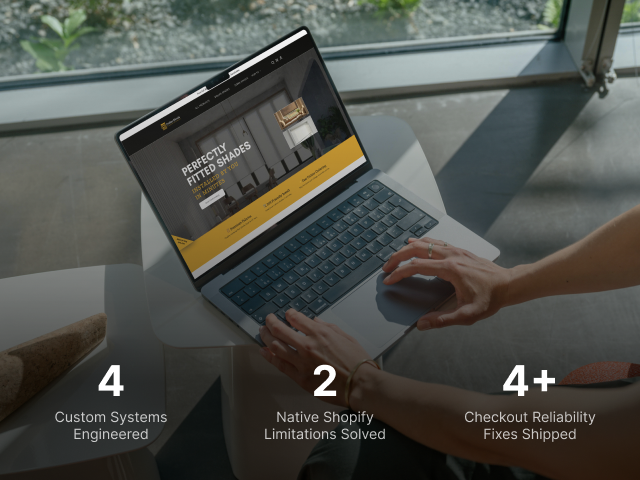
Dollar Blinds does the hard part well – precision, made-to-measure window shades built to each customer’s exact specifications. The checkout wasn’t carrying its weight: Shopify’s native cart had no concept of configuration-based pricing, and multi-panel products couldn’t be split, priced, or mirrored correctly for a real order.
Custom Checkout EngineeringDynamic Pricing SystemServerless API DevelopmentThird-Party App Integration
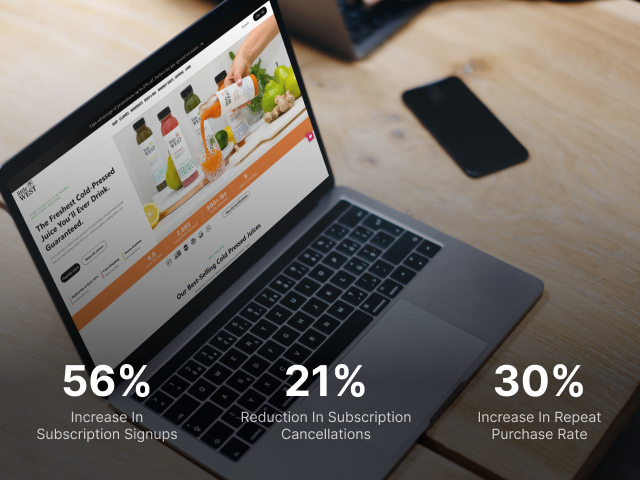
Little West does the hard part well – cold-pressed juice from West Coast produce, bottled within 48 hours of harvest, with a Farmlink Project partnership. The website wasn’t carrying its weight: “fresh” is an overused, easily-doubted claim in this category, and the old site gave nothing concrete to back it up.
Rollen does the hard part well – ethically sourced fine jewelry and a full lab-grown diamond line across rings, earrings, and a men’s collection. The website wasn’t carrying its weight: jewelry buyers expect to touch a piece before buying, and the old site gave no real reason to trust a purchase sight unseen.
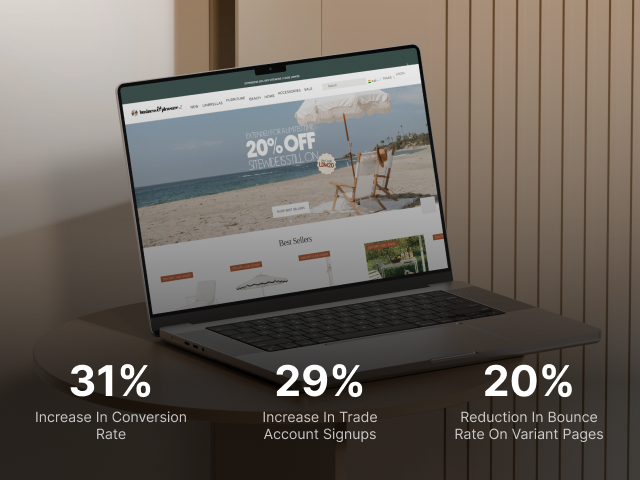
Business & Pleasure Co. does the hard part well – premium beach and outdoor furniture, including a Jenni Kayne collaboration, sold to retail and trade buyers. The website wasn’t carrying its weight: some products offered 200+ fabric combinations, leaving customers with decision overload instead of a confident choice.
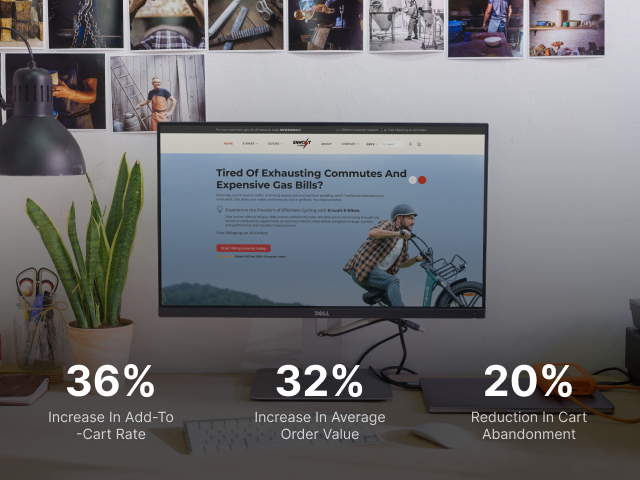
Enwolt does the hard part well – an authorized EU distributor of ENGWE and VARUN e-bikes, with free shipping and a one-year warranty. The website wasn’t carrying its weight: customers had real unanswered questions on legality, range, and charging, and Enwolt needed its own credibility independent of the manufacturer names.