Technology has transformed every business, including finance, in today’s digital world. Gone are the days of standing in long queues at banks or relying only on traditional financial institutions for all of our financial needs. Financial freedom is now just a click away, thanks to the rise of fintech app development.
Fintech application development has opened up a world of possibilities for individuals and businesses alike. Whether you’re looking to manage your personal finances more efficiently or seeking innovative solutions for your organization’s financial needs, a fintech app can be your ultimate companion.
However, with the increasing demand for fintech apps, it is crucial to choose the right fintech app development services. A reliable fintech app development company can help you navigate through the complexities of financial technology and create a seamless user experience that caters to your unique requirements.
The benefits of fintech mobile app development are numerous. It enables you to access your financial information anytime, anywhere, making it convenient and hassle-free.
Moreover, fintech app development solutions offer a wide range of functionalities, such as budgeting tools, expense tracking, bill payments, and even personalized financial advice.
Wondering about the cost of fintech app development? Well, it varies depending on the various factors. While it may require a significant investment upfront, the long-term benefits far outweigh the initial expenses.
A well-designed fintech app can streamline your financial operations, reduce manual errors, and save you both time and money in the long run. It can also help you identify opportunities for growth, optimize your investments, and enhance your overall financial well-being.
With the right fintech app development services and a reliable fintech app development company, you can unlock a world of financial opportunities and achieve your goals with ease.
So, let’s embark on this exciting journey of creating a fintech app that combines cutting-edge technology with financial services to transform the way people manage their money.
Top 14+ FinTech Trends to Expect in 2023 and Beyond
What is Fintech in Simple Words?
The word “fintech” has grown fairly common in today’s digital world. But what does it all mean? Fintech is a combination of the terms “financial” and “technology.” It is the application of technology to improve and enhance financial services.
Banks and other financial organizations have traditionally provided financial services through physical branches. However, with quick technological improvements, fintech has emerged as a game-changer in the sector. It has transformed how we handle our finances, make payments, and perform financial activities.
Fintech encompasses a wide range of services and technologies, including mobile banking, online payments, peer-to-peer lending, digital wallets, robo-advisors, and more. These innovations have made financial services more accessible, convenient, and efficient for individuals and businesses alike.
What is a Fintech App?
Fintech apps are becoming increasingly popular in the worlds of finance and technology. But, exactly, what is a Fintech app? A Fintech app is a mobile application that uses technology to provide consumers with financial services. These applications are intended to simplify and improve many elements of personal finance, allowing people to manage their money on the move.
Mobile payments, banking, investment management, budgeting, and other financial services are all covered by fintech applications. They strive to give consumers with simple and user-friendly financial solutions, doing away with the necessity for traditional brick-and-mortar banks or financial institutions.
Discover how our expertise can turn your Fintech dream into reality!
Fintech App Development: Statistics
The financial technology (fintech) business is seeing fast growth and innovation in today’s digital age. Fintech app development has become an important component of the business due to the increased need for smooth and secure financial services.
Here are some statistics that highlight the growth and impact of fintech app development:
1. Global Fintech Market Size
The global fintech market was valued at around $111.8 billion in 2018 and was projected to reach approximately $309.98 billion by 2022, growing at a CAGR of 24.8% from 2019 to 2022. (Source: Statista)
2. Fintech App Downloads
In the first half of 2021, fintech apps were downloaded over 8 billion times globally, which was a significant increase compared to previous years. (Source: Sensor Tower)
3. Mobile Fintech Apps
Mobile apps have become an integral part of our daily lives, and the fintech sector is no exception. As of 2021, there are over 2.9 billion smartphone users worldwide, and this number is expected to reach 3.8 billion by 2026. fintech mobile app development are gaining popularity due to their convenience, accessibility, and user-friendly interfaces.
4. Investment in fintech app startups
Investors have recognized the immense potential of fintech app startups and have been pouring in substantial amounts of capital. In 2020, global investments in fintech reached a record high of $105 billion, as reported by KPMG. This indicates the confidence and interest investors have in fintech app development and its ability to disrupt traditional financial services.
5. Fintech app usage by generation
A study conducted by PwC found that millennials are the largest users of fintech apps, with 47% of millennials using fintech apps to make payments. However, the popularity of fintech apps extends beyond this demographic, as 22% of Gen X and 14% of baby boomers also use fintech apps. This showcases the widespread adoption and appeal of fintech apps across different age groups.
Fintech app development is not just a trend but a transformative force in the financial industry. The statistics discussed in this blog post highlight the significant growth, adoption, and impact of fintech apps. As technology continues to advance, the potential for innovation in fintech app development is limitless.
How is Fintech Technology Shaping the Future of Finance Industry?
Fintech, short for financial technology, is revolutionizing the way we interact with finance. With the rapid advancements in technology, fintech is shaping the future of finance in numerous ways.
From mobile banking to digital payments, fintech has disrupted traditional financial systems and opened up a world of opportunities for businesses and individuals alike.
Fintech application development has become increasingly popular, with businesses recognizing the need to adapt to the changing landscape of finance. The demand for fintech app development services has soared, and companies are investing heavily in building fintech apps to meet the evolving needs of their customers.
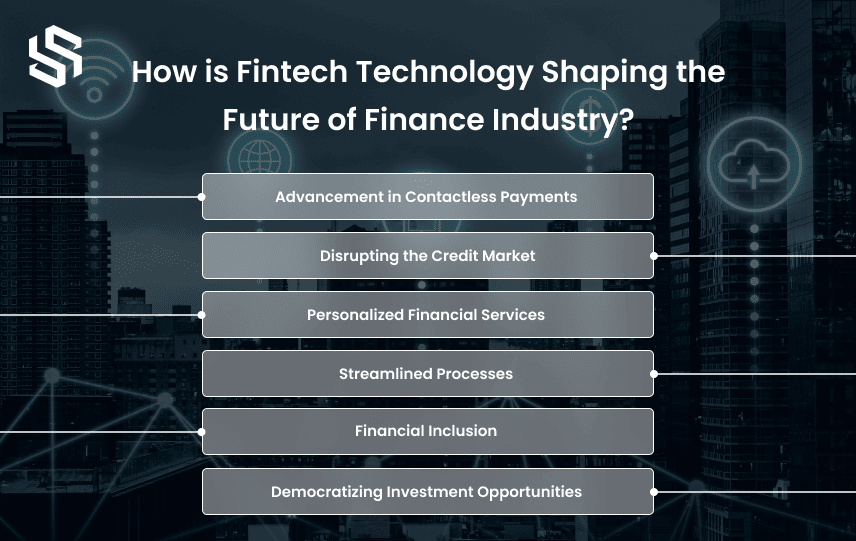
So, how exactly is fintech shaping the future of finance?
Let’s delve into the various ways in which fintech is revolutionizing the industry:
1. Advancement in Contactless Payments
Fintech has ushered in innovative contactless payment methods, such as e-wallets, UPI (Unified Payments Interface), net banking, and cryptocurrencies. These options offer convenience and efficiency, enabling users to make transactions seamlessly. However, the increased reliance on these methods also necessitates enhanced security measures. Fintech leverages advanced technologies to improve the security and reliability of these payment systems, assuring users of their safety.
2. Disrupting the Credit Market
Fintech has disrupted the traditional credit market by introducing novel offerings. Previously, new businesses and startups faced challenges in securing loans from traditional banks. However, fintech services like peer-to-peer lending platforms have emerged, making it easier for these entities to obtain loans. Additionally, fintech platforms often provide faster loan processing and repayment options, empowering borrowers with more flexibility and convenience.
3. Personalized Financial Services
Fintech has empowered individuals by providing personalized financial services tailored to their specific needs. Through advanced algorithms and data analytics, fintech apps can analyze users’ financial behavior and offer personalized recommendations, such as investment opportunities or budgeting advice. This level of personalization allows individuals to make more informed financial decisions and achieve their financial goals more effectively.
4. Streamlined Processes
Fintech has streamlined various financial processes, making them more efficient and cost-effective. For businesses, fintech applications can automate tasks such as invoicing, payroll management, and inventory tracking, saving time and resources. Similarly, fintech solutions have simplified loan applications and underwriting processes, allowing financial institutions to provide faster and more accurate lending decisions. This streamlining of processes has not only increased productivity but has also reduced the costs associated with traditional financial operations.
5. Financial Inclusion
Despite the progress made in financial inclusion, a significant portion of the global population still lacks access to basic banking services. Fintech has played a crucial role in bridging this gap. With the advent of companies like Google Pay, Sage Pay, Square Cash, and Jupiter Money, banking services have become more accessible and convenient. Online banking platforms allow users to conduct various transactions, such as fund transfers, bill payments, and account management, all from the comfort of their devices.
6. Democratizing Investment Opportunities
Traditionally, accessing investment opportunities was limited to a select group due to high barriers to entry. Fintech app development has transformed this landscape by simplifying access to investment platforms. Apps like Robinhood, Acorns, Coinbase, and others have made it easier for individuals to engage in investing, regardless of their prior knowledge or financial background. Fintech empowers users to practice their investment skills, fostering financial literacy and inclusivity.
Fintech is reshaping the future of finance in numerous ways. From transforming payment processing to revolutionizing lending and investing, fintech is making financial services more accessible, efficient, and user-friendly. As technology continues to advance and consumer expectations evolve, the financial industry must continue to embrace fintech and leverage its potential to create a more inclusive and innovative financial ecosystem.
Looking for a trusted Fintech app development partner?
Most Popular Types of Fintech Apps
Fintech, or financial technology, is a rapidly growing industry that encompasses various applications and services aimed at improving financial processes and services.
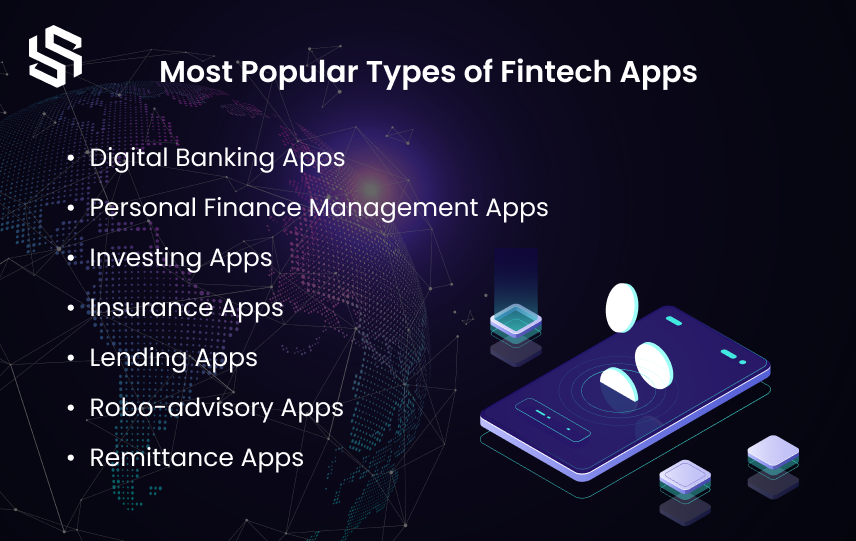
Here are some of the most popular types of fintech apps:
1. Digital Banking Apps
Digital banking apps have transformed the banking experience, allowing users to manage their accounts, deposit checks, transfer money, and pay bills from anywhere. These apps often come with features like savings goals, spending insights, and even virtual cards for online purchases. Well-known digital banking apps include Chime, Ally Bank, and Simple.
2. Personal Finance Management Apps
Personal finance management apps offer a comprehensive view of your financial health. They consolidate all your financial accounts in one place and provide insights into your spending, saving, and investing habits. These apps often come with tools for goal setting, net worth tracking, and even credit score monitoring. Popular personal finance management apps include Personal Capital, Clarity Money, and Quicken.
3. Investing Apps
Investing used to be a complex and daunting task, but fintech apps have simplified the process for both beginner and experienced investors. These apps provide access to a variety of investment opportunities, such as stocks, bonds, and mutual funds. They offer user-friendly interfaces, educational resources, and even automated investment options. Investing apps allow you to grow your wealth and achieve your financial goals without the need for a traditional broker or financial advisor.
4. Insurance Apps
Managing insurance policies and claims can be a time-consuming task. Fintech apps have streamlined the insurance process, making it easier to compare policies, submit claims, and access important information. These apps provide a centralized platform where you can store all your insurance documents, receive personalized recommendations, and get real-time updates on your coverage. Insurance apps help simplify the complex world of insurance and ensure that you are adequately protected.
5. Lending Apps
Lending apps have disrupted the traditional banking industry by making borrowing more accessible and convenient. These apps offer personal loans, student loans, mortgages, and other types of credit. They often use alternative data sources and advanced algorithms to assess creditworthiness and provide instant loan approvals.
6. Robo-advisory Apps
For those who prefer a hands-off approach to investing, robo-advisory apps offer automated investment services. These apps use algorithms to create and manage investment portfolios based on your risk tolerance and financial goals. They often come with low fees compared to traditional financial advisors. Some well-known robo-advisory apps include Betterment, Wealthfront, and Ellevest.
7. Remittance Apps
Remittance apps have simplified the process of sending money internationally. These apps allow you to transfer funds to family and friends abroad, often at a fraction of the cost charged by traditional money transfer services. Remittance apps typically offer competitive exchange rates and fast transfer speeds.
These are just a few examples of the common types of fintech apps available today.Whether you’re looking to budget better, invest smarter, make payments more conveniently, or track your expenses effortlessly, there’s a fintech app out there to meet your needs.
By leveraging the power of technology, these apps offer convenience, efficiency, and peace of mind when it comes to managing your financial life.
So why not give them a try and see how they can help you achieve your financial goals?
Features of Fintech App
When developing a fintech app, there are several features you can consider including to provide a comprehensive and user-friendly experience.
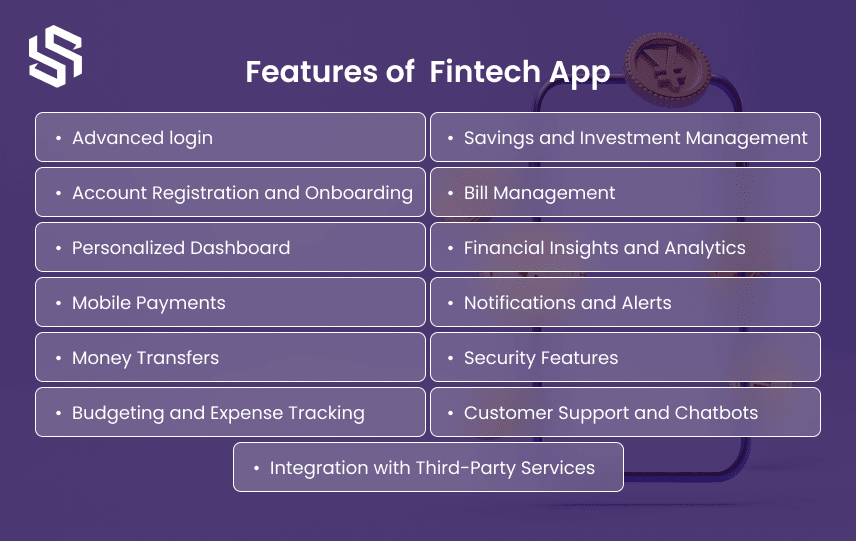
If you are planning to develop a fintech app, here are some key features you can incorporate:
1. Advanced login
Login/Sign in refers to the process of accessing an account or platform by providing valid credentials, typically a username and password, to authenticate and gain authorized access to the system or application.
2. Account Registration and Onboarding
Allow users to create accounts securely and complete the onboarding process efficiently, including identity verification and KYC (Know Your Customer) procedures.
3. Personalized Dashboard
Provide users with a personalized dashboard that displays an overview of their financial activities, including account balances, transaction history, investment portfolio, and spending analysis.
4. Mobile Payments
Enable users to make secure and convenient payments using their smartphones. Integrate popular payment methods such as credit/debit cards, digital wallets, and mobile payment platforms.
5. Money Transfers
Facilitate peer-to-peer (P2P) money transfers within the app, allowing users to send and receive funds easily. Implement features like QR code scanning or contact-based transfers for seamless transactions.
6. Budgeting and Expense Tracking
Offer tools to help users manage their finances effectively. Enable budget creation, expense categorization, and real-time expense tracking. Provide visualizations and notifications to help users stay within their budget.
7. Savings and Investment Management
Allow users to set savings goals and track progress. Offer investment options such as stocks, bonds, mutual funds, or digital assets. Provide insights, educational resources, and portfolio performance analysis.
8. Bill Management
Enable users to manage and pay bills directly through the app. Send reminders for due dates, provide bill history, and facilitate automatic payments where possible.
9. Financial Insights and Analytics
Provide users with personalized financial insights and recommendations based on their spending patterns, investment goals, and financial health. Offer visualizations and reports to help users understand their financial habits better.
10. Notifications and Alerts
Send real-time notifications and alerts for various financial activities, such as account activity, bill payments, budget updates, investment opportunities, and security-related information.
11. Security Features
Implement robust security measures, including two-factor authentication, biometric authentication (e.g., fingerprint or facial recognition), encryption of sensitive data, and regular security audits to ensure the safety of user information.
12. Customer Support and Chatbots
Offer a responsive customer support system, including chatbots or live chat functionality. Allow users to get assistance, ask questions, and resolve issues promptly within the app.
13. Integration with Third-Party Services
Enable integration with popular financial services and platforms, such as banking institutions, credit score providers, expense management tools, or financial planning services, to offer a holistic user experience.
Remember to tailor these features to suit the specific goals and target audience of your fintech app. Additionally, complying with applicable regulations and ensuring data privacy are crucial aspects to consider throughout the development process.
Don’t compromise on excellence!
to create your Fintech app!
Things to Consider When Building Fintech App
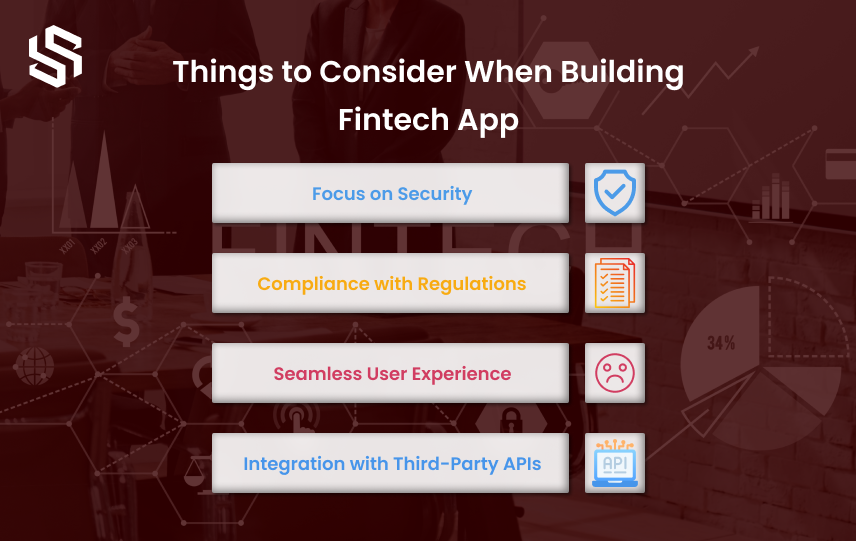
As more businesses embrace the power of fintech, building a pivotal fintech app has become a top priority for many entrepreneurs and developers. However, venturing into the world of fintech app development requires careful consideration to ensure success.
Here are several important considerations to keep in mind. Here are some key aspects to consider:
Read More About: How to Create a Mobile Banking App: An Ultimate Guide
1. Focus on Security
Security should be at the forefront when developing a fintech app. As your app will handle sensitive financial data, it’s essential to implement robust security measures to protect user information from potential threats. Encryption, two-factor authentication, and secure data storage are just a few examples of security features you should consider. Collaborate with cybersecurity experts to ensure your app adheres to industry standards and regulations.
2. Compliance with Regulations
Fintech is a highly regulated industry, and compliance with relevant regulations is non-negotiable. Familiarize yourself with the legal requirements and regulations specific to your target market. Ensure that your app meets all necessary compliance standards, such as Know Your Customer (KYC) and Anti-Money Laundering (AML) regulations. Partner with legal experts who specialize in fintech to navigate the complex regulatory landscape.
3. Seamless User Experience
User experience (UX) is a critical factor in the success of any app, and fintech is no exception. Design an intuitive and user-friendly interface that simplifies complex financial processes. Ensure that the app’s navigation is intuitive, and information is presented clearly. Incorporate features like personalized dashboards, real-time notifications, and easy-to-understand analytics to enhance the overall user experience.
4. Integration with Third-Party APIs
To provide a comprehensive fintech solution, your app may need to integrate with various third-party APIs. This could include payment gateways, banking systems, credit bureaus, or other financial institutions. Consider the scalability of your app and its ability to seamlessly integrate with these external systems. Prioritize building a flexible app architecture that allows for future integrations and updates.
Steps for Building a Fintech Application
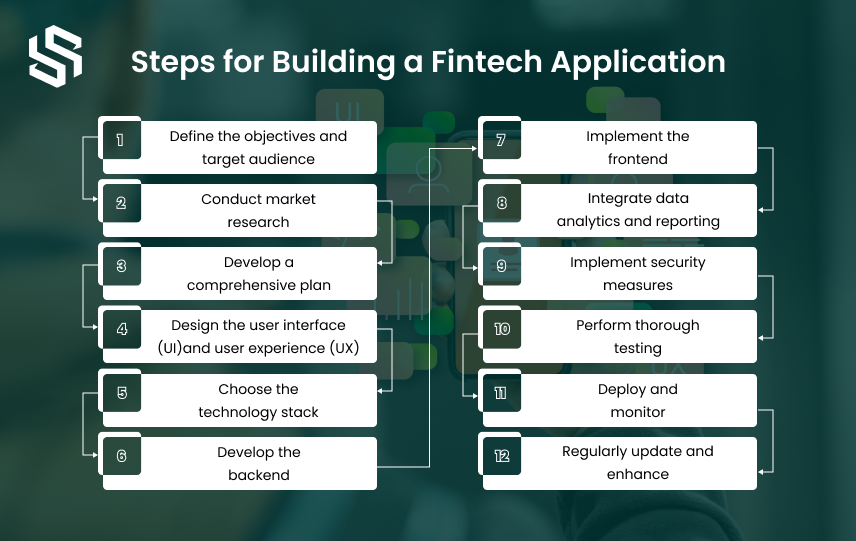
Financial technology, or fintech, is a fast-rising business in today’s digital era. Fintech applications have transformed how we manage our money, making chores like budgeting, investing, and banking more accessible and convenient than ever before.
If you’re considering building your own fintech app, here are some essential steps to help you get started:
1. Define the objectives and target audience
Determine the purpose of your fintech application and identify the specific needs of your target audience. This will help you shape the features and functionalities of your application.
2. Conduct market research
Analyze the existing fintech landscape to understand the competition, identify market gaps, and gather insights about user preferences and expectations. This research will inform your decision-making process and help you differentiate your application.
3. Develop a comprehensive plan
Outline the key features, functionalities, and technical requirements of your application. Create a roadmap that includes timelines, milestones, and resource allocation to guide the development process.
4. Design the user interface (UI) and user experience (UX)
Create wireframes and mockups to visualize the layout, navigation, and interactions of your application. Pay attention to usability, accessibility, and aesthetics to deliver an intuitive and engaging user experience.
5. Choose the technology stack
Select the appropriate technologies, frameworks, and programming languages based on the requirements of your application. Consider factors such as scalability, security, compatibility, and ease of maintenance.
6. Develop the backend
Build the server-side components and infrastructure of your fintech application. This includes developing APIs, integrating with third-party services (such as payment gateways or banking APIs), implementing security measures, and setting up databases.
7. Implement the frontend
Develop the client-side components of your application, including the user interface and interactions. Use web technologies such as HTML, CSS, and JavaScript or frameworks like React, Angular, or Vue.js to create responsive and interactive interfaces.
8. Integrate data analytics and reporting
Implement mechanisms to collect, analyze, and visualize data from user interactions and transactions. This can provide valuable insights to improve your application’s performance, identify trends, and personalize user experiences.
9. Implement security measures
Fintech applications deal with sensitive user information and financial transactions. Ensure that your application adheres to industry standards and follows best practices for data encryption, authentication, access control, and compliance with regulations like GDPR or PCI-DSS.
10. Perform thorough testing
Test your application rigorously to identify and fix any bugs, usability issues, or security vulnerabilities. Conduct functional testing, performance testing, and security testing to ensure your application is robust and reliable.
11. Deploy and monitor
Deploy your application to a production environment and continuously monitor its performance, uptime, and user feedback. Implement mechanisms for error logging, crash reporting, and analytics to proactively address any issues that may arise.
12. Regularly update and enhance
Fintech is a fast-paced industry, and user needs and technologies evolve rapidly. Continuously gather user feedback, monitor market trends, and iterate on your application to introduce new features, improve existing functionalities, and stay ahead of the competition.
Building a fintech app requires careful planning, rigorous development, and ongoing commitment.
By following these steps, you can create a successful fintech app that meets the needs of your target audience and provides a seamless financial experience.
So, roll up your sleeves and get ready to embark on an exciting journey in the world of fintech innovation!
We’re just an email away! Contact us to explore Fintech app possibilities.
Fintech App Development: Tech Stack
When it comes to developing a fintech app, choosing the right tech stack is crucial for ensuring the app’s functionality, security, and performance. Here are some commonly used technologies and frameworks for fintech app development:
| Aspect | Technologies |
|---|---|
| Programming Languages | JavaScript, Swift, Kotlin, Python, Java |
| Frontend Development | React, Angular, Vue.js |
| Backend Development | Node.js, Django, Spring Boot, Ruby on Rails |
| Databases | MySQL, PostgreSQL, MongoDB, Redis |
| API Integration | RESTful APIs, GraphQL |
| Security | SSL/TLS, OAuth 2.0, JSON Web Tokens (JWT) |
| Cloud Services | AWS, Azure |
| Deployment | Docker, Kubernetes |
Programming Languages
- JavaScript: Used for frontend development and popular frameworks like React and Angular.
- Swift or Kotlin: For developing native iOS and Android applications respectively.
- Python or Java: Used for backend development and data processing.
Frontend Development
- React: A popular JavaScript library for building user interfaces.
- Angular: A TypeScript-based framework for building scalable web applications.
- Vue.js: A progressive JavaScript framework for building user interfaces.
Backend Development
- Node.js: A JavaScript runtime environment for building scalable server-side applications.
- Django: A Python web framework known for its simplicity and security.
- Spring Boot: A Java framework for building enterprise-level applications.
- Ruby on Rails: A Ruby-based framework known for its simplicity and rapid development.
Databases
- MySQL or PostgreSQL: Open-source relational databases commonly used for fintech applications.
- MongoDB: A NoSQL database for handling unstructured data.
- Redis: An in-memory data structure store used for caching and session management.
API Integration
- RESTful APIs: Commonly used for communication between the frontend and backend.
- GraphQL: An alternative API query language that offers more flexibility in data retrieval.
Security
- SSL/TLS: Essential for encrypting data transmission between the app and the server.
- OAuth 2.0: A widely-used authorization framework for secure user authentication.
- JSON Web Tokens (JWT): Used for securely transmitting information between parties.
Cloud Services and Deployment
- Amazon Web Services (AWS) or Microsoft Azure: Popular cloud platforms for hosting and scaling fintech applications.
- Docker: Containerization technology for packaging and deploying applications.
- Kubernetes: An orchestration tool for automating deployment, scaling, and management of containerized applications.
Advanced Technology Used in Fintech App Development
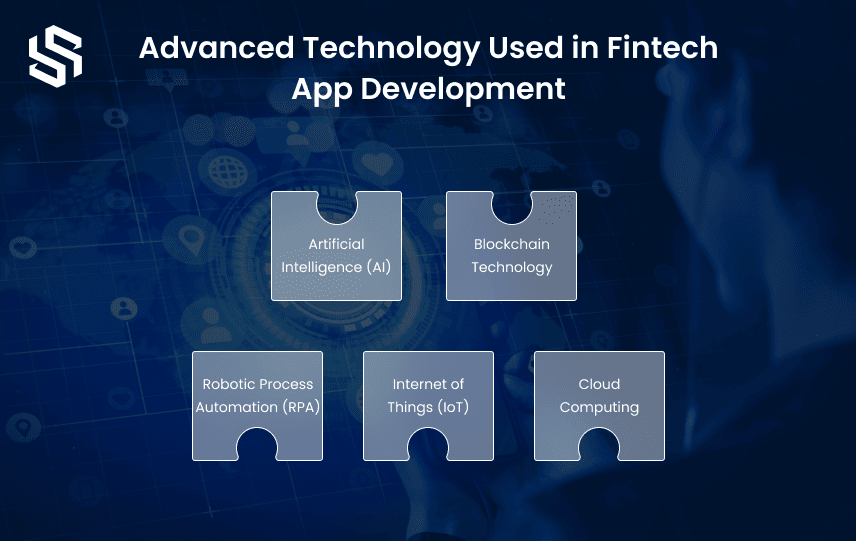
In finance industry, technology has become a game-changer. Fintech, short for financial technology, has revolutionized the way we handle our finances.
But what enables these apps to perform with such efficiency? The answer lies in the advanced technology used in their development.
Here are some of the advanced technologies that are shaping the landscape of fintech app development:
1. Artificial Intelligence (AI)
AI has emerged as a game-changer in the fintech sector. It is being used to develop smart chatbots and virtual assistants that can provide personalized financial advice and support to users. These AI-powered assistants can analyze vast amounts of data and provide valuable insights to help users make informed decisions. Moreover, AI algorithms can detect patterns and anomalies in financial transactions, enabling early fraud detection and prevention.
2. Blockchain Technology
Blockchain technology has disrupted the financial industry with its decentralized and transparent nature. Fintech apps are leveraging blockchain to facilitate secure and efficient peer-to-peer transactions, eliminating the need for intermediaries. This technology ensures tamper-proof record-keeping and quick settlement of transactions, making it ideal for cross-border payments and remittances.
3. Robotic Process Automation (RPA)
RPA is revolutionizing back-office operations in the fintech industry. It involves the use of software robots to automate repetitive and rule-based tasks, such as data entry, reconciliation, and report generation. By automating these processes, fintech apps can significantly reduce manual errors, improve efficiency, and free up human resources for more strategic tasks.
4. Internet of Things (IoT)
IoT has the potential to transform the way we interact with financial services. With the increasing number of connected devices, fintech apps can gather real-time data from wearables, smart homes, and other IoT devices to offer personalized financial solutions. For example, IoT-enabled devices can track spending habits and provide users with insights on how to save money or make better financial decisions.
5. Cloud Computing
Cloud computing has revolutionized the way fintech apps are developed and deployed. It enables seamless scalability, cost-efficiency, and accessibility, allowing users to access their financial information from any device with an internet connection. Cloud-based fintech apps also ensure data security and privacy by storing sensitive information in encrypted form.
The use of these advanced technologies in fintech app development is transforming the financial industry by providing innovative solutions that are secure, efficient, and user-friendly.
Your Fintech dreams deserve a face-to-face discussion.
Mistakes to Avoid When Building a Fintech App
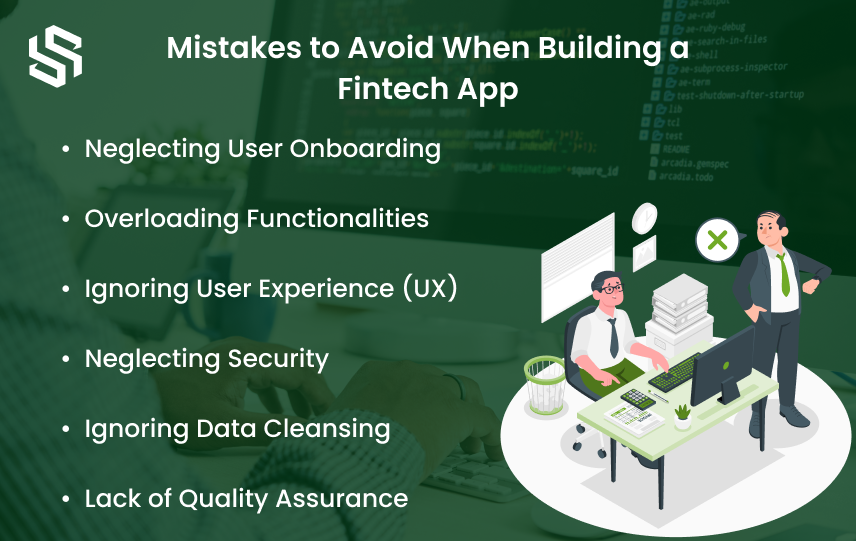
Fintech apps have become increasingly popular among consumers and businesses alike. With their ability to streamline financial processes, provide convenient access to services, and enhance user experiences, it’s no wonder that more and more companies are venturing into the fintech space.
However, building a successful fintech app is not without its challenges. There are several common mistakes that many app developers make, which can hinder the app’s success and user adoption.
Here are some of the common mistakes to avoid during fintech app development:
1. Neglecting User Onboarding
Many fintech companies overlook the importance of designing effective user onboarding screens. Poorly designed onboarding experiences can lead to user disinterest and high churn rates. Take the time to creatively design onboarding screens that educate and engage users, making the onboarding process a continuous and enjoyable experience.
2. Overloading Functionalities
While it’s great to offer a full-featured fintech app, adding too many unnecessary functionalities can make the app cluttered and overwhelming for users. Strive for simplicity and focus on providing essential features that are intuitive and regularly used by your target audience.
3. Ignoring User Experience (UX)
User experience is crucial in fintech apps, whether they are web or mobile-based. Adopt a user-centric approach to design your app’s user interface (UI), considering factors such as market research, effective app navigation, and UX strategies. Create a fintech app UI/UX that is easy to navigate and provides a seamless experience for your users.
4. Neglecting Security
Fintech apps handle sensitive personal information, such as financial and personal details. Ensure that security is a top priority throughout the development process. Implement robust security measures, including encryption, authentication, and secure data storage, to protect user data from unauthorized access or breaches.
5. Ignoring Data Cleansing
Fintech apps often rely on data from various sources, which can lead to inconsistent and inaccurate information. Neglecting regular data cleansing and validation can result in outdated or incorrect data being presented to users. Implement data cleansing processes to address data errors, inconsistencies, and compatibility issues, ensuring the accuracy and reliability of information within the app.
6. Lack of Quality Assurance
Building a reliable fintech app requires thorough testing at every stage of development. Unfortunately, some developers overlook quality assurance (QA) and fail to engage certified QA engineers to test the app extensively. In addition to general app testing, fintech apps require specific financial testing to comply with industry regulations. Employing DevOps practices can help ensure continuous integration, testing, and quality assurance of your fintech app, minimizing bugs and ensuring a robust user experience.
By avoiding these common mistakes, you can increase the chances of building a successful and user-friendly fintech app.
Developing a Pharmaceutical Software: A Step-by-Step Guide
Read More About: Breaking Down the Cost of Developing a Mobile App Like Tabby
How Much Does It Cost to Develop a Fintech App?
From banking and investments to budgeting and payments, fintech apps have become an integral part of our daily lives. But have you ever wondered about the cost behind developing such a full-fledged fintech app?
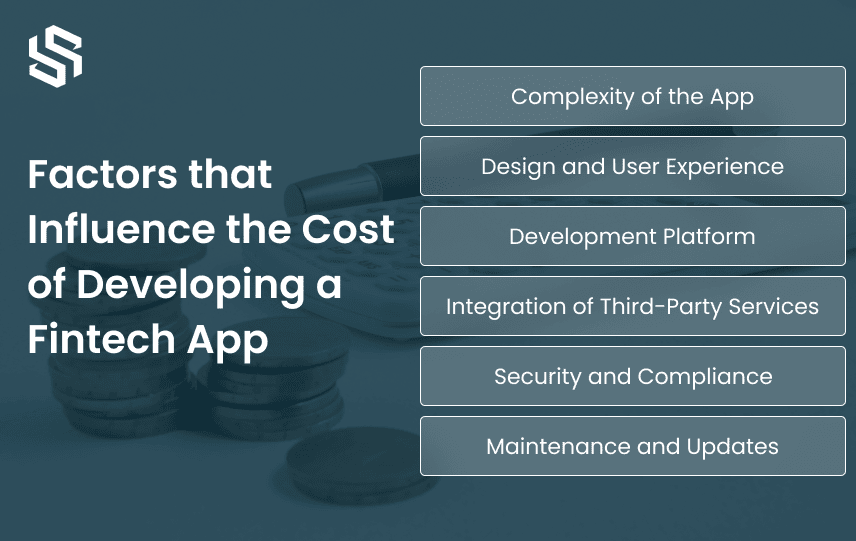
Here are various factors that influence the cost of developing a fintech app and provide you with insights to help you plan your budget effectively.
1. Complexity of the App
The complexity of a fintech app plays a crucial role in determining its development cost. A full-fledged fintech app typically involves multiple features like user registration, account management, transaction history, payments, budgeting tools, investment tracking, data analytics, and more. The more intricate and sophisticated the features, the higher the development cost.
2. Design and User Experience
Creating an appealing and user-friendly design is essential for any fintech app. The cost of design and user experience (UX) development will depend on the complexity of the app’s design, the need for custom graphics or animations, and the level of expertise required from designers and UX specialists. Investing in a seamless, intuitive, and visually appealing design will enhance user engagement and satisfaction.
3. Development Platform
Choosing the right development platform is crucial, as it affects both the cost and time required for app development. Fintech apps can be developed for various platforms, including iOS, Android, and web-based applications. Each platform has its own development requirements and associated costs. Additionally, if you decide to develop a cross-platform app to target multiple platforms simultaneously, it may increase the overall development cost.
4. Integration of Third-Party Services
Fintech apps often require integration with third-party services such as payment gateways, banking APIs, financial data providers, and security providers. These integrations enhance the functionality and security of the app but may add to the development cost. The complexity of integrating these services, along with any associated licensing fees, should be considered when estimating the overall app development cost.
5. Security and Compliance
Given the sensitive nature of financial data, security is of utmost importance for fintech apps. Compliance with industry regulations, such as GDPR or PCI DSS, may be mandatory. Implementing robust security measures and ensuring compliance with regulatory standards will incur additional development costs. However, it is essential to prioritize security to protect user data and build trust among your app users.
6. Maintenance and Updates
App development is an ongoing process that requires regular maintenance, bug fixes, and updates to enhance performance, security, and user experience. It is essential to factor in the long-term maintenance costs while estimating the overall development cost. Regular updates and improvements will ensure that your fintech app remains competitive and relevant in the dynamic fintech landscape.
Based on these factors, the cost of developing a full-fledged fintech app can range anywhere from $50,000 to $500,000 or more. This estimate, however, is just a rough range, and the actual cost may vary depending on your specific requirements and the development team you choose.
Conclusion
Creating a fintech app can be a complex process, but with the right approach and resources, it can be a highly rewarding endeavor. Fintech application development is a rapidly growing field, driven by advancements in technology and increasing demand for innovative financial solutions.
When embarking on the journey of creating a fintech app, it is crucial to partner with a reputable fintech app development company. These companies have the expertise and experience to understand the intricacies of the financial industry and can provide valuable insights and guidance throughout the development process. They offer fintech app development services tailored to your specific requirements, ensuring that your app is secure, user-friendly, and compliant with regulatory standards.
Fintech mobile app development requires a well-thought-out strategy and meticulous attention to detail. With a clear vision in mind, you can work with fintech app developers to design an intuitive user interface, develop robust functionalities, and integrate essential features such as secure payment gateways, data encryption, and real-time analytics.
Syndell is a leading fintech app development company in USA, offers comprehensive fintech app development solutions. Their team of skilled developers and industry experts can assist you at every stage of the development process, from ideation to deployment. Whether you are a startup or an established financial institution, Syndell can provide customized solutions to meet your specific requirements.
To learn more about Syndell’s fintech app development services, discuss your project, or request a quote, feel free to contact us. Our dedicated team is always ready to assist you and turn your fintech app idea into a reality. Embrace the opportunities of the fintech revolution and empower your users with seamless and secure financial experiences.