Being ahead of the curve is essential for success in the quick-paced and changing world of pharmaceuticals. Many pharmaceutical companies use custom healthcare software development services to acquire a competitive edge and keep up with the industry’s constantly changing needs.
In terms of simplifying processes and increasing overall effectiveness, pharmacy management software development has changed the game. Specialized pharmacy software development services offer solutions tailored to meet the unique challenges faced by the industry.
These solutions include cutting-edge pharmacy management software that simplifies inventory tracking, prescription management, and patient information organization, as well as advanced pharma manufacturing software that enhances production processes.
To embark on this transformative journey, it is essential to collaborate with a skilled and experienced pharmaceutical software development company. These expert teams of software developers possess the technical prowess and domain knowledge required to build bespoke solutions that cater precisely to your organization’s needs.
Whether you are a large-scale pharmaceutical manufacturer, a biotechnology startup, or a pharmacy chain seeking enhanced management solutions, hiring software developers from a reputable company can provide you with the necessary expertise in custom pharmaceutical software development that adapts swiftly to market changes, complies with rigorous industry regulations, and meets the rising expectations of consumers and healthcare professionals alike.
So let’s delve into the world of pharmaceutical software development and discover the boundless possibilities it presents.
What is Pharmaceutical Software?
The term “pharmaceutical software” describes a group of computer programs and applications created especially to serve the requirements of the pharmaceutical business. In the fields of medication discovery, production, distribution, and patient care, these software solutions are created to expedite numerous processes, improve effectiveness, and guarantee compliance with laws. Pharmaceutical software can include a vast variety of programs, each of which has a particular function within the pharmaceutical industry.
From Threads to Code: Crafting an ERP Software for the Garment Manufacturing Business
Pharmaceutical Software Development:Statistics
Pharmaceutical software development plays a crucial role in the pharmaceutical industry, supporting various aspects of drug discovery, clinical trials, manufacturing, and regulatory compliance.
Let’s look at a few statistics on pharmaceutical software development to see how important it is:
- The Pharmaceuticals market is projected to hit US$1,156.00bn by 2024, with Oncology Drugs leading at US$214.10bn. Anticipated growth at a 6.19% CAGR could see the sector reach US$1,470.00bn by 2028, with the United States expected to generate the highest revenue of US$636.90bn in 2024, owing to its advanced healthcare infrastructure and robust R&D capabilities.(Source: Statista)
- Statistics show that the global pharmaceutical software development market is expected to reach a value of $14.5 billion by 2026, with a compound annual growth rate (CAGR) of 7.8% from 2021 to 2026. This exponential growth is a testament to the increasing demand for advanced software solutions in the pharmaceutical industry. (Source: MarketsandMarkets)
What are the Advantages of Pharmaceutical Software Development?
Pharmaceutical software development has transformed the way the healthcare business functions. With technological improvements, software solutions particularly built for the pharmaceutical sector have arisen, providing several benefits to pharmaceutical businesses, healthcare professionals, and patients alike.
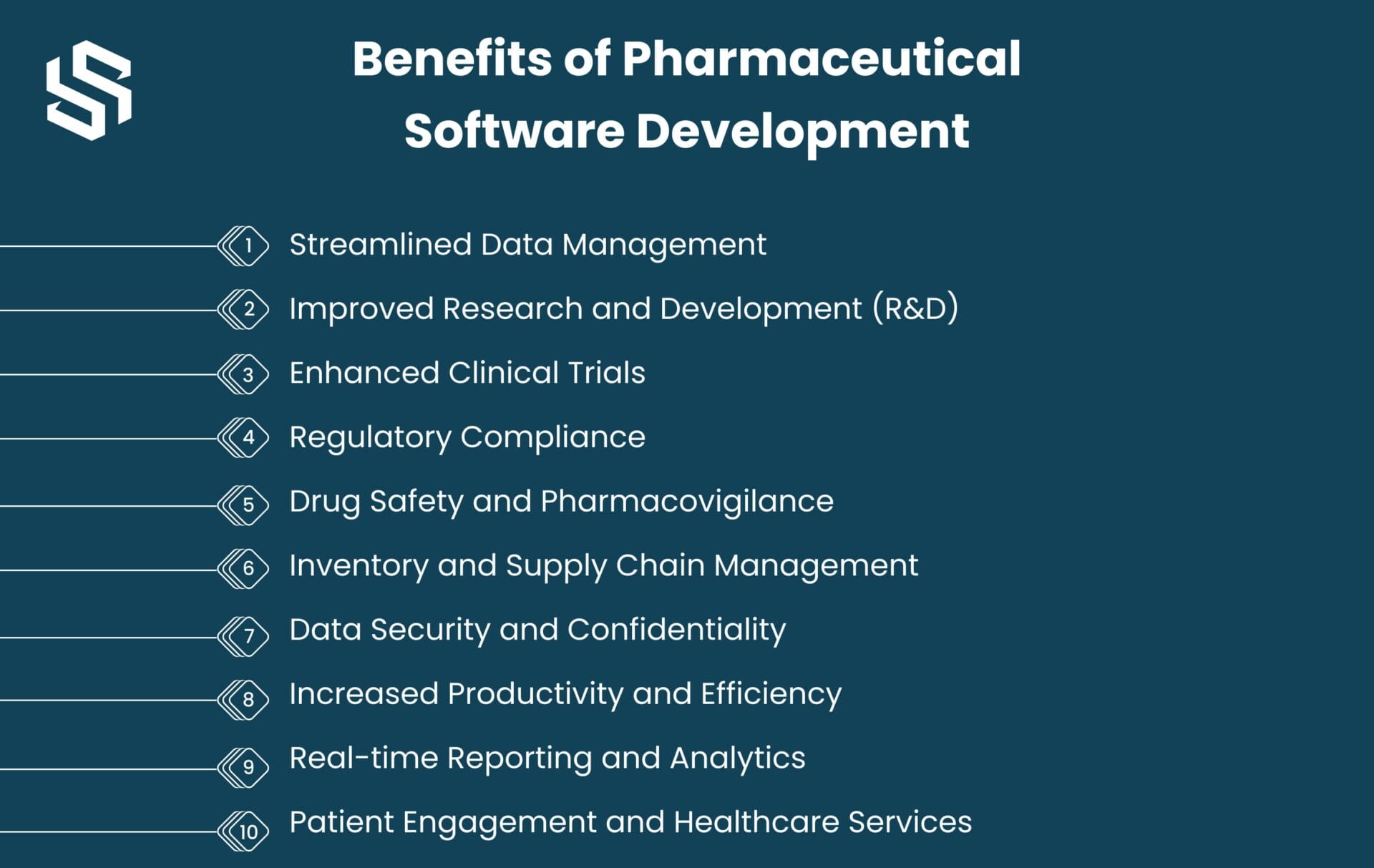
Here are some key benefits of pharmaceutical software development and how it is transforming the industry
1. Streamlined Data Management
Pharmaceutical software solutions help in organizing and managing vast amounts of critical data related to drug development, clinical trials, regulatory compliance, and patient information. This ensures that data is easily accessible, up-to-date, and accurate.
2. Improved Research and Development (R&D)
Advanced software tools can facilitate research and development processes, enabling scientists and researchers to analyze data, simulate drug interactions, and model potential outcomes. This can lead to faster drug discoveries and reduced development timelines.
3. Enhanced Clinical Trials
Software applications designed for clinical trials assist in patient recruitment, data collection, and analysis. These tools can increase the efficiency of the trial process, leading to quicker results and potentially accelerating the availability of new treatments.
4. Regulatory Compliance
The pharmaceutical industry is heavily regulated, and software solutions can assist in complying with various regulatory requirements, ensuring that drugs are developed and marketed in adherence to safety and quality standards.
5. Drug Safety and Pharmacovigilance
Software systems are used to monitor and report adverse drug reactions, allowing pharmaceutical companies to track drug safety data and take appropriate measures to ensure patient well-being.
6. Inventory and Supply Chain Management
Pharmaceutical software can optimize inventory management, reduce wastage and ensure that drugs are always available when needed. It can also help in managing the complex supply chain involved in distributing pharmaceutical products.
7. Data Security and Confidentiality
Protecting sensitive information, such as patient records and proprietary research data, is crucial in the pharmaceutical industry. Custom software solutions can be tailored to implement robust security measures to safeguard data from unauthorized access and cyber threats.
8. Increased Productivity and Efficiency
Automation of various processes through pharmaceutical software can reduce manual workloads, minimize errors, and increase overall efficiency, allowing employees to focus on more strategic tasks.
9. Real-time Reporting and Analytics
Software applications provide real-time data analytics and reporting capabilities, enabling better decision-making based on up-to-date insights into drug development, sales performance, and other critical metrics.
10. Patient Engagement and Healthcare Services
Pharmaceutical software can facilitate communication with patients, providing them with valuable information about medications, treatment plans, and healthcare services, leading to better patient engagement and adherence to treatment regimens.
Don’t let outdated systems slow down your pharmaceutical operations. Take charge of your future with our revolutionary Pharmaceutical Software.
to unlock the potential of digital transformation for your business.
Read More About: Know More about Medicare App API Integration Solutions for Your App
Must Have Features of Pharmaceutical Management Software
When it comes to pharmaceutical software, there are several must-have features to ensure efficiency, compliance, and accuracy in various processes. These features are essential for managing the complex tasks involved in pharmaceutical research, development, manufacturing, distribution, and regulatory compliance.
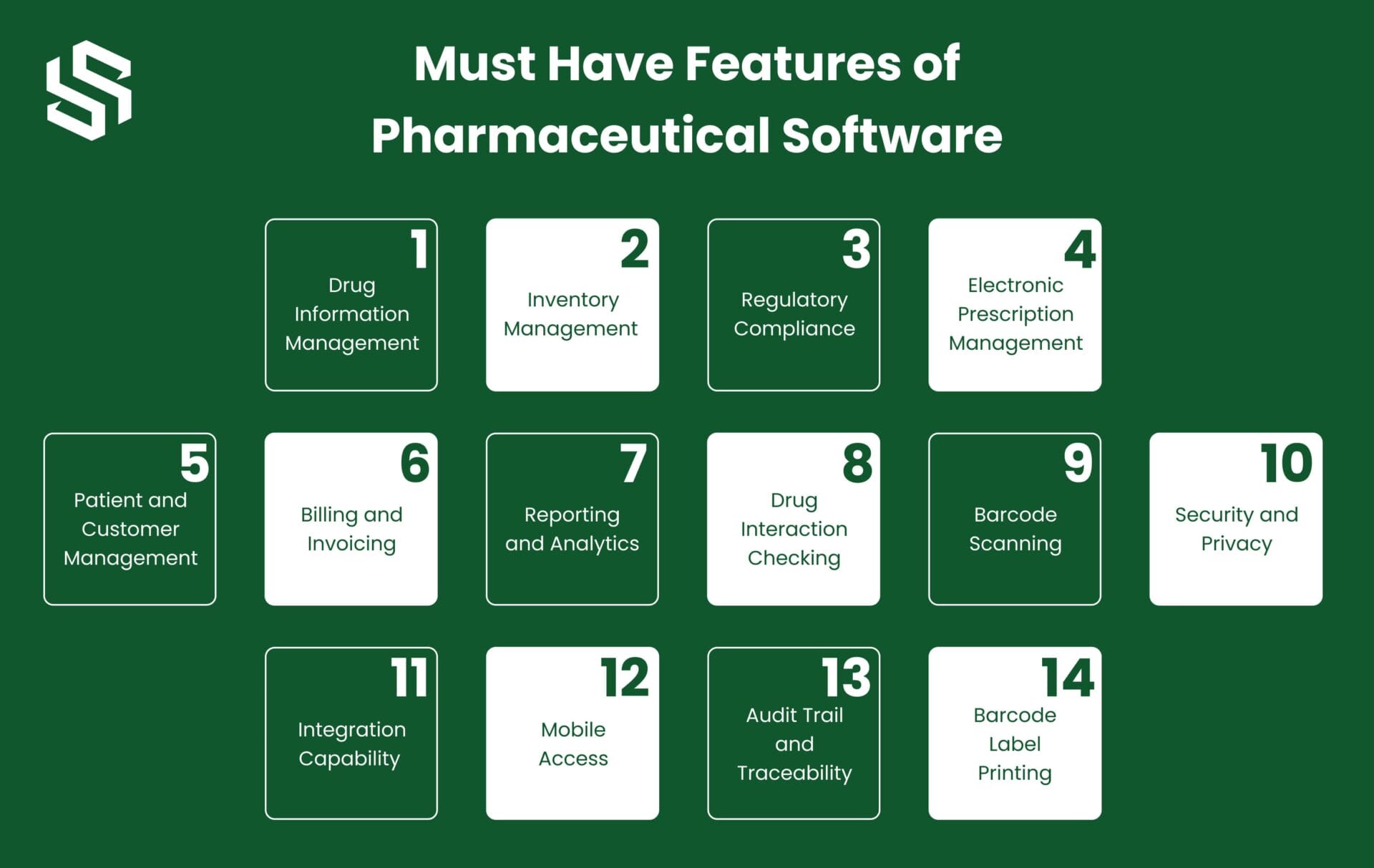
Here are some of the key must-have features of pharmaceutical software:
1. Drug Information Management
The software should have a comprehensive database to store and manage detailed information about drugs, including their chemical composition, indications, contraindications, side effects, dosage guidelines, and interactions with other medications.
2. Inventory Management
Efficient management of drug inventory is essential to avoid stockouts and wastage. The software should track stock levels, expiration dates, and automatically generate purchase orders when stocks run low.
3. Regulatory Compliance
Compliance with pharmaceutical regulations and standards is crucial. The software should help ensure adherence to various guidelines, such as Good Manufacturing Practices (GMP), Good Distribution Practices (GDP), and FDA requirements.
4. Electronic Prescription Management
The software should support electronic prescription processing, enabling healthcare providers to send prescriptions directly to pharmacies, reducing errors and improving efficiency.
5. Patient and Customer Management
A robust system should facilitate patient profile creation, capturing essential information like medical history, allergies, and prescribed medications. Additionally, customer management features assist with handling inquiries and maintaining a customer database for other pharmaceutical businesses.
6. Billing and Invoicing
Streamlined billing and invoicing functionalities are essential to handle sales transactions, manage payment processing, and generate accurate invoices for customers and insurance companies.
7. Reporting and Analytics
Comprehensive reporting tools help monitor sales trends, inventory status, prescription patterns, and overall business performance. Data-driven insights support better decision-making.
8. Drug Interaction Checking
The software should have a built-in drug interaction checker to alert healthcare providers and pharmacists of potential adverse reactions when multiple medications are prescribed.
9. Barcode Scanning
Integration with barcode scanning technology enhances efficiency and accuracy during inventory management and prescription processing.
10. Security and Privacy
Pharmaceutical software should prioritize data security and compliance with privacy regulations like HIPAA (Health Insurance Portability and Accountability Act) to safeguard sensitive patient information.
11. Integration Capability
The ability to integrate with other systems, such as Electronic Health Records (EHR) or hospital management software, allows for seamless data sharing and improved collaboration among healthcare providers.
12. Mobile Access
In today’s mobile world, having a mobile application or a responsive web interface ensures accessibility and convenience for users on the go.
13. Audit Trail and Traceability
The software should maintain a detailed audit trail, recording all actions taken within the system, such as prescription changes and inventory movements, for traceability and accountability purposes.
14. Barcode Label Printing
The software should support barcode label printing for medication packaging, making it easier to scan and track products accurately.
Read More About: Best Dental Practice Management Software Development: A Beginner’s Guide
Most Popular Type of Pharmaceutical Management Software
Different types of pharmaceutical software have developed in the modern digital era to meet the unique requirements of pharmacies, hospitals, and other healthcare facilities.
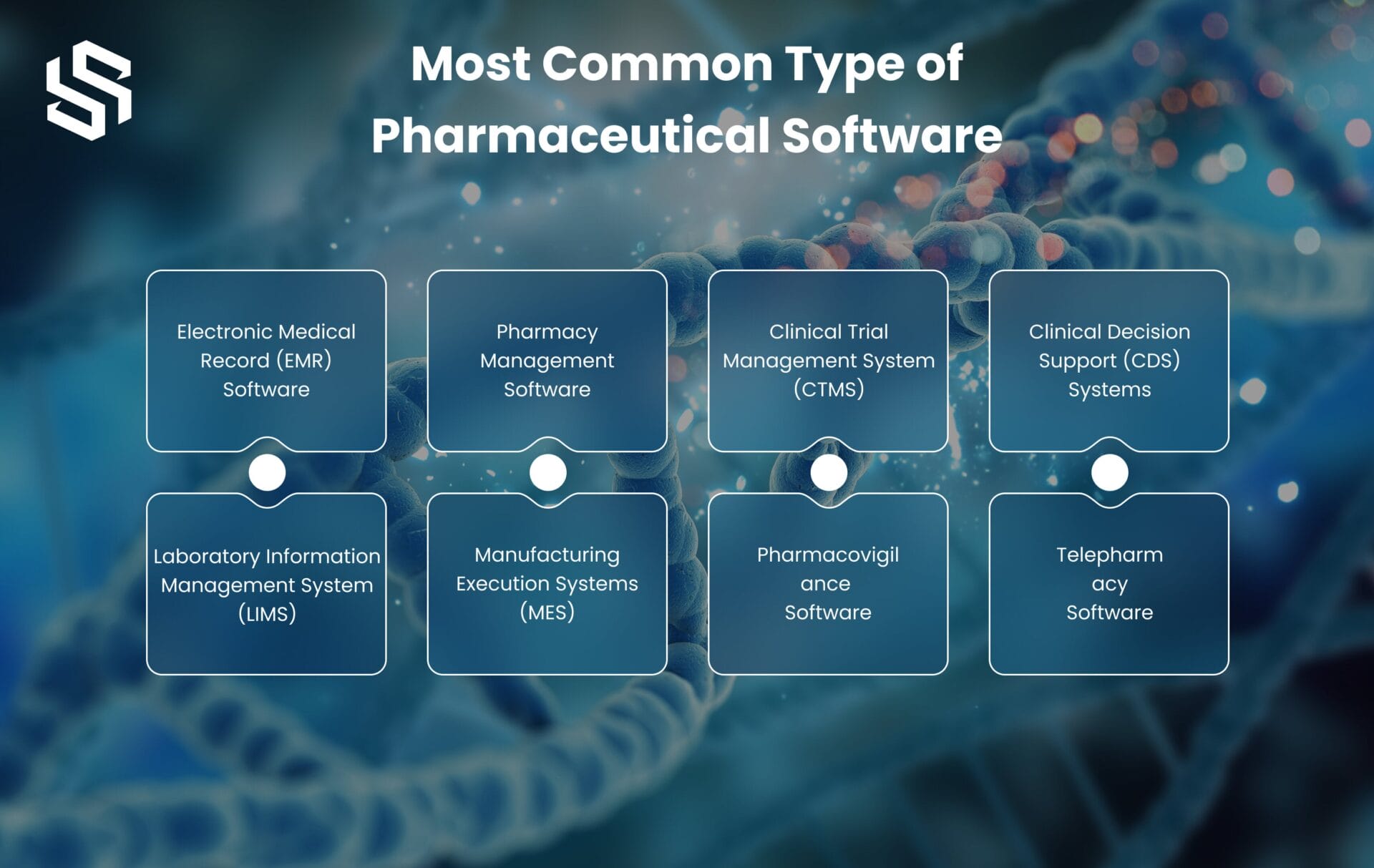
Let’s take a closer look at some of the leading types of pharmaceutical software that are being widely used in the industry today.
1. Electronic Medical Record (EMR) Software:
EMR software is designed to store, manage, and retrieve patient health records electronically. It replaces the traditional paper-based records, allowing healthcare professionals to access patient information quickly and securely. EMR software streamlines workflows, reduces errors, and improves collaboration among healthcare providers.
Key features of EMR software include:
– Patient demographics and medical history – Prescription and medication management – Lab and diagnostic test results – Appointment scheduling and reminders – Electronic prescribing (e-prescribing) – Integration with billing and insurance systems
2. Pharmacy Management Software:
Pharmacy management software is specifically designed to streamline the operations of retail and hospital pharmacies. It helps pharmacists with tasks such as prescription processing, inventory management, and patient counseling. This software ensures accuracy, reduces medication errors, and improves customer service.
Key features of pharmacy management software include:
– Prescription processing and dispensing – Inventory management and automatic reordering – Drug interaction and allergy checks – Patient medication profiles and counseling – Insurance claims processing – Point-of-sale (POS) integration
3. Clinical Trial Management System (CTMS):
CTMS software assists in the planning, execution, and monitoring of clinical trials. It streamlines trial processes, improves data accuracy, and ensures compliance with regulatory guidelines.
Key features of the clinical trial management system include:
– Subject recruitment and enrollment – Protocol management and amendment tracking – Investigator and site management – Electronic data capture (EDC) and data management – Regulatory document management – Reporting and analytics capabilities
These software solutions play a crucial role in various industries, enabling organizations to streamline operations, enhance compliance, and achieve better outcomes.
4. Clinical Decision Support (CDS) Systems:
CDS systems provide healthcare professionals with evidence-based information and guidance at the point of care. These systems use clinical knowledge databases and algorithms to assist in making accurate diagnoses, prescribing medications, and determining treatment plans. CDS systems help healthcare providers deliver better patient outcomes and reduce medical errors.
Key features of CDS systems include:
– Drug formulary and dosage recommendations – Alerts for potential drug interactions and contraindications – Clinical guidelines and best practices – Disease-specific decision support – Integration with EMR and pharmacy systems
5. Laboratory Information Management System (LIMS):
LIMS software is used in clinical and research laboratories to manage and track laboratory workflows, samples, and test results. It helps automate laboratory processes, ensure data integrity, and improve overall laboratory efficiency. LIMS software is crucial for quality control, regulatory compliance, and timely reporting of test results.
Key features of LIMS software include:
– Sample tracking and management – Test request and result recording – Workflow automation and instrument integration – Quality control and data validation – Audit trail and traceability – Reporting and analytics
6. Manufacturing Execution Systems (MES):
MES software helps manufacturers monitor and control production processes on the shop floor. It provides real-time visibility into manufacturing operations, optimizing efficiency and productivity.
Key features of manufacturing execution systems (MES) include:
– Production scheduling and planning – Shop floor data collection and monitoring – Quality control and traceability – Inventory and material management – Equipment maintenance and downtime tracking – Integration with enterprise resource planning (ERP) systems
7. Pharmacovigilance Software:
Pharmacovigilance software is used by pharmaceutical companies to monitor the safety of their drugs and ensure compliance with regulatory requirements. It helps in the collection, analysis, and reporting of adverse drug reactions.
Key features of Pharmacovigilance Software include:
– Adverse event case management – Signal detection and risk assessment – Regulatory reporting and compliance – Drug safety database management – Workflow automation and collaboration tools – Integration with clinical trial systems
8. Telepharmacy Software:
Telepharmacy software enables pharmacists to provide remote medication-related services to patients. It allows patients in remote areas or with limited access to pharmacies to receive expert advice, medication counseling, and prescription services from qualified pharmacists through video consultations or phone calls. Telepharmacy software expands access to healthcare and improves medication adherence.
Key features of telepharmacy software include:
– Secure video consultations and messaging – Prescription verification and counseling – Medication adherence monitoring – Medication synchronization and home delivery coordination – Integration with EMR and pharmacy systems
Have specific requirements for your pharmaceutical operations?
Let’s talk about it –
How to Develop a Medical App for Pharmaceutical Businesses?
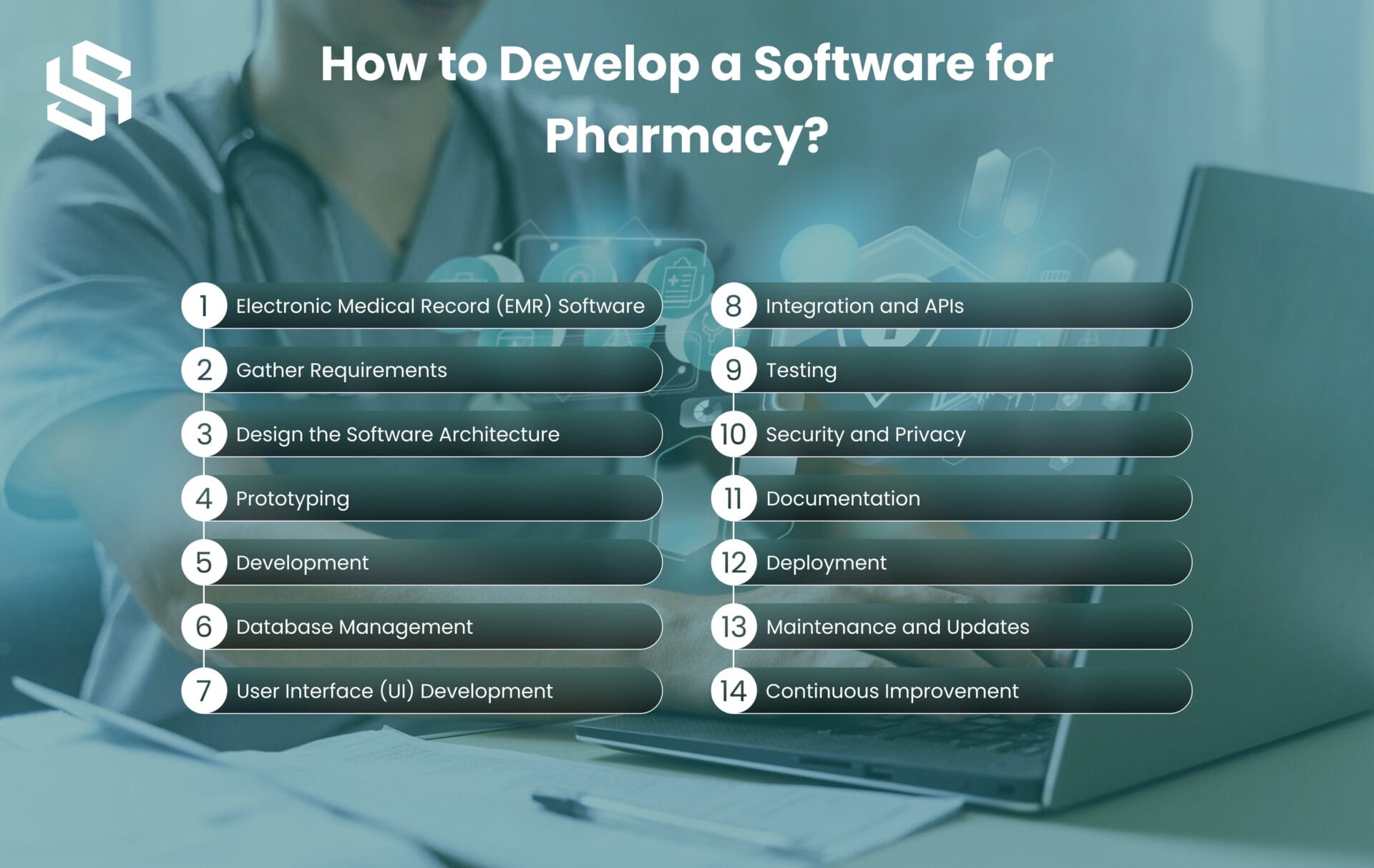
Developing pharmaceutical software requires careful planning, design, and implementation to ensure it meets the specific needs and regulatory requirements of the pharmaceutical industry.
If you are a pharmaceutical company looking to develop your own pharmaceutical software, here are the key steps you need to follow:
Steps 1. Identify the Purpose and Scope
Clearly define the objectives of your pharmaceutical software. Determine the specific functionalities it should offer, such as drug inventory management, patient information, prescription tracking, adverse event reporting, or regulatory compliance support.
Step 2. Gather Requirements
Collaborate with pharmaceutical experts, healthcare professionals, and potential end-users to gather detailed requirements. Document all functional and non-functional requirements to serve as a foundation for the development process.
Step 3. Design the Software Architecture
Design the software architecture based on the gathered requirements. Decide on the appropriate technologies, frameworks, and databases that will be used in the development process. Consider scalability, security, and data integrity while designing the architecture.
Step 4. Prototyping
Build a prototype of the software to get feedback from potential users and stakeholders. This step helps to identify potential issues and allows for early adjustments to the design.
Step 5. Development
Start the actual coding and development process based on the finalized design and prototype. Divide the development process into smaller modules or sprints to facilitate better management and testing.
Step 6. Database Management
Set up a secure and efficient database system to handle the pharmaceutical data. Ensure that data integrity and confidentiality are maintained, especially considering sensitive patient information.
Step 7. User Interface (UI) Development
Create an intuitive and user-friendly interface to enable easy navigation and interaction with the software. Prioritize the accessibility of the UI, particularly for users with disabilities.
Step 8. Integration and APIs
If needed, integrate the software with external systems, databases, or APIs to enhance its functionality and data exchange capabilities.
Step 9. Testing
Perform rigorous testing at different stages of development. This includes unit testing, integration testing, system testing, and user acceptance testing. Identify and fix any bugs or issues that arise during the testing phase.
Step 10. Security and Privacy
Implement robust security measures to protect sensitive data and prevent unauthorized access. Use encryption protocols, access controls, and other security mechanisms to safeguard the software.
Step 11. Documentation
Create comprehensive documentation that covers all aspects of the software, including user guides, technical manuals, and troubleshooting documents.
Steps 12. Deployment
Deploy the software to the intended users or clients. This may involve installation on-premises or through cloud-based solutions.
Steps 13. Maintenance and Updates
Regularly maintain the software to keep it up-to-date and secure. Address any issues that arise and release updates or patches as needed.
Steps 14. Continuous Improvement
Collect feedback from users and stakeholders to identify areas for improvement. Continuously enhance the software based on user feedback and changing industry needs.
How Much Does Fleet Management Software Development Cost?
Tech Stack Required for Pharmaceutical Software Development
When developing pharmaceutical software, you need a well-rounded tech stack that ensures security, reliability, and scalability.
Here’s a list of technologies commonly used in pharmaceutical software development:
| Category | Technologies |
|---|---|
| Programming Languages | Python, Java or C#, JavaScript |
| Web Development | HTML, CSS, Front-end Frameworks (React, Angular, Vue.js) |
| Back-end Development | Frameworks (Django, Spring), APIs (RESTful) |
| Databases | Relational Database (PostgreSQL, MySQL, SQL Server), NoSQL Database (MongoDB, Cassandra) |
| Data Analysis and Visualization | Pandas, NumPy, Matplotlib, Plotly |
| Cloud Services | AWS, Azure, Google Cloud Platform, Containerization (Docker) |
| Security |
|
| Version Control | Git |
| Testing |
|
| Continuous Integration/Continuous Deployment (CI/CD) | Jenkins, Travis CI, GitLab CI/CD |
| Compliance and Regulation | Depending on the intended use: FDA, HIPAA, GDPR, etc. |
Looking to meet tight deadlines? –
now!
Our dedicated developers deliver on time, every time.
Real-world Examples of Pharmaceutical Software
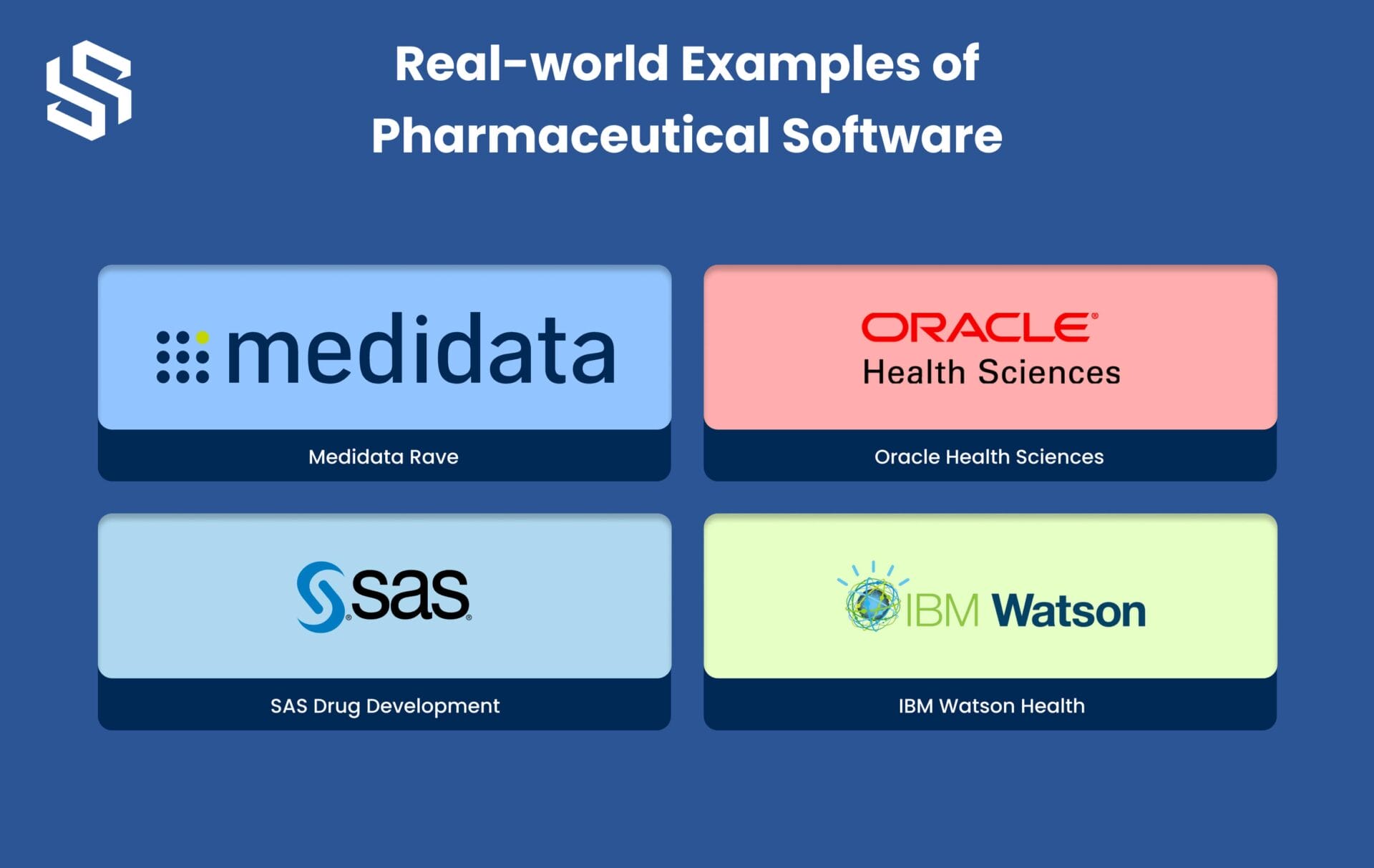
Pharmaceutical software plays a crucial role in the pharmaceutical industry, assisting with various tasks ranging from drug development and clinical trials to regulatory compliance and supply chain management.
Here are some real-world examples of pharmaceutical software:
1. Medidata Rave
Medidata Rave is a comprehensive electronic data capture (EDC) system used by pharmaceutical companies in clinical trials. It allows researchers to collect, manage, and analyze patient data in a secure and efficient manner. With features like real-time data capture, query management, and role-based access control, Medidata Rave ensures data integrity while accelerating the drug development process.
2. Oracle Health Sciences
Oracle Health Sciences offers a suite of software solutions designed to address the unique challenges faced by the pharmaceutical industry. From clinical trials management to safety reporting and pharmacovigilance, Oracle Health Sciences provides an integrated platform for end-to-end drug development. Its cloud-based infrastructure enables secure data storage, real-time analytics, and seamless collaboration between researchers, clinicians, and regulatory bodies.
3. SAS Drug Development
SAS Drug Development is a comprehensive analytics platform that empowers pharmaceutical companies to analyze complex clinical trial data. By leveraging advanced statistical techniques, machine learning, and artificial intelligence, SAS Drug Development enables researchers to gain valuable insights from large datasets. This software solution helps identify patterns, optimize trial designs, and make informed decisions that accelerate the development of safe and effective drugs.
4. IBM Watson Health
IBM Watson Health is an AI-powered platform that combines data, analytics, and cognitive computing to transform healthcare and drug development. From personalized medicine to drug discovery and clinical trial optimization, IBM Watson Health offers a range of solutions that leverage the power of artificial intelligence. By analyzing vast amounts of data, Watson Health can assist researchers in identifying potential drug targets, predicting patient outcomes, and even designing new treatment approaches.
Embracing Industry 4.0: A Look at IoT in Manufacturing Beyond 2023
Conclusion
Pharmaceutical software development services entail an intricate and pivotal process for any pharmaceutical entity. Our comprehensive guide outlines the essential phases in crafting a thriving pharmacy software system, pharmacy management software, and pharma manufacturing software through pharma software development.
By leveraging custom pharmaceutical software development services and hiring experienced software developers, pharmaceutical companies can ensure the creation of a robust and tailored solution that meets their specific needs.
A pharmaceutical software development project requires careful planning, analysis, design, implementation, and testing to ensure the software’s reliability, security, and regulatory compliance. The engagement of a reputable pharmaceutical software development company like Syndell can significantly streamline the process and enhance the overall outcome.
Syndell, as a trusted partner pharmaceutical software development, offers specialized expertise in this domain. Their experienced team of software developers can collaborate closely with pharmaceutical companies to deliver cutting-edge solutions tailored to their unique requirements.
If you are interested in developing a pharmaceutical software system or wish to explore how Syndell can assist you with your pharmaceutical application development needs, do not hesitate to contact us. Our team is ready to provide personalized guidance and support throughout the entire development journey.
Embrace the potential of custom medical software development and unlock new possibilities for your pharmaceutical organization.