Welcome to the Ultimate Showdown: AI Vs Developers in Healthcare App Development!
Artificial Intelligence (AI), the technological wonder that’s revolutionizing healthcare apps. AI provides lightning-fast processing speeds and pinpoint accuracy; sifting through vast amounts of medical data in mere seconds is just part of what makes AI such an amazing invention.
Developers, the human architects of app innovation, play a pivotal role. Equipped with creativity and an intimate knowledge of user needs, these developers design the interface, user experience and functionalities necessary for an app to meet real world healthcare challenges.
Start watching as we dissect the strengths, weaknesses, and potential victories of AI versus
in healthcare tech! Who will emerge victorious as we explore ways to create an ideal healthcare app? Let’s explore!
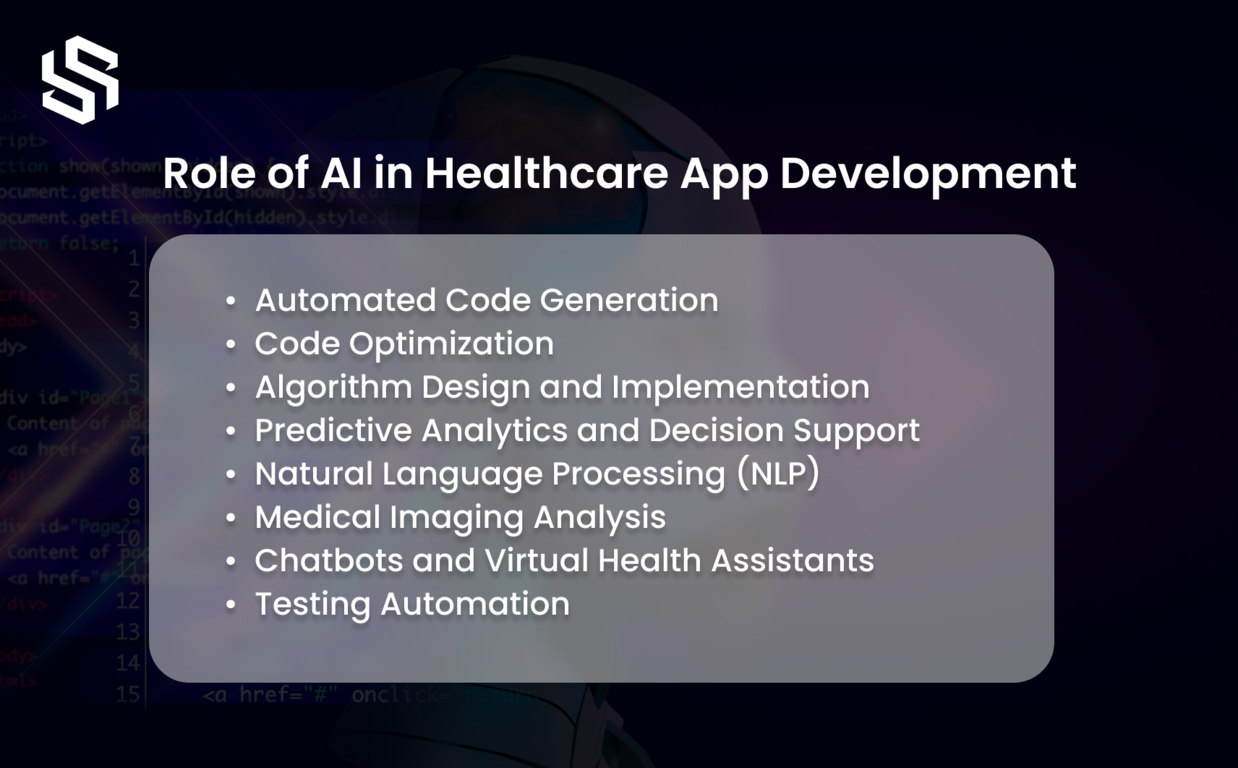
Role of AI in Healthcare App Development
Artificial Intelligence (AI) has emerged as a game-changer in healthcare app development, promising a future where technology revolutionizes patient care, diagnosis, treatment, and more.
Automated Code Generation:
Artificial Intelligence techniques such as Generative Adversarial Networks or Reinforcement Learning from Human Feedback (RLHF) can be effectively trained on large code repositories to discover patterns and structures within them, learning them so it can generate code snippets or even functions based on provided requirements – this speeds up initial phases of coding considerably when writing repetitive or boilerplate code.
Code Optimization:
AI tools employing machine learning algorithms can analyze code to pinpoint areas for optimization. For instance, AI could identify better algorithms, data structures or memory usage patterns before suggesting changes that improve them. AI also detects and refactors sections prone to errors or not compliant with best practices in programming language usage.
Algorithm Design and Implementation:
AI techniques like machine learning and evolutionary algorithms can aid developers in designing and implementing complex algorithms more easily and quickly. Genetic algorithms may optimize parameters specific to healthcare data processing applications, giving developers the power to fine-tune these systems for maximum performance.
How Will AI Affect the Future of Digital Marketing
Predictive Analytics and Decision Support:
Artificial Intelligence models such as machine learning classifiers or regression models can analyze patient data, EHRs, and research articles to predict disease outcomes, recommend treatment plans, or provide decision support based on past patterns seen within healthcare provider records. This analysis may help predict disease outcomes or offer decision support based on historical trends and patterns that help healthcare providers make more informed decisions based on historical records and patterns.
Natural Language Processing (NLP):
AI-powered Natural Language Processing tools leverage deep learning techniques to quickly interpret and extract valuable insights from vast amounts of medical literature. Named Entity Recognition (NER) helps identify medical entities such as diseases or drugs while sentiment analysis identifies opinions expressed within medical research papers for more in-depth and nuanced analysis.
Medical Imaging Analysis:
AI, particularly deep learning architectures like Convolutional Neural Networks (CNNs), can be trained on extensive medical imaging datasets. The AI model learns to recognize patterns in images, aiding in automated detection of anomalies, such as tumors or fractures, significantly supporting radiologists in their diagnosis.
Chatbots and Virtual Health Assistants:
AI-powered chatbots leverage Natural Language Processing and Machine Learning to simulate human-like conversation. They analyze user queries, extract intent, and provide appropriate responses. Reinforcement learning can enable chatbots to learn and improve responses over time, creating more effective virtual health assistants.
Testing Automation:
AI can automate testing processes by creating scripts that generate test cases, simulate user interactions, and detect bugs. AI algorithms can also prioritize test cases based on potential impact or frequently used features, optimizing the testing process and ensuring robustness and reliability of the healthcare application.
Schedule an appointment with our healthcare app experts to explore how our dedicated developers can bring your vision to life.
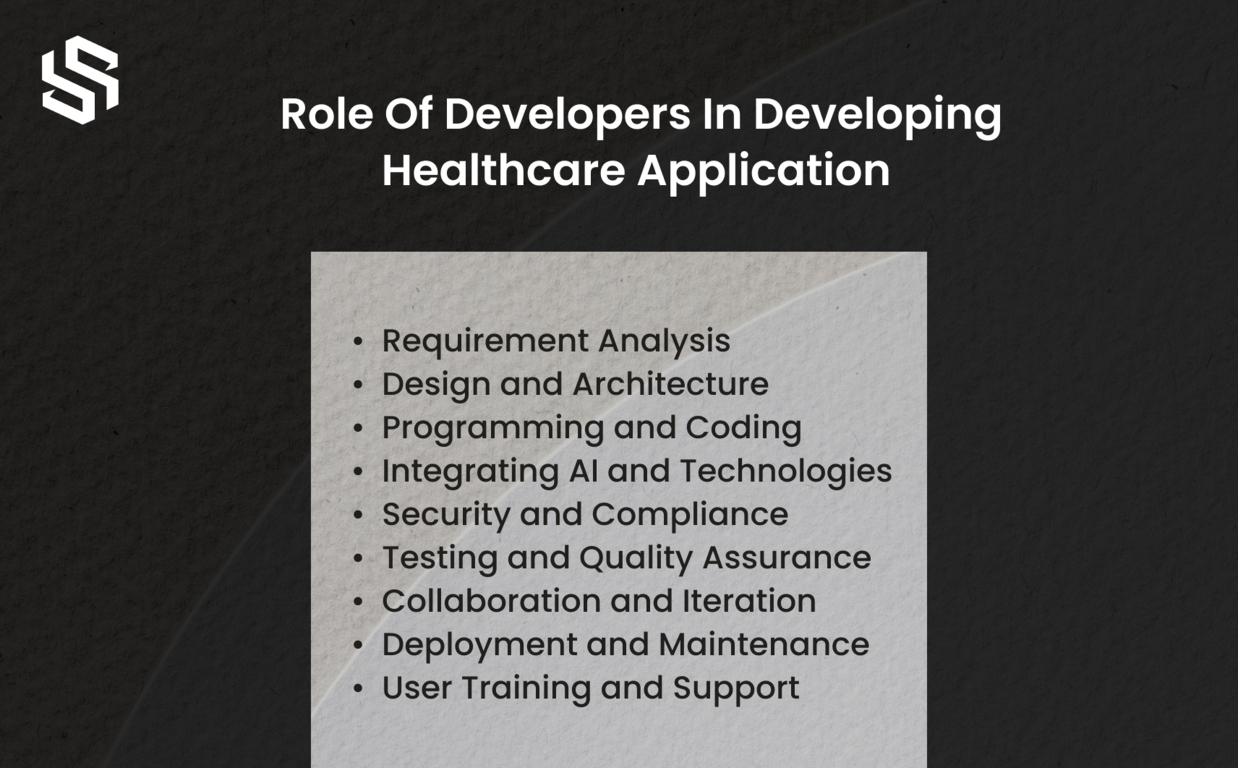
Role Of Developers In Developing Healthcare Application
Developers play a critical and multifaceted role in the development of healthcare applications, combining technical expertise with an understanding of healthcare intricacies. Here’s a breakdown of their key roles:
Requirement Analysis:
Developers engage with healthcare professionals to grasp the intricate needs of the healthcare application. They conduct in-depth interviews and workshops to understand the workflow, data flow, regulatory constraints, and user expectations. This analysis is the foundation for a successful project, aligning the technical solution with the specific requirements of the healthcare domain.
Design and Architecture:
Once the requirements are clear, developers start planning the design and architecture. They create wireframes and mockups, focusing on user interfaces that are intuitive for healthcare providers and patients. The architecture is designed to ensure scalability, security, and optimal performance, considering the potential growth and data handling requirements of the application.
How To Hire a Dedicated Development Team
Programming and Coding:
Developers are responsible for writing the actual code that powers the application. They choose the appropriate programming languages and frameworks based on the project’s unique needs and scalability requirements. Care is taken to write clean, maintainable code that is well-documented for future development and updates.
Integrating AI and Technologies:
Integration of AI involves the seamless merging of AI algorithms and technologies within the application. Developers utilize AI libraries and frameworks, configuring AI models to align with the specific healthcare goals. This ensures that AI-driven features such as predictive analytics or medical image analysis function optimally within the application.
Security and Compliance:
Developers embed stringent security measures into the application to ensure the confidentiality and integrity of healthcare data. Compliance with regulations like HIPAA is meticulously observed. Encryption techniques, access controls, and secure storage practices are implemented to safeguard sensitive patient information from potential threats.
Testing and Quality Assurance:
Thorough testing is paramount to ensure a robust and reliable application. Developers conduct various levels of testing, including functional, usability, performance, and security testing. Compatibility testing across devices and platforms guarantees a consistent user experience, while bug fixing and iteration refine the application’s performance and functionality.
Collaboration and Iteration:
Developers work in close collaboration with designers, AI specialists, and healthcare domain experts. Regular meetings, feedback sessions, and brainstorming help in refining the application. Developers iterate on the codebase, incorporating suggestions and improvements to enhance the application’s efficiency and effectiveness.
Deployment and Maintenance:
Deployment involves transferring the application from the development environment to a live server. Developers manage this transition carefully, monitoring the application’s performance post-launch. Ongoing maintenance includes updates, patches, and enhancements to keep the application secure, efficient, and aligned with evolving healthcare needs.
User Training and Support:
Developers assist in creating user training materials and conduct training sessions for healthcare professionals and end-users. They provide continuous support to address queries, troubleshoot issues, and ensure smooth utilization of the application, promoting user satisfaction and adoption.
Ready to elevate healthcare technology? Hire our dedicated developers today and witness the transformation.
Read More About: AI vs Human Doctors: How AI is Reshaping Healthcare Roles
AI vs. Developers in Healthcare App Development
Understanding Complex Healthcare Needs:
AI: AI excels in processing and analyzing vast amounts of healthcare data to derive patterns and insights. However, it lacks the deep understanding and nuanced interpretation of healthcare complexities that human developers possess.
Developers: Developers, with their expertise in both technology and healthcare, play a vital role in interpreting AI-generated insights. They understand the intricate healthcare requirements and translate AI findings into practical, actionable solutions that truly address the complex needs of healthcare applications.
Customization and Adaptability:
AI: AI offers standardized solutions based on its training data and algorithms. However, it may struggle to adapt to specific, unique requirements that vary across healthcare applications and organizations.
Developers: Developers excel in customizing solutions to precisely fit the diverse and evolving needs of healthcare providers and patients. They craft personalized features and functionalities, ensuring that the healthcare app seamlessly integrates into the distinct workflows and processes of each healthcare setting.
Decision-making and Expertise:
AI: AI can generate valuable insights, but it lacks the expertise, experience, and critical judgment that healthcare professionals and developers collectively bring to the table.
Developers: Developers collaborate closely with healthcare experts, infusing AI-generated insights with domain-specific knowledge and expert validation. This human-AI partnership ensures that the decisions and recommendations provided by the healthcare app are accurate, reliable, and aligned with the best practices of the healthcare industry.
Benefits Of Hiring a Dedicated Development Team
Ensuring Data Privacy and Compliance:
AI: AI algorithms need careful guidance and oversight to align with stringent healthcare data privacy regulations like HIPAA. Developers are instrumental in ensuring AI operates within these regulatory frameworks.
Developers: Developers implement AI within a robust framework of compliance. They design and configure the AI components to adhere to the strict data security and privacy standards required in healthcare. Their expertise ensures that sensitive medical data remains protected and compliant with all necessary regulations.
User Experience and Interface:
AI: AI processes data and generates insights but often requires developer intervention to create a seamless, intuitive user interface that enhances user experience.
Developers: Developers, in collaboration with designers, optimize AI-generated outputs to create a user-friendly interface. They focus on crafting an intuitive and engaging user experience, ensuring that healthcare professionals and patients can easily interact with the application to derive maximum benefit.
Troubleshooting and Maintenance:
AI: AI lacks the capability to identify and resolve issues within the system or application. It requires human intervention to address problems.
Developers: Developers play a crucial role in ongoing maintenance. They identify and troubleshoot any bugs or glitches that may arise, ensuring the application functions smoothly. Their vigilance and expertise help in the continuous enhancement of the application, adapting it to changing healthcare needs and technological advancements.
Innovation and Progress:
AI: AI functions within the confines of its algorithms and training data. It is unable to innovate beyond its predefined scope without human guidance.
Developers: Developers drive innovation in healthcare app development. They are at the forefront of exploring new technologies, frameworks, and methodologies. Their relentless pursuit of progress leads to the enhancement of healthcare app functionalities, offering innovative solutions and staying ahead in a rapidly evolving healthcare landscape.
| Aspect | AI | Developers |
|---|---|---|
| Understanding Complex Healthcare Needs | Analyzes data and patterns, lacks healthcare domain knowledge. | Possess deep healthcare expertise, interpret AI insights, and align technology with healthcare requirements. |
| Customization and Adaptability | Provides standardized solutions based on data, may struggle with customization. | Customize solutions to fit diverse healthcare needs, ensuring practical utility. |
| Decision-making and Expertise | Generates insights but lacks expertise and judgment. | Collaborate with healthcare experts to validate and enhance AI-generated insights. |
| Ensuring Data Privacy and Compliance | Requires guidance for data privacy compliance. | Implement AI within a framework of compliance, ensuring data security and adherence to regulations. |
| User Experience and Interface | Offers insights but may need developer intervention for user-friendly interfaces. | Optimize AI outputs for a seamless, intuitive user experience. |
| Troubleshooting and Maintenance | Lacks troubleshooting abilities, relies on human intervention. | Provide ongoing maintenance, promptly addressing issues and ensuring reliability. |
| Innovation and Progress | Operates within set algorithms, limited in innovation. | Drive innovation, exploring emerging technologies to enhance healthcare functionalities. |
Curious about the cost of building your healthcare app? Click here to get a free quote from our dedicated developers.
Conclusion
Healthcare app development presents unique challenges when using artificial intelligence; AI lacks the granular understanding needed for this sensitive sector, making humans essential. Developers’ deep comprehension of healthcare complexities allows them to bridge this gap between AI’s potential and real-world healthcare requirements.
Healthcare requires customization, compliance and an exceptional user experience. Developers excel at customizing solutions to ensure HIPAA regulatory compliance while optimizing user interface design – essential requirements in this vital sector where human touch, adaptability and expertise give developers the optimal choice in creating applications tailored specifically to healthcare providers and patients’ individual requirements.
How Syndell’s Dedicated Developers Build Your Healthcare Application
Syndell’s talented developers excel at designing innovative healthcare applications. With extensive industry knowledge and an emphasis on data security and privacy, our talented specialists craft tailored solutions tailored specifically for healthcare industry requirements. At Syndell we take our data privacy very seriously so you can rest easy knowing that healthcare information will always be handled with utmost care and compliance.
Experience our expertise by taking advantage of a 15-day trial of our development services. This gives you the chance to witness first-hand the commitment and innovation our dedicated developers bring to healthcare app development. If you want to raise the standards of healthcare technology, consider hiring them.
Book an Appointment Now to Discover How We Can Transform Your Healthcare App Into Reality
Ready to revolutionize your healthcare app? Contact us now to discuss your project with our dedicated developers.