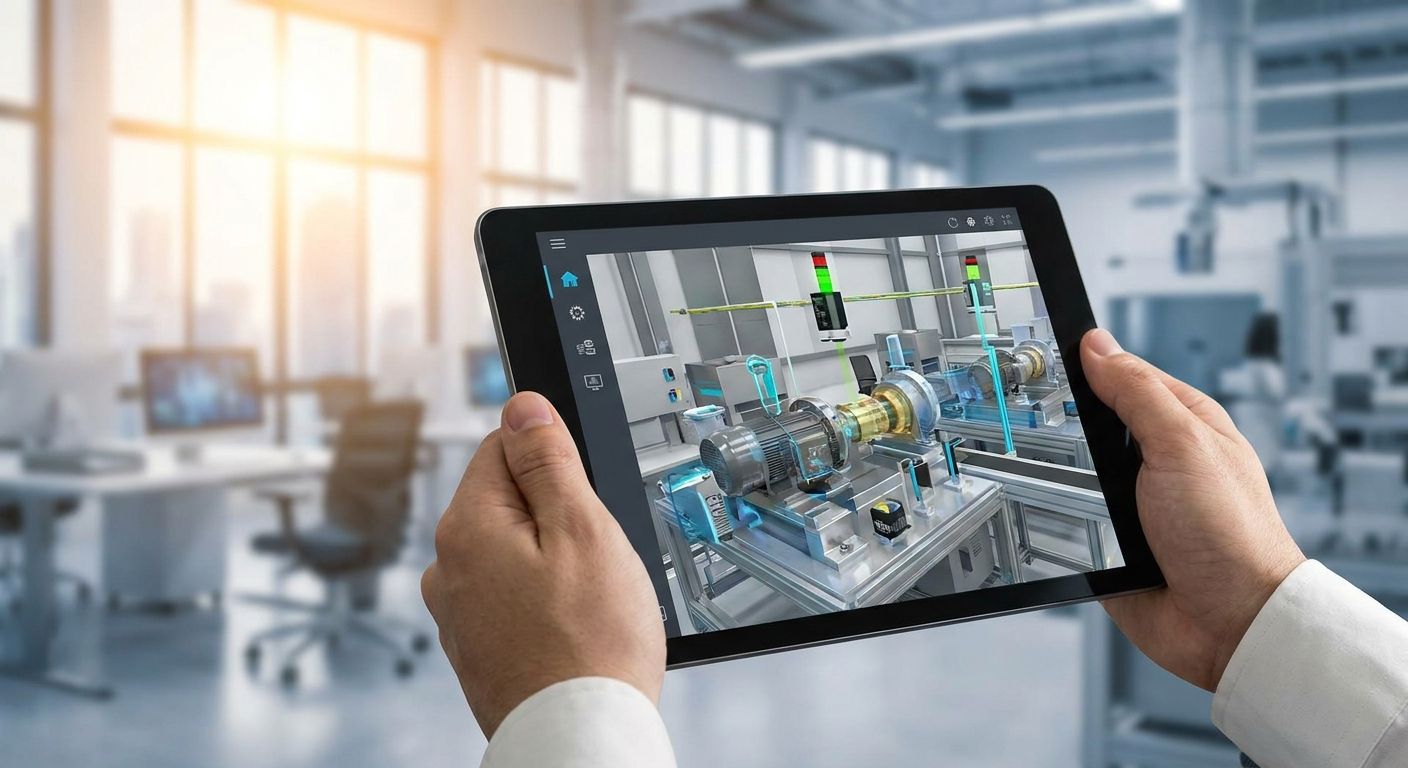
Digital twin software turns live sensor data from industrial equipment into a virtual model you can monitor, simulate, and stress-test before a problem shows up on the plant floor. This guide ranks the platforms and build options worth evaluating in 2026, including when a packaged platform beats a custom build.
TL;DR
- Syndell's custom digital twin software development wins for manufacturers whose equipment mix or data stack doesn't fit a vendor's generic twin templates.
- Siemens Xcelerator is the strongest packaged option for large discrete manufacturers already running Siemens PLM tools.
- AWS IoT TwinMaker is the lowest-lock-in, pay-as-you-go digital twin software option for teams already standardized on AWS.
- PTC ThingWorx handles retrofits on legacy PLCs and SCADA better than most cloud-native competitors.
- Cognite Data Fusion isn't a full twin product — it's the data layer that makes any twin above it actually work.
Why this matters
Industrial teams don't buy digital twin software because it's trendy — they buy it because unplanned downtime, scrap rate, and asset failures are expensive problems that get worse the longer they go unmonitored. A working twin turns a maintenance team from reactive to predictive, which is why predictive maintenance software and digital twin projects usually get evaluated together.
The catch: picking the wrong platform locks you into someone else's data model for years. Picking the right build path — packaged platform versus custom — matters more than any single feature comparison in this list. That's the decision this guide is built to help you make in 2026, not just which logo has the flashiest dashboard.
What makes the best digital twin software
- Real-time OT data ingestion — pulls from PLCs, SCADA, and historians without a fragile custom connector for every asset type
- Simulation depth — physics-based or ML-based models that predict behavior, not just visualize current state
- Integration with existing systems — connects cleanly to ERP, MES, and PLM tools you already run
- Scalability across sites — one model framework that works whether you have 5 machines or 500
- Security for OT networks — segmented access and compliance controls built for industrial environments, not just IT
- Flexibility for non-standard equipment — handles proprietary or older machines a vendor's default templates don't cover
Digital twin software at a glance
| Platform | Best for | Standout feature | Key limitation |
|---|---|---|---|
| Syndell (custom build) | Proprietary or mixed equipment fleets | Model matches your exact data schema | Longer launch than a licensed install |
| Siemens Xcelerator | Large discrete manufacturers on Siemens PLM | Deep product-to-shop-floor integration | Heavy lift if you're not already a Siemens shop |
| PTC ThingWorx | Legacy equipment retrofits | Broad legacy protocol support | Licensing scales per connected asset |
| Microsoft Azure Digital Twins | Cloud-native multi-site deployments | Graph-based modeling across facilities | Code-first, needs real cloud engineering skill |
| AWS IoT TwinMaker | Teams already standardized on AWS | Pay-as-you-go, no big platform license | Thinner physics simulation than Siemens |
| Cognite Data Fusion | Contextualizing fragmented OT/IT data | Cleans and links historian data across sites | Not a standalone visual twin product |
1. Syndell: best digital twin software development for proprietary or mixed equipment
Syndell builds digital twin applications directly from your PLC and SCADA data, then wires the model into your existing ERP or MES instead of forcing your equipment into a vendor's preset asset template. This route matters most when your equipment mix is genuinely non-standard — a blend of decade-old machines and newer sensors that no packaged platform models cleanly out of the box.
Syndell digital twin software pros:
- No vendor lock-in — the model logic and data schema belong to you
- Built around your actual equipment, not a generic industrial asset template
- Integrates with systems already in place, including manufacturing software already running on your floor
Syndell digital twin software cons:
- Takes longer to launch than installing a licensed platform
- Requires an upfront discovery phase to map every data source
- Pricing is quote-based, not a published subscription tier
Best for: manufacturers whose asset mix doesn't fit a single vendor's twin templates.
Verdict: Buy if your equipment or data stack is genuinely non-standard. Wait if you need a working twin in weeks, not months.
2. Siemens Xcelerator: best digital twin software for large discrete manufacturers
Siemens Xcelerator combines Tecnomatix and Mindsphere assets into a single platform that ties product design data to real-time shop-floor telemetry. It's the deepest option on this list if your engineering team already lives inside Siemens PLM tools.
Siemens Xcelerator pros:
- Deep integration between design data and live equipment performance
- Mature simulation library built over years of industrial deployments
- Broad OEM equipment support
Siemens Xcelerator cons:
- Heaviest platform to license and staff if you're not already on Siemens tools
- Steep ramp for teams without dedicated Siemens administrators
Best for: manufacturers already invested in Siemens design and automation tools.
Verdict: Buy if you're already a Siemens shop. Skip if you're starting from zero — the ramp cost outweighs the benefit.
3. PTC ThingWorx: best digital twin software for legacy equipment retrofits
ThingWorx connects to older PLCs and SCADA systems through a wide protocol library, layering a twin model on top of equipment that predates modern IoT standards. It's built for plants that can't just rip out 15-year-old hardware.
PTC ThingWorx pros:
- Strong support for legacy industrial protocols
- Established augmented-reality tie-in for maintenance crews
- Large partner network for custom connectors
PTC ThingWorx cons:
- Dashboard and modeling interface feels dated next to newer cloud-native tools
- Licensing scales per connected asset, which adds up fast across a large fleet
Best for: plants running equipment 10+ years old that newer platforms don't support natively.
Verdict: Buy for legacy retrofits. Hold if your equipment is already modern and cloud-native.
4. Microsoft Azure Digital Twins: best for cloud-native, multi-site deployments
Azure Digital Twins is a graph-based modeling service that represents assets, spaces, and relationships across facilities, built to plug straight into Azure IoT Hub and Power BI. It's the strongest option for enterprises managing many sites on one cloud stack.
Azure Digital Twins pros:
- Scales across many facilities on a single graph model
- Tight integration with the rest of the Azure ecosystem
- Flexible modeling language (DTDL) for custom asset relationships
Azure Digital Twins cons:
- Requires real Azure cloud engineering capacity to configure correctly
- Code-first approach has a genuine learning curve for non-developer teams
Best for: enterprises already standardized on Microsoft's cloud stack across multiple facilities.
Verdict: Buy if you're already deep in Azure. Hold if your team has no cloud engineering bandwidth yet.
5. AWS IoT TwinMaker: best budget digital twin software with low lock-in
TwinMaker assembles digital twins from data sources you already have — video, telemetry, 3D models — without forcing a single proprietary schema, built on top of AWS IoT Core. It's the lowest-commitment entry point on this list.
AWS IoT TwinMaker pros:
- Pay-as-you-go pricing with no large upfront platform license
- Works with data already sitting in your AWS environment
- Visual scene composer usable by non-developers
AWS IoT TwinMaker cons:
- Still requires AWS infrastructure know-how to wire correctly
- Simulation depth is thinner than Siemens or physics-heavy competitors
Best for: teams already running IoT workloads on AWS that want a twin without a new vendor contract.
Verdict: Buy for AWS-native teams. Skip if your use case needs heavy physics simulation.
6. Cognite Data Fusion: best for contextualizing fragmented industrial data
Cognite focuses less on visual twin modeling and more on unifying messy OT and IT data — historians, ERP records, maintenance logs — into one contextualized layer other tools or custom apps can query. It's the fix for teams whose real problem is dirty data, not a missing dashboard.
Cognite Data Fusion pros:
- Strong at cleaning and linking data across disparate industrial systems
- Works well as the data layer under a custom-built twin
- Proven track record in heavy industry and energy
Cognite Data Fusion cons:
- Not a full visual twin product on its own
- Usually needs another layer — dashboard or custom app — built on top
Best for: multi-site operations with fragmented historian and SCADA data that need cleanup before any twin works.
Verdict: Hold as a standalone twin platform. Buy as the data layer feeding a custom build.
Scope your digital twin project
Get a technical assessment of your equipment and data stack before you commit to a platform.
Talk to Syndell
How we ranked these
Each platform above got weighed against the six criteria listed earlier: real-time OT ingestion, simulation depth, existing-system integration, multi-site scalability, OT-grade security, and flexibility for non-standard equipment. Packaged platforms scored well on speed to deploy but lost points on flexibility for proprietary equipment. Custom builds scored the reverse — slower to launch, but no ceiling on how closely the model matches your actual machines.
Which digital twin software should you choose?
If you're already running Siemens design tools across a large discrete manufacturing operation, Siemens Xcelerator is the direct path in 2026. If your equipment is 10+ years old and a packaged platform can't see it, PTC ThingWorx covers the legacy protocol gap. If your team already lives in AWS or Azure, use the native option before adding a new vendor relationship.
If none of that fits — if your asset mix is genuinely proprietary, your data lives across disconnected historians, or a vendor's twin template just doesn't match how your plant actually runs — Syndell's custom digital twin software development is built for exactly that gap. Start with a scoping conversation before you sign a platform contract you can't unwind.
One last thing
Most failed digital twin projects don't fail on the model — they fail on the OT data feeding it. If your historian and SCADA data isn't already contextualized and cleaned, fix that first, whether through a layer like Cognite or a dedicated data engineering pass, before you evaluate any platform on this list. A great twin built on dirty data still produces bad predictions.
Related guides
- Manufacturing software development services
- How to plan legacy software modernization
- Data engineering services for AI-ready growth