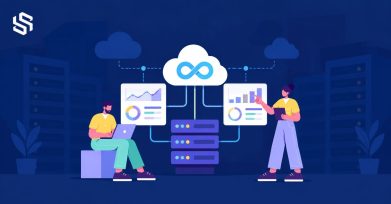
Custom software development for solar companies is the design and build of bespoke platforms that connect sales, engineering, field operations and asset monitoring into one system — shaped around how an installer or developer actually works instead of forcing the business into generic tools. Solar feels this gap more than most industries: a single project moves through site survey, design, permitting, interconnection and commissioning, and then the same company monitors and services that asset for decades.
- Custom solar software connects sales, design, field ops and monitoring in one system.
- Off-the-shelf tools cover CRM and proposals but rarely monitoring and interconnection workflows.
- A focused first build commonly runs $30,000–$120,000; full platforms $150,000–$250,000+.
- Start with one broken workflow — proposals, field ops or monitoring — before a full platform.
Why custom software matters for solar companies
Solar is a project business wrapped around an asset business. Before an array produces its first kilowatt-hour, your team qualifies leads, surveys roofs, models production, pulls permits and waits on utility interconnection. After commissioning, the same company monitors performance, manages warranties and services that asset for 25 years or more. Off-the-shelf SaaS covers pieces of this; the handoffs between tools are where installs stall and margin leaks.
A custom software development partner starts from your workflow rather than a feature list. That matters in solar because the workflow — not the technology — is usually the constraint.
Map your operations before you scope anything
1. Document the project lifecycle end to end
Walk one real project from first inquiry to first invoice and write down every handoff: who touches it, which system holds the data, where it waits. Most solar companies find the bottleneck is not a missing feature but data re-entered between two tools. Deliverable: a one-page map of the current state with the three slowest handoffs marked.
2. Build the monitoring layer early
Commercial and utility-scale arrays can carry dozens or hundreds of inverters and meters reporting every 5–15 minutes. Collecting, normalizing and alerting on that telemetry is a classic IoT development problem: device protocols, time-series storage and threshold alerts that reach the right technician instead of a shared inbox. Tactics:
- Standardize inverter APIs and polling intervals before designing dashboards
- Store raw telemetry and aggregate for reporting, so history survives schema changes
- Alert on deviation from modeled production, not only on downtime
3. Automate proposals and system design
Manual quoting from spreadsheets is where smaller installers lose deals to slow response. Connect production modeling, equipment pricing and financing options into one quoting flow your sales team can run in a single meeting. Tactics:
- Reuse a shared equipment and labor price list across proposals
- Generate the permit-ready one-line diagram from the same design data
- Track quote-to-signature time as the metric that proves the automation worked
4. Digitize field operations
Survey checklists, photo capture, commissioning sign-off and punch lists belong in one mobile app development effort that works offline, because job sites rarely have reliable coverage. Field data should flow straight into the project record rather than through a nightly spreadsheet import.
5. Integrate billing, incentives and reporting
Interconnection paperwork, incentive filings and financing partners each run their own process. Plan the integration work deliberately — pick a system of record per data type and enforce it — then roll pipeline, performance and margin into one reporting view leadership actually checks weekly. Tactics:
- Reconcile installation pipeline against cash flow monthly, not quarterly
- Give operations one dashboard instead of five exports
6. Decide build vs buy with real numbers
| Approach | Best for | Key limitation |
|---|---|---|
| Off-the-shelf solar tools | Small installers who need CRM and proposals this quarter | Workflow rarely configurable; monitoring and interconnection usually missing |
| Custom-built platform | Companies whose process is the competitive edge | Higher upfront cost and a longer runway before value |
| Hybrid (custom layer on existing tools) | Teams with one clearly broken handoff | Ongoing integration maintenance as tools change |
A scoped first build — one workflow, real integrations — commonly lands in the $30,000–$120,000 range. A full platform across sales, operations and monitoring runs $150,000–$250,000 or more. Scope honestly: phase two funds itself only if phase one ships.
Common mistakes solar companies make
- Buying per department. Sales gets a CRM, operations gets a tracker, monitoring gets a portal — and nobody owns the data model that connects them.
- Treating monitoring as an afterthought. Post-install performance data drives warranty costs and referrals; bolting it on later costs more than building it in.
- Ignoring the interconnection reality. Utility timelines sit outside your software's control, so build the workflow around waiting states instead of against them. The Solar Energy Industries Association publishes interconnection data worth reviewing before you scope anything.
- Budgeting only for the build. The asset runs 25+ years; plan for maintenance, schema evolution and new incentive programs from day one.
FAQ
What does custom software development for solar companies include?
It typically covers CRM and proposal automation, system design workflows, field operations apps, monitoring and alerting, and integrations with billing, incentives and utility processes. Scope depends on whether you sell residential installs or operate commercial assets.
How much does custom solar software cost?
A focused first build covering one workflow usually runs $30,000–$120,000, while a full platform across sales, operations and monitoring typically costs $150,000–$250,000 or more. Integration depth and telemetry volume are the biggest cost drivers.
How long does it take to build custom solar software?
A single-workflow build ships in 8–16 weeks. A platform covering sales, field operations and monitoring usually takes 4–9 months, phased so each stage delivers value before the next begins.
Can off-the-shelf solar software be enough?
Yes, for small installers whose main pain is CRM and proposals — several products cover that well. It stops being enough when monitoring, interconnection tracking or multi-team workflows need to live in one system.
What data should a solar monitoring platform collect?
Inverter and meter telemetry every 5–15 minutes, weather-normalized production, fault and event logs, and service history. Store the raw telemetry so future reporting can build on it without re-collection.
Should we build for residential sales or asset operations first?
Build where the bottleneck is. Residential sellers usually feel quoting speed first; commercial operators feel monitoring and service costs first. The operations map from step 1 tells you which pays back faster.
One last thing
The cheapest monitoring upgrade in solar is not software — it is alert routing. Most operators already collect inverter faults; the money leaks because alerts land in a shared inbox instead of reaching the technician nearest that site. Fixing routing inside the first build takes days and typically pays for itself within a quarter.
Related guides