Introduction
Welcome to the world of gaming!
In today’s digital age, mobile gaming has become a popular pastime, and mobile game app development has emerged as a lucrative business. The market is flooded with various gaming apps that cater to different audiences and interests. Whether you are looking to create a gaming app to enter the market or build a gaming app to entertain your users, you need to partner with the right game app development company.
With the increasing demand for mobile game development services, it is essential to find the top mobile game developers who can provide you with the best solutions to create your own game app.
But the question that arises is, how much does it cost to make a game app?
In this blog, we will explore the mobile game development cost breakdown, what tools are used for game development and find out what factors determine the cost of developing a game app.
The development of gaming apps has become the latest trend in the mobile app industry. CTN News reported that during the two-year period when individuals were restricted to their homes due to COVID-related quarantine measures, gaming apps experienced an unparalleled surge in popularity.
Looking to take your web application to the next level?
Know How!
Mobile Gaming now dominates over 50% of the gaming industry market, with no signs of slowing down. This is due to the convenience of smartphones and their easy installation. The cost of developing a mobile game can range from $3,000 to over $1 million, but understanding the game-making process is necessary to determine pricing accurately. These statistics provide insight into the current state of the gaming industry.
8 Steps to Upload An App To Google Play Store?
Mobile Gaming App Market Share and Statistics
Recent statistics have highlighted the significance of mobile gaming app development, including the fact that:
- 25% of iOS apps and 21% of Android apps downloaded are games.
- Gaming apps account for 43% of smartphone usage, with 62% of people installing a game on their phone within the first week of purchasing it.
- Android users comprise 78% of all gamers, and there are over 2.2 billion active mobile gamers worldwide.
- Puzzle games account for 57.9% of all games played across devices,
- Women tend to spend more money on in-game content than men.
Given these mobile gaming trends and user preferences, it is not surprising that Android game app development is on the rise. However, this increase in the number of apps also means that there is more competition in the market, which entrepreneurs should consider when entering the space.
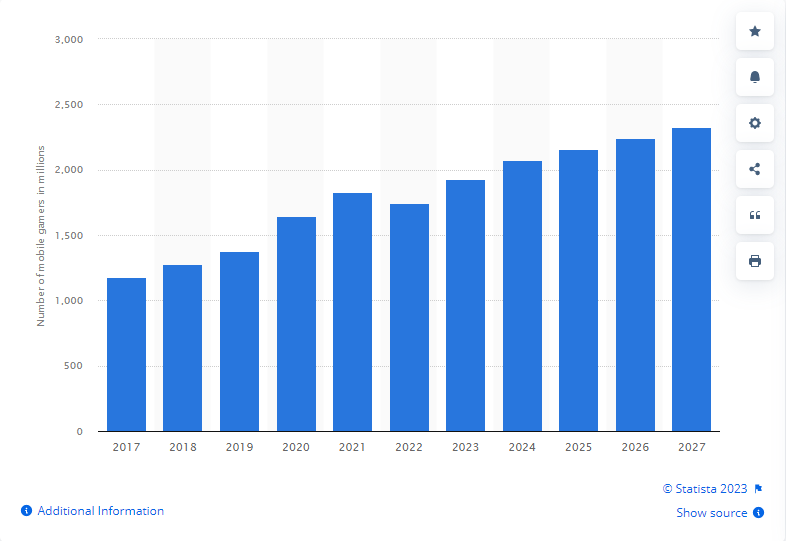
According to Statista, the number of users in the mobile games segment of the digital media market is expected to steadily rise between 2023 and 2027, with an estimated increase of 398 million individuals (+20.67 %). As a result, it is predicted that the total number of users will reach 2.3 billion individuals by 2027.
- It is predicted that the mobile games market will generate revenue of US$41.71 billion by 2022.
- The market volume is expected to grow to US$59.34 billion by 2027, with an estimated annual revenue expansion rate of 7.31% (CAGR 2022-2027).
- By 2027, it is predicted that 182.0 million people will be playing mobile games.
- User penetration is expected to reach 44.9% by 2022 and 52.9% by 2027.
This blog will explore various strategies to make a gaming app successful. The first step towards building a successful gaming app is to choose a game type.
Read More About: Top 15 Mobile Game Development Trends to Watch Out in 2024-26
What is a Mobile Game Development?
Mobile game development refers to the process of creating games specifically designed for mobile devices such as smartphones and tablets. It involves designing and developing games that are optimized for the smaller screens and touch-based interfaces of mobile devices. Mobile game app development software includes various stages such as concept generation, game design, coding, testing, and release.
The Mobile game development process may also involve incorporating various game app development tools and features such as in-app purchases, social media integration, and multiplayer capabilities. Successful mobile game development requires a deep understanding of the mobile gaming market, user preferences, and technical skills to create a high-quality and engaging game.
Dating Apps Development Cost with Features like Tinder App
How Much Does It Cost To Develop A Game App?
Given the popularity of the mobile gaming market, the cost of developing a mobile game is a common concern. Generally, mobile games are developed for the Google Play Store (Android) and App Store (iOS), with costs ranging from $3,000 for basic games to over $1 billion for complex game applications. However, it is important to note that the cost may vary depending on the desired features, design style, testing requirements, and other factors. Game development apps for iOS are typically more expensive than for android game app development software due to features like payment systems and system management. Mobile game development cost breakdown can be categorized into three levels to simplify cost understanding:
| Complexity Level | Development Time | Estimated Cost Range |
|---|---|---|
| Small | 2-3 months | $25,000 – $60,000 |
| Mid Level | 4-6 months | $60,000 – $120,000 |
| High Level | 7-12+ months | $120,000 – $200,000+ |
Our organization is driven by a genuine passion to serve and work alongside individuals. We strive to create value through technology solutions that cater to diverse technical requirements. Our culture is defined by teamwork, mutual respect, and extensive industry expertise.
Our talented team is our greatest strength, empowering us to tackle any computational challenge and exceed expectations. Together, we celebrate a shared commitment to delivering results that exceed our initial projections.
Join us in our mission to make a meaningful impact in people’s lives through innovative technology.
Now that you have a general understanding of the mobile game app development cost, it’s important to explore the various factors that can influence your budget estimation. These factors can have a significant impact on the overall cost of creating a mobile game app.
Note: These are estimated values and the actual cost, time, and complexity can vary based on the specific requirements of the mobile game app.
The hourly rate of the developers is a significant factor in determining the cost of a mobile game. To calculate the cost of developing a mobile game app, you can use the following formula:
Total Number of Development Hours
x
Hourly Rate of Developers
=
Mobile Game Development Cost
Developing a game app involves multiple processes, including analysis, wireframing, quality assurance, and maintenance. The cost of creating a mobile game app is determined by a formula that takes into account various factors, including its complexity. Let’s examine these factors that influence the cost and complexity of mobile game app development.
Want To Develop A Mobile Game App?
Get in touch with syndell for the Mobile Gaming app development.
10 Factors Affecting Mobile Game Development Cost
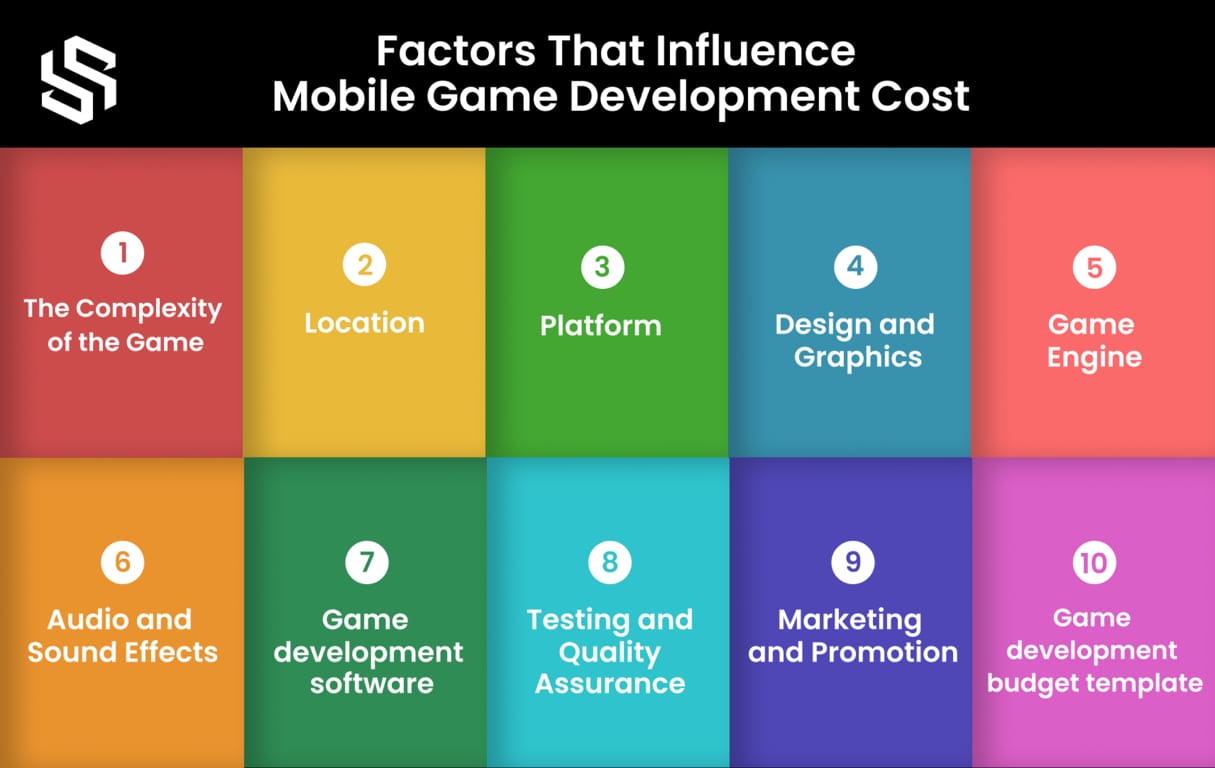
Mobile gaming is an increasingly popular industry, but creating one can be costly. Understanding which factors affect the development costs of mobile games is crucial.
We will examine seven factors that influence the cost of mobile game development, including team composition and time requirements. Mobile games provide hours of entertainment; therefore it’s crucial that developers take all costs into consideration before creating one.
1. The Complexity of the Game:
Complex mobile games often incur more development costs due to their increasing complexity. Games with advanced graphics, complex gameplay, and multiple levels require more time and resources for their creation than simpler titles with basic graphics and gameplay. The game type also plays an influential role in its cost – 3D adventure titles tend to cost more than simple puzzle titles due to additional time and resource needs; cost increases with complexity due to increased time commitment required from both developers and game players alike.
2. Location:
Where your development team is based can also influence the cost of mobile game development. Hiring Mobile app developers from countries with lower costs of living may result in lower overall expenses; however, quality work must still meet your standards to maintain your bottom line.
3. Platform:
A mobile game’s development cost depends on which platform it will be released on. While developing games for both iOS and Android requires different coding languages and tools, optimizing for each can incur additional expenses. Releasing on multiple platforms increases costs as well. In addition, costs may depend on which version is chosen – more advanced versions may require additional resources for their creation.
4. Design and Graphics:
A game’s design and graphics play an essential role in its success, drawing players in with high-quality graphics that capture their interest while providing an engaging play experience. However, designing graphics for games may require extensive time investment as well as extra resources – which in turn may increase game development costs significantly.
5. Game Engine:
A game engine is a software framework that enables game developers to create games. There are various game engines on the market, each offering unique features and functionalities. Your choice of game engine may affect development costs as some require additional resources and time commitment for use.
6. Audio and Sound Effects:
Sound effects and music are integral components of game development, creating an immersive user experience and more engaging gameplay for users. Unfortunately, creating custom sound effects and music increases development costs as developers must hire professionals or license the music and effects from third parties.
7. Game development software
The cost of mobile game development depends heavily on the software used for development. While AAA game development software may be more costly, its advanced features and capabilities could offset that additional expense. Indie game developers may opt for less costly or open-source solutions in order to keep costs at a minimum.
8. Testing and Quality Assurance:
Testing and quality assurance are critical elements of game development. A development team must ensure their game is free of bugs and performs flawlessly across various devices and platforms; costs for testing may differ depending on its complexity and platform support.
9. Marketing and Promotion:
Promoting mobile games effectively relies heavily on marketing and promotion efforts from its development team, including devising a marketing plan and publicizing it via various channels like social media, app stores, or advertisements. Costs associated with such efforts depend on budget allotments as well as chosen promotion methods.
10. Game development budget template
Making a game development budget template will allow you to keep an eye on expenses and stay within your budget, which may help prevent overspending on certain aspects of development and help allocate your resources more efficiently.
The table provides information about how much does it cost to make a video game app, as well as examples of popular mobile games developed in the USA, UK, CA, and UAE.
| Type of Game | Cost Range for Mobile Game Development | Example (USA) | Example (UK) | Example (CA) | Example (UAE) |
|---|---|---|---|---|---|
| Mini-Game | $1000 – $2000 | Finger Driver by Ketchapp | Crazy Freekick by NoxGames | Color Switch by Fortafy Games | Desert Golfing by Captain Games |
| Small Game | $1500 – $30000 | Crossy Road by Hipster Whale | Monument Valley by ustwo Games | Alto’s Adventure by Snowman | Orixo by Logisk |
| Medium Game | $20000 – $60000 | Bloons TD 6 by Ninja Kiwi | Don’t Starve: Pocket Edition by Klei Entertainment | Reigns by Devolver Digital | Shadow Fight 2 by Nekki |
| Large Game | Pokemon Go by Niantic | Pokemon Go by Niantic | Minecraft by Mojang | Clash of Clans by Supercell | Asphalt 9: Legends by Gameloft |
| AAA Game | $2000000 – $5000000 | Call of Duty: Mobile by Activision | Fortnite by Epic Games | Grand Theft Auto: San Andreas by Rockstar Games | Final Fantasy XV: Pocket Edition by Square Enix |
10 Most Popular Types of Mobile Game Development Ideas
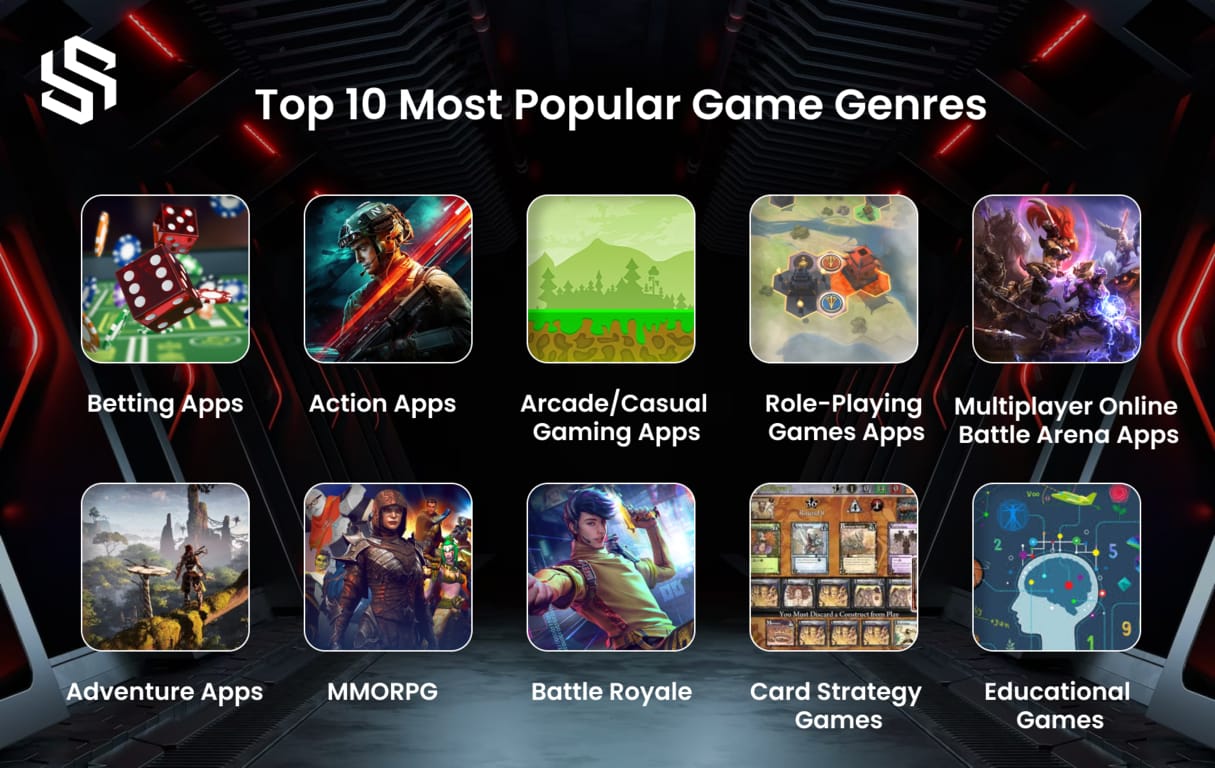
Mobile gaming has quickly become a global trend, with millions of people worldwide enjoying their favorite titles on smartphones and tablets. From casual to complex strategy titles, there is something available for every taste – you simply have to decide!
Here are some of the most sought-after game app development examples:
1. Betting Apps:
Sports betting is a growing trend globally, with soccer and cricket leading the pack. Betting apps are highly active during ongoing matches and are popular for card-based games. Though illegal in some areas, the US has legalized sports betting, increasing demand for developers. Examples of betting apps include Las Atlantis and BetUS.
These apps allow players to place bets on sports and events and offer casino-style games, making them a convenient and favored option for sports enthusiasts.
2. Adventure Apps:
Adventure games on mobile offer virtual world exploration, quests, and puzzle-solving with strong storytelling. Popular titles include Minecraft, The Walking Dead, and Life is Strange. They combine reflex testing and puzzle-solving while following a character or becoming one. Examples include Pokemon GO and The Room: Old Sins.
3. Arcade/Casual Gaming Apps:
Arcade-style games are still popular today with fast-paced action and simple gameplay mechanics. Examples include Candy Crush, Angry Birds, and Temple Run. These games focus on gameplay rather than content and often have short, challenging levels. Other popular examples include Subway Surfers, Fruit Ninja, and Angry Birds.
4. Role-Playing Games Apps:
RPGs are a popular mobile game genre that allows players to create their own characters and go on epic quests in rich fantasy worlds. Examples include Final Fantasy, Dragon Age, and The Elder Scrolls. These games are best for those who enjoy lengthy gameplay with multifaceted stories, multiple characters, and several hours of play. Popular RPG apps include Ragnarok and Dungeons and Dragons.
5. Multiplayer Online Battle Arena Apps:
MOBAs are mobile games that combine action, strategy, and teamwork. Popular titles include League of Legends and Dota 2. In MOBAs, players control heroes and battle in real-time matches to destroy the other team’s base. Popular MOBA apps are PUBG, Arena of Valor, and Mobile Legends. Multiplayer battle arenas are similar but focus more on fast-paced action. Examples include Brawl Stars, Clash Royale, and Arena of Valor.
6. Adventure Games:
Adventure games are immersive and engaging mobile games that take you on a journey through different worlds and storylines. These games usually involve exploration, problem-solving, and decision-making. Examples of popular adventure games include Minecraft, Tomb Raider, and The Sims.
7. MMORPG:
Massively multiplayer online role-playing games (MMORPGs) offer an engaging gaming experience similar to traditional RPGs; however, their worlds consist of millions of virtual worlds where thousands of players can explore together. Popular examples of MMORPGs are World of Warcraft, Final Fantasy XIV, and Guild Wars 2; among many others.
8. Battle Royale:
Battle royale games have quickly gained in popularity thanks to wildly popular titles like PlayerUnknown’s Battlegrounds and Fortnite, both of which place players on a massive map and challenge them to remain the last person standing until one wins outright. These engaging titles offer captivating and highly immersive gameplay that keeps people coming back for more!
9. Card Strategy Games:
Card strategy games are an increasingly popular form of mobile games that combine elements of strategy and luck. In these games, players collect cards that they use in battle against other players – collecting decks can create an in-depth gaming experience even for experienced gamers – such as Hearthstone, Magic: The Gathering Arena, or Legends of Runeterra to name just a few of the more well-known examples.
10. Educational Games:
Educational games provide an entertaining way of developing skills and knowledge while having fun! Popular examples of educational games are BrainPOP, Duolingo, and Khan Academy – three great options that cover various subjects while teaching new ones!
There is an assortment of mobile gaming apps to suit every taste and interest imaginable; whether you prefer fast-paced action games, immersive RPGs, or casual time-wasters there’s sure to be something available just for you. So grab your smartphone or tablet and explore this magical world of mobile gaming!
Top 10 Features of Game App Development
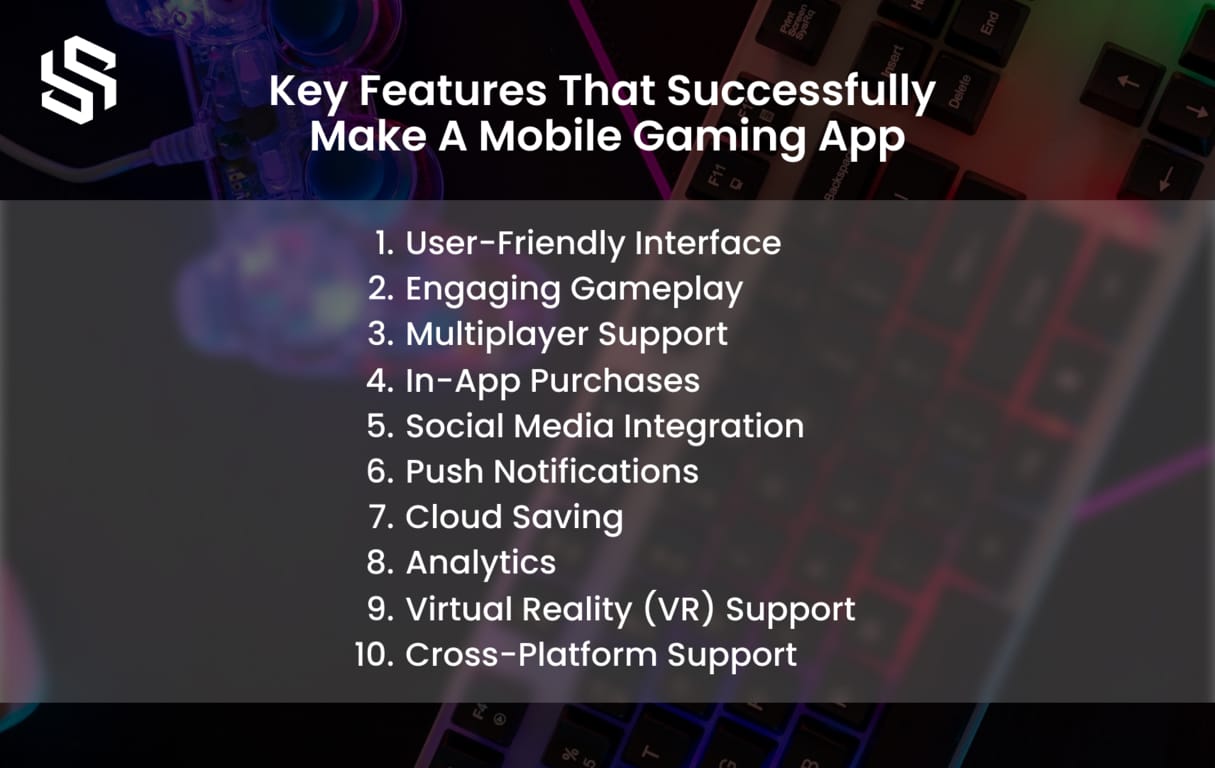
Here are the top 10 features of game development apps for beginners that can make your game app stand out from the rest:
1. User-friendly Interface:
The first feature of any game app should feature an intuitive user interface. Users should quickly grasp its mechanics upon beginning playback of the game.
2. Engaging Gameplay:
Engaging gameplay is at the center of any great gaming app. A truly great app should offer engaging, addicting play that keeps users engrossed for hours on end. A compelling narrative should come alive through engaging levels that provide appropriate challenges – none too easy or too challenging!
3. Multiplayer Support:
The ability to play with friends and other players is a great way to keep users engaged. Multiplayer support can be in the form of online gaming, local multiplayer, or even split-screen support.
4. In-App Purchases:
In-app purchases can be the best way to monetize a game app. Users can buy virtual goods and currency, or access premium features in your game app through this type of in-app purchase. But they should not be too intrusive – users should feel comfortable enjoying the game without feeling forced to make purchases.
5. Social Media Integration:
Integrating your game app with social media is a great way to promote it and boost its visibility. Users can share their achievements, and high scores and invite their friends to the game; all this helps increase user engagement and retention rates.
6. Push Notifications:
Push notifications can be a great method to engage people and keep them informed about critical updates, events, or promotions. However, push notifications must be utilized cautiously, only sending vital messages with important news updates.
7. Cloud Saving:
A great feature that enables players to store their game progress and game data on the cloud is cloud saving, ensuring that users can play from any device without losing their progress or data.
8. Analytics:
Analytics can provide valuable insight into user interaction with your game app. By offering insights into user behavior, retention, and engagement levels it allows you to make data-driven decisions to enhance the user experience and enhance customer loyalty.
9. Virtual Reality (VR) Support:
Virtual Reality (VR) support can enhance any gaming experience by creating an immersive first-person perspective experience – particularly suitable for racing or shooting games.
10. Cross-Platform Support:
Offering cross-platform support can expand the reach of your game app, giving users access to it across different devices – like smartphones, tablets, or gaming consoles – thus increasing player engagement and retention.
How to Develop a Mobile Game App Successfully?

Mobile gaming is a thriving industry, with millions of people worldwide playing games on their cell phones on a daily basis.
Although partnering with an iOS or Android app development company that has a dedicated team for game development can be beneficial, it’s also important to understand the strategies that can lead to a successful mobile game app.
App game development life cycle involves more than just technical abilities; it also necessitates a thorough understanding of user behavior and preferences.
Here are 7 key steps to creating a mobile game app that is both engaging and profitable:
1. Build an idea:
Every successful mobile gaming app begins with a brilliant concept. Consider the type of game you want to make and the audience you want to reach. Do you want to make a puzzle, platformer, or action game? Who is your intended audience – casual gamers, hardcore gamers, or something in the middle? Once you’ve decided what you want to make, you can start planning out your game mechanics and design.
2. Build a story:
A key aspect of any successful mobile gaming app is the ease of use for its players. They should be able to jump straight into playing your game without feeling confused or overwhelmed; make sure that its game mechanics are intuitive so players can navigate easily between menus and controls.
3. Keep it intuitive:
One of the most important aspects of a successful mobile game app is its ease of use. Engaging players and cultivating a dedicated fan base are paramount. Add rewards, achievements, and leaderboards as additional incentives for people to keep playing and compete against one another in this manner.
4. Make it addictive:
Engaging players and building a devoted following depend on creating addictive games. Consider adding elements like rewards, achievements, and leaderboards that encourage players to keep playing and compete against their friends in your gaming community.
5. Enjoy an Exquisite Design:
A well-designed game can make an enormous impactful statement about its creators’ commitment. Be sure that its visuals are appealing and eye-catching, as well as cohesive in design – paying particular attention to fonts, colors, animations, and mobile device optimization.
6. Have a monetization strategy:
Even while designing an engaging game is essential, having an effective monetization strategy in place is equally vital. There are various approaches available for mobile game apps to monetize themselves: in-app purchases, ads, and subscriptions are among them. Choose one that best fits your game and target audience before integrating it seamlessly and without disruption into your app’s design.
7. Build an MVP first:
Finally, it is key to start small by creating an MVP (minimum viable product). This will give you a chance to test game mechanics and gather user feedback before investing too much time or money in development. Once your MVP is complete, additional features and polish can be added until it’s ready for launch.
These seven factors are crucial to creating a successful gaming app, but it is also crucial that when building one you also consider its tech stack in the backend.
Looking for an accurate cost estimate for your own gaming app idea?
We can provide you with precise estimates based on the scope of your project!
How to Hire Custom App Developers: An Ultimate Guide
Conclusion
The cost of developing a mobile game app depends on the type and category of game you choose. If you plan to develop high-end AAA titles or games with advanced features like multiplayer, maps, and voice integration, the cost will increase. Ultimately, the cost will depend on your business requirements, but it’s important to ensure you’re getting high-quality work for the price you pay. Before choosing a mobile game development company, it’s essential to review different options to find the best fit for your needs.