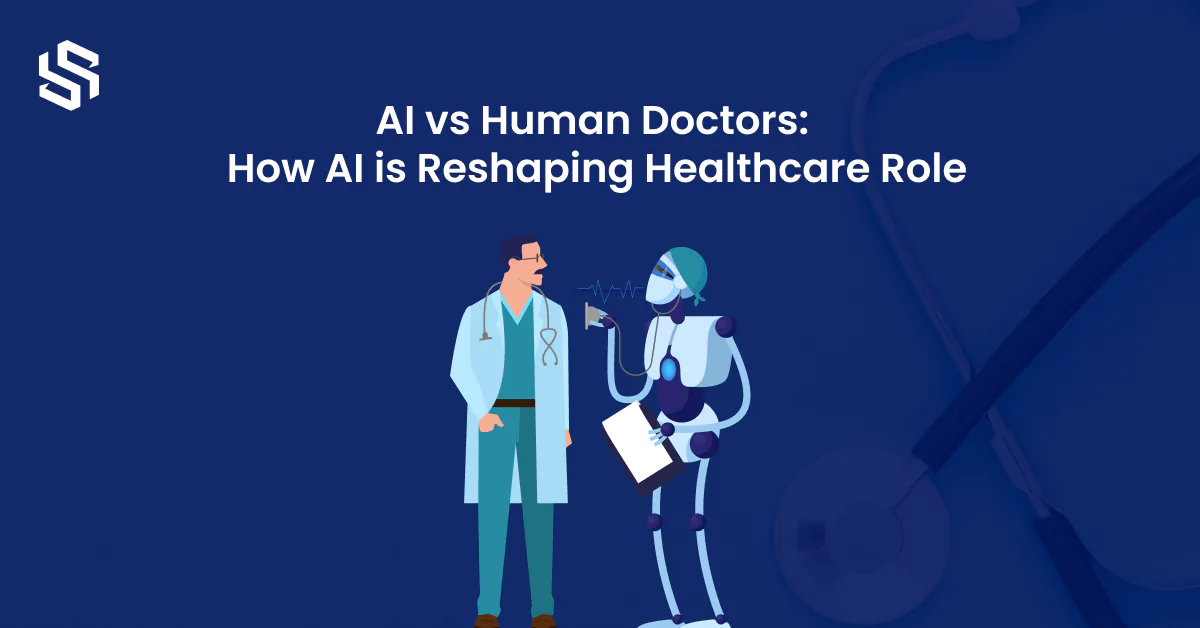
Across the quiet corridors of hospitals and clinics all over the world, an algorithmic transformation is taking place. There has been a noteworthy development in the field of artificial intelligence – its applications in the medical field have emerged, developing challenging clinical policies and patient care paradigms cultivated over centuries. The predominant question that used to roam the minds of many, whether AI in healthcare would transform medicine, has already been answered. Instead, people are now concerned with the degree to which the kunta-he glob, DNA medicine, will triumphs us is turns, ai the transformations towards healthcare in those blades hands mnsh grid muggle healing thier us human harts.
This global healthcare developmental anxiety allied internationally this(relatively) radical innovation that has elevated both expectant enthusiasm and escalating panic. As we analyze the complex interplay of artificial intelligence and healthcare, there is a critical issue to answer: Will AI technologies replace doctors, or will they serve as the finest tool for collaboration, augmenting human functions but upholding the unique, humane touch in caregiving?
The Current State of AI in Healthcare
From Research Labs to Clinical Practice
The use of artificial intelligence in healthcare has significantly evolved from being a field of experimental research to being implemented in practice. Healthcare facilities globally are increasingly adopting AI in healthcare industry technologies into clinical workflows, completely altering the methods of examination, treatment, and management at all levels.
The example of AI in the healthcare industry is revealing. Its astonishing growth rate suggests that the global market for AI in Healthcare will exceed $100 billion by 2028. This increasing rate of growth also shows how greatly the healthcare industry values AI development agencies in solving its persistent issues and innovatively enhancing patient care.
How is Generative AI used in the Pharmaceutical Industry? – A Complete Guide
Bridge the Gap Between AI & Human Doctors for a Future-Ready Healthcare System.
TALK TO AN EXPERT!
Key Areas Where AI Is Making a Significant Impact
Medical Imaging and Diagnostic Help
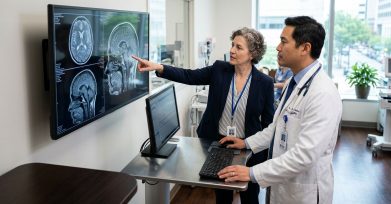
The first domain of AI in healthcare application that comes to mind is probably diagnostics, more specifically, medical imaging. Each year, the scope of artificial intelligence development increases, and the algorithms created to solve a given scope can analyze almost every single radiological image with the same or even greater accuracy than humans when it comes to identifying the problem.
With AI development, systems now routinely screen through X-rays, MRIs, and CT scans. They flag many areas of concern that need be paid attention to by the radiologists. These systems tend to screen over patterns that are undetectable to even some highly skilled experts, such as early form signs of breast cancer in mammograms or mellower forms of intracranial hemorrhages in brain scans.
AI for the healthcare world has advanced in many other fields. Assistive dermatology is one. With the advancement of deep learning algorithms, it is possible to analyze images of skin lesions. It becomes easier for dermatologists to differentiate between a benign condition and a malignant one. Some deep learning artificial intelligence development has matched the skills of board-certified dermatologists when it comes to analyzing, classifying different skin cancers through images.
Support for Clinical Decisions
In addition to imaging, AI in the healthcare industry is changing the practice of clinical decision-making in all medical fields. AI development agency-powered clinical decision support systems (CDSS) use computer algorithms to evaluate complex data from multiple patients quickly and accurately. An extensive number of patient data, which includes a patient’s entire medical history, the results of all laboratory tests, relevant family predispositions, medicine records, and many more, can be put together, and the generated insights can significantly aid in decision-making for physicians.
Such systems excel at identifying sophisticated patterns and relationships, especially within complex situations that are beyond the scope of human capabilities. For instance, predictive health models can help predict which patients are likely to make progress toward life-altering diseases like sepsis, thus enabling timely preventive intervention.
Administrative Efficiency and Documentation
Over the past few decades, the administrative load in healthcare has increased significantly. Physicians now spend almost fifty percent of their working hours on documenting information and managing electronic health records (EHR). Healthcare AI solutions are beginning to transform this area with developments in medical transcription AI and medical scribe AI.
Medical AI scribes can precisely document every patient interaction that takes place during an appointment in the EHR. This enables physicians to optimize their direct interactions with patients, thereby improving patient satisfaction and the quality of care provided to them.
The Comparative Strengths: AI vs. Human Doctors
AI’s Undeniable Advantages
Processing Power and Pattern Recognition
AI frameworks surpass the level of thinking and reasoning an individual can perform in set areas such as computational power and pattern recognition. In contrast to what AI in the healthcare industry does, the human brain is more holistic and general in scope. AI development systems have very specific functions, including analyzing large datasets, identifying patterns, and executing tasks.
The ability of an individual artificial intelligence development system is unparalleled. AI systems can process millions of medical imaging files alongside patient records and logs to reveal patterns that, with the aid of human specialists, would take years to unearth manually. AI for health systems can identify early precursors of diseases that remain undetected by human clinicians because of the amount of processing that they are capable of.
Freedom from Cognitive Biases and Consistency
The liberation from cognitive biases, emotional influence, and tiring judgement are the primary attributes human clinicians usually have to deal with. Rather, depending on the level of exhaustion, strain, and various emotions, physicians often alter their decision making. These biases can be detrimental in complicated sick areas and can impact care quality.
AI Development Services Systems, on the other hand, deliver reliable results irrespective of the time, activity, or other external factors. They exert the same level of scrutiny regardless of whether it is the first patient of the day or the last patient during an exhausting overnight shift.
This lack of certain human decision-making cognitive biases is equally influenced by overconfidence bias, availability bias, and post-event anchoring effects. Experienced clinicians can still fall prey to these biases. When designed and validated properly, AI in healthcare systems is capable of assisting to balance those human tendencies.
The Learning Curve: Continuous Improvement
Modern AI Development systems, especially those designed with deep learning architectures, become better with more data. Unlike human physicians who, after years of practice, may have severely diminishing returns on experience, AI in the healthcare industry can consistently improve their performance with case analyzing.
Healthcare organizations utilizing Artificial Intelligence and Healthcare have observed this trajectory in healthcare systems. Initial deployments have had decent but not outstanding performance. However, accuracy continuously improves with patient data being processed.
The Integrative Traits of Human Doctors
Emotional Intelligence and The Therapeutic Relationship
Alongside fortifying their medical expertise, doctors have had to integrate emotional sensitivity into patient care throughout history. It is the true essence of humanity in medicine that builds trust and cultivates relationships. This bond will always be more than the exchange and processing of medical information – this alliance is a partnership with innate healing properties that yield results beyond treatment or procedural interventions.
Bringing Emotional Intelligence is one of the greatest strengths of human doctors. A doctor meets a patient and already interprets body language, identifies underlying emotions, and interacts accordingly. There is a level of sympathy, affection, and human interaction that no matter how sophisticated an AI Development Agency builds a Conversational AI for Healthcare, systems and robots will never be able to provide.
This ailment dimension elicits clinical results in patients in ways we are only beginning to understand clinically. Healthcare providers who offer complete emotional and respectful support to their patients and empower them to participate in the treatment process tend to yield better compliance with controlling various medical conditions.
Ethical Judgment and Value-Based Decisions
In Medical Practice, the physician implements intricate ethical reasoning that cannot be derived from statistics or pattern recognition. Numerous competing priorities require complicated value-based trade-off decisions that are not solved within an algorithm.
Reflect on decisions regarding care during a patient’s final days. It involves a harmonization of family relationships, culture, patient’s quality of life, and personal preferences. Human doctors can carry out sensitive and deep dialogues about private life issues using moral reasoning and ethics to navigate quite complicated dilemmas.
Health AI systems can highlight ethical issues as well as provide support for decisions, but given the context, they do not possess moral agency, which makes them incapable of autonomous ethical reasoning relating to complex clinical situations.
Originality and Creative Solutions
Complex medical cases can arise that do not have corresponding solutions in textbooks, data used for training, or resources available. A variety of unusual presentations of symptoms, abnormal variants of diseases, and unexpected responses to treatment all challenge the conventional approaches to problem-solving.
Clinical diagnosis involves multidisciplinary knowledge, and human physicians are regarded as outstanding adaptive thinkers, actively drawing upon this deep well of knowledge and establishing remarkable links between it, as well as with many unique clinical scenarios. Their ability to reason by analogy, diverse application of concepts to dissimilar domains, and improvisation when protocols are inadequate places human doctors in a class of their own.
When treating patients with several comorbidities, non-standard genetic compositions, or psychosocial factors that impact health, adaptability becomes essential. All of these conditions require different types of integrative reasoning and relayed expertise, things that are, at least for the time being, beyond the scope of AI in the medical field.
“Stay Ahead with AI in Healthcare: Enhance Efficiency, Accuracy, and Patient Satisfaction.”
Get Started Today!
The Emerging Complementary Model
From Competition to Collaboration
The emergence of a new model that integrates AI in medicine is informed by the unique contributions of human clinicians, with the assistance of AI operating in healthcare. A shift toward a more synergistic approach is observed in leading healthcare institutions AI is viewed as a technology to be thoughtfully integrated into existing systems: creative work that needs human intuition.
The goal to harness the utmost potential of AI and take healthcare services to the next level is achieved by complementing human intelligence with machine intelligence. Firstly, AI services, particularly in Healthcare AI, where granular including swift data processing and automated pattern recognition in complex datasets are executed, while human management is needed for judgment-based, emotional care-related decisions, and highly novel clinical situations.
Real-World Examples of Successful Human-AI Partnerships
Several forward-looking healthcare organizations have built and succeeded in implementing this model:
- At the Mayo Clinic, cardiologists work hand in hand with AI-powered ECG pattern detection algorithms. AI algorithms attempt to unveil patterns of heart diseases masked in ECG data. Cardiologists provide interpretations of the relevant clinical data within the framework of caring for the patients so that critical heart rhythm disturbances can be treated promptly.
- In collaboration with IBM, the Memorial Sloan Kettering Cancer Center has embedded Watson for Oncology’s generative AI in healthcare along with the other basic functions of analyzing patient files and relevant medical literature to devise suggestions for treatment to be adjudicated by the physicians in their clinical wisdom
- In primary care scenarios, physicians utilizing documentation powered by medical scribe AI express that they have greater levels of patient contact and less administrative work, which, if accurate, could positively impact the quality of care and job satisfaction.
The “Augmented Clinician” Concept
Healthcare may belong to what some experts refer to as the “augmented clinician,” an integrated healthcare approach where human capabilities are augmented with artificial intelligence and healthcare systems. This model maintains the physician’s pivotal position with technology that aids in overcoming human operational limits.
The augmented clinician exercises direct control over a patient’s clinical decision while making use of insights generated by AI in the healthcare industry that would not have been available otherwise. They preserve the important relationship with patients but automate repetitive and computationally intensive work to AI development services systems.
AI Healthcare Solutions: Enhancing Patient Care & Hospital Management
Challenges and Issues in Adopting AI in Healthcare

More Technical Issues and Challenges
Data Quality and Bias of an Algorithm
The AI development companies in question will never function appropriately due to the flaws presented in the vast amounts of data available. Collection of healthcare data and information comes with problems such as its storage in different silos, its structure, and the biases created due to past care services.
Algorithmic bias is a major and serious concern. The artificial intelligence in a healthcare system will always lead to either repeating or increasing existing healthcare disparities due to biased training data. As an instance, some portions of the population might be poorly served by the algorithm’s predictive magic if healthcare algorithms trained on a certain population (model) are unfavorably tested on a population that is insufficiently represented.
Diverse population validation, continuous surveillance monitoring, transparent reporting for training data composition, and maintenance of gaps across demographic parameter groups are the necessary tools to resolve the matter.
Integration With Previous Health Systems
The organizational structure of health IT is extremely intricate. There are numerous operational and technical issues relating the clinical steps and procedures to the entire system. These issues arise from the need to embed AI development agency technologies into electronic health record systems into clinical workflows, and organizational processes.
Turning strategy into action succeeds through meticulous user experience design, workflow analysis, and change management approaches. Tools like AI in the healthcare industry are met with skepticism by providers already bogged down with clinical work due to technology fatigue when these tools are forced upon clinical routines with little to no perceived value.
Professional and Labor Issues
Evolving Roles and Skill Needs
Changes to traditional medical tasks by artificial intelligence and healthcare require a shift in identity and skill set for healthcare workers. Changes in medical education will need to occur to train more clinicians to interact seamlessly with AI development services systems as they become mainstream.
These shifts may prompt physicians to acquire new competencies in data analysis, algorithm auditing, and general technological knowledge. At the same time, this provides the opportunity to reimagine the practice of clinical medicine by integrating AI development—creating positions that merge the technical with the care of patients.
Queries Regarding Liability and Responsibility
The inclusion of AI in healthcare systems into clinical decision-making raises questions of responsibility and liability. Who is liable if a recommendation made by an artificial intelligence development system leads to a negative outcome for the patient? Is it the physician who opted for the recommendation? The health care facility that put the system into operation? Or the developers of the algorithm?
Most of these questions have not been answered, legally or ethically, which creates an inbuilt ambiguity that may hinder the spread of technologies that are promising to be beneficial.
Patient Acceptance and Ethical Concerns
Trust, Human Touch, and the Blend of Both
Patients have expressed concerns over losing the human element in care due to AI in healthcare industry augmentation. While many patients are open to innovations that enhance the accuracy of diagnosing or treating ailments, they tend to resist changes that move care beyond direct human interaction with the provider.
Patient perceptions research paints a complex picture where patients appear to be supportive of AI for health, at least when it comes to data processing or increasing administrative efficiencies. However, they seem to reserve the harshest criticism for artificial intelligence in healthcare algorithms that take over crucial decision-making roles or reduce the time patients spend with physicians.
Privacy and Research Data Security
In order to set up any AI development agency, a great deal of sensitive patient data needs to be collected. This raises suitable concerns regarding privacy and data safety. Patients are concerned about who has access to their data, how it will be used, and if it is protected from breaches and misuse.
The worries regarding the protection of sensitive health information become more acute with the shift from traditional medical and healthcare facilities’ moving to a cloud, third-party, or AI business-sponsored– think of it as an “ecosystem” – hosting. Patients trust care providers and technology partners only when there is responsible engagement with communications about data practices and security, including how data is utilized and safeguarded.
“AI-Powered Healthcare Solutions: Elevate Patient Care with Cutting-Edge Technology.”
Schedule A Consultation!
Top AI Development Trends Businesses Must Watch in 2025
The Future of AI: New Avenues With Topical Trends

AI-Driven Personalized Medicine
The tailoring and customizing of treatment regimens to factors such as the patient’s genetic makeup, specific biomarkers, lifestyle, and environmental factors are known as Personalized Medicine. Mergers of the “artificial intelligence development” and healthcare fields have overshot remarkable achievements in personalized medicine.
Healthcare systems with incorporated AI perform remarkably well in discerning intricate relationships within complex, multidimensional datasets. As a result, there are and potentially will be greater custom treatment recommendations for patients according to their distinct attributes. This approach represents and strives towards the previously held model of traditional medicine, which was centered around population-based treatment guidelines.
The possibilities in oncology are expansive. Systems for AI for health that study the genomic data of tumors can potentially optimize results by identifying patients who will most likely benefit from specific targeted treatments while minimizing the need for other therapies and their costs, side effects, and complications.
Remote Monitoring and Preventive Care
The combination of artificial intelligence and healthcare has great potential, especially with remote monitoring techniques applied to chronic disease management and preventive care. The application of AI development services algorithms to data from wearables, smartphones, and home monitoring devices enables the detection of even minor patient status changes, which, if not addressed, could progress into major health issues.
Consider, for instance, AI applications in healthcare: systems developed for the at-home monitoring of heart failure patients can perhaps allow for decompensation detection through changes in weight and activity, among other parameters, facilitating early intervention and the avoidance of hospitalization.
These possibilities could help address the issues relating to the dominant unsustainable model of health systems, which are based on responding to crises, moving towards a more proactive and preventive model that tackles health problems head of time before they escalate into serious and more expensive problems.
Enhancing Healthcare Accessibility with AI
AI development agency Tools are particularly useful in the context of expanding healthcare access to underdeveloped areas with a shortage of physicians. While artificial intelligence development cannot take over the role of medicine in a patient’s comprehensive care plan, it can augment clinical functions in places where specialists are lacking.
In low-income or developing areas where healthcare facilities are scarce, AI in healthcare can enable remote diagnostics and help general practitioners detect problems for diagnosis and management that would require a higher level of specialized knowledge and skills. Mobile AI in healthcare applications makes sophisticated diagnostic tools available through smartphones or other portable devices.
This public access to medical skills has the potential to mitigate healthcare inequality, but attention needs to be paid to context, cultural considerations, and existing systems of care.
Navigating the Path Forward
Governance and Ethical Boundaries
With the further development of generative AI in healthcare, strong ethical and governance policies must be established. Several principles have emerged to guide responsible AI development and implementation in healthcare:
- Accountability: Responsibility for AI in healthcare industry decisions must be traceable, with the primary burden of accountability lying with a human healthcare professional selected.
- Fairness: AI for health systems should be implemented and tested to ensure they perform the same across varying demographics with automated disparity detection in place.
- Privacy: Data collected from patients to enable the functioning or training of artificial intelligence and healthcare systems should be subjected to due protection, consent, and security protocols.
- Beneficence: AI development services should focus on the enhancement of patient outcomes and well-being instead of profit or operational efficiency.
These principles demand the formulation of policy structures such as rules on clinical validation, guidelines on longitudinal evaluation of performance, and protocols on the analysis of negative incidents related to AI in healthcare industry technologies.
Reinventing Medical Education
- The field of medicine must adapt to adequately prepare clinicians for collaboration with AI development systems. Adaptations to future training will need to include:
- Evaluation of AI performed within the bounds of the healthcare system and the tool’s outputs
- Recognition of algorithmic advantages and disadvantages
- Bias or failure mode identification for recommendations from an AI development agency
- Insights generated by conversational AI in healthcare communications with patients
- Clinical reasoning preservation while utilizing powerful decision support tools
This evolution requires multidisciplinary approaches to curriculum design, including data ethics, human-computer interaction, and even beyond the scope of traditional medical education.
Patient Engagement And Education
Increasing the use of AI in healthcare places a greater emphasis on the need for patient education. There is a need for patients to know:
- The point at which artificial intelligence development ADI constitutes their care.
- System-influenced decisions and workflows.
- Decisions and oversight are performed by humans.
- Rights revolving around data privacy and algorithmic disclosure
Healthcare organizations leveraging AI for health should focus on developing effective communication protocols that help the patients understand the technologies without causing panic or a breach of trust with the care providers.
Conclusion: Future Intertwined in AI and Human Healthcare
The intertwining of artificial intelligence advancement and human healthcare providers is not a zero-sum scenario. The best possible future for health care does not lie in AI in healthcare systems replacing human physicians, but rather in intelligent collaborative synergies that leverage the unparalleled abilities of each of them.
AI development services can handle enormous quantities of data, detect minute details of patterns, and provide unbiased analysis regardless of the time since their last evaluation. The human clinician has requirements that entail contextual, ethical, and empathetic understanding, as well as flexible reasoning and solution crafting skills. Together, they offer abilities in healthcare delivery that neither can perform singly.
While on this journey, we must ensure to keep focusing on the patient’s physical, social, and psychological health as the primary target and not as a resource—refocusing attention toward the technology for the sake of technology, for example. The answer to the challenge of artificial intelligence and healthcare should reflect performance measures such as outcome attainment, the ability to access care, and the capability to be provided and operated within organic frameworks.
“Transform Healthcare with AI: Smarter Diagnostics, Faster Treatment, Better Outcomes.”
DISCOVER MORE!
Syndell Overview
Syndell, a major web and mobile app development company, offers customized services as per your requirements. We take pride in having an unmatched software development team with a dedicated 50+ member staff who work tirelessly to build your brand’s digital identity, all within 9 years of operation in the field.
Within the scope of AI development services, Syndell assists healthcare providers in incorporating modern technologies in artificial intelligence development that enhance clinical functions while still maintaining the care components of an AI. The way Syndell operates as an AI development agency consolidates attention to enhancing human potential and not replacing it. Hence, technology used for healthcare should be created to assist people, not the other way around.
Call us today to find out how our AI development knowledge can assist your organization in improving patient results, operational efficiencies, and adapting to the future of healthcare. Get in touch with our experts for personalized support.