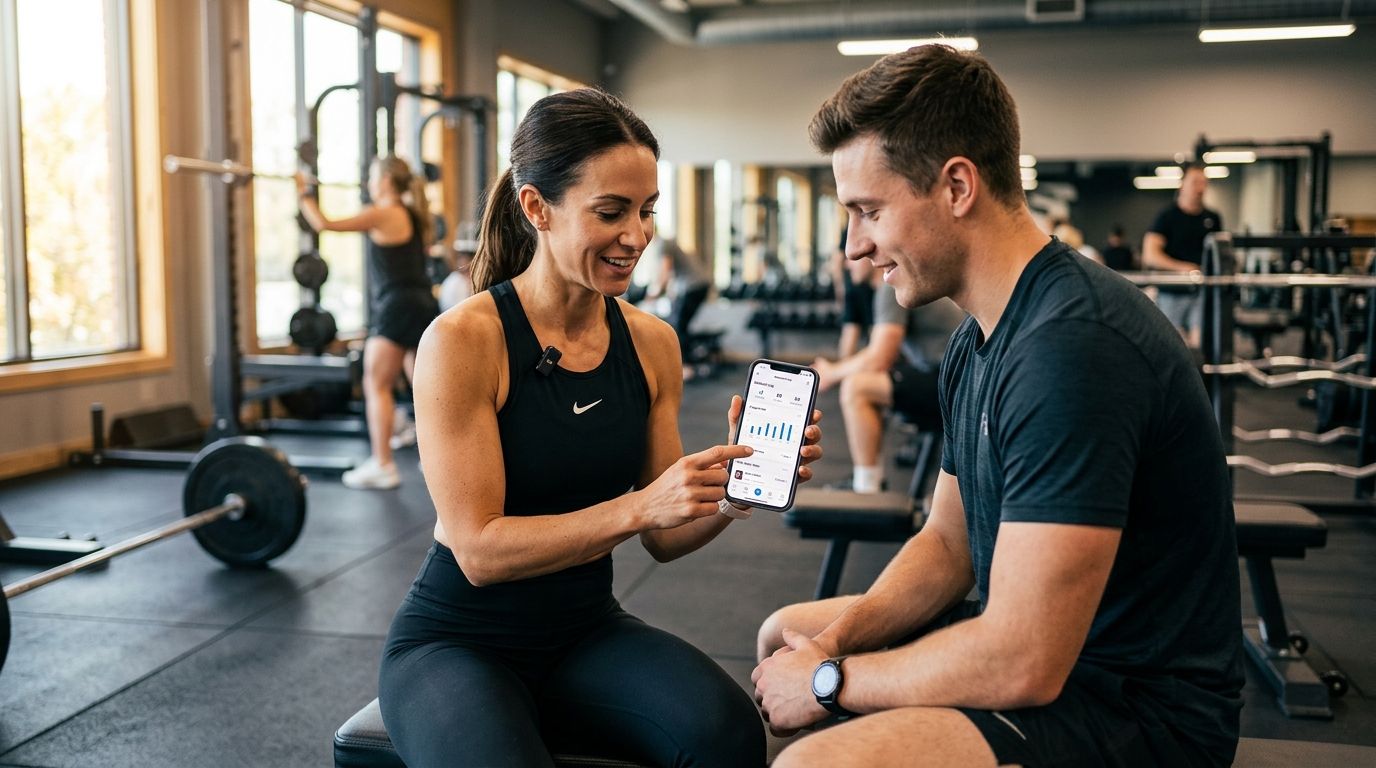
Fitness app development for gyms and personal trainers means building a branded mobile app that handles class booking, workout delivery, payments, and member engagement — with the aim of lifting member retention and revenue per member. Off-the-shelf gym software covers the back office; a custom app covers the member experience, where retention is actually won.
TL;DR
- A custom fitness app puts booking, workouts, payments, and engagement in one branded member experience.
- Off-the-shelf gym software starts faster but caps differentiation and locks up your member data.
- Budget decisions hinge on scope: booking-first apps cost less than AI coaching or wearable features.
- Choose a partner that shows real fitness and wellness work, not just general app experience.
Why fitness app development matters for gyms and trainers
Membership churn is the margin killer in this business. A member who books classes, tracks workouts, and pays inside your app touches your brand several times a week — the same member who only shows up occasionally is one price comparison away from leaving. In 2026, members also expect wearables to sync, plans to adapt, and trainers to be reachable in-app.
For gym owners and independent trainers, the decision is no longer "do we need an app?" but "do we build one branded to us, or keep renting someone else's?" If you are weighing that, start from the business case the same way you would for any custom software development investment: what retention or revenue change pays for it?
What a custom fitness app should do
Members book, pay, and check in
Class schedules, waitlists, package purchases, and check-ins form the daily-use core. Gyms that already use a booking tool know this works — the question is whether it lives inside your brand or inside a marketplace's app that also advertises your competitors.
Workouts, coaching, and progress
Trainers need to assign plans, log results, and message members. Members need video guidance and visible progress. This is the layer where custom builds beat templated software, because your training methodology — not a vendor's template — becomes the product.
Retention features that pay for the app
Streaks, milestone badges, leaderboards, and win-back campaigns for lapsed members. Done well, these features reduce the number of members who quietly cancel. AI features such as adaptive workout plans or form feedback are realistic in 2026, but they need member data and a clear use case before they earn their cost.
Build vs buy for fitness businesses
| Option | Best for | Key limitation |
|---|---|---|
| Off-the-shelf gym software | Single-location gyms that need booking and billing fast | Little brand differentiation; vendor controls data and roadmap |
| Custom member app | Multi-location gyms, studios, and trainers selling methodology | Upfront investment; requires a disciplined discovery phase |
| Hybrid (keep admin software, add branded app) | Owners who want member-facing control without replacing operations | Two systems to integrate and maintain |
Most growing operators land on the hybrid row first: keep the billing engine you trust, add a branded member app on top, and consolidate later if it makes sense.
How to choose a fitness app development partner
- Review their fitness and wellness portfolio. A team that has shipped booking flows, membership logic, and health-adjacent apps will anticipate questions you haven’t thought of. Compare that against guides such as how business leaders choose Flutter for cross-platform apps — platform choice matters less than domain fluency.
- Ask how they handle integrations. Your app will need to talk to payment processors, door-access systems, and possibly wearables. A partner should name the integration work in the plan, not discover it mid-build.
- Insist on a discovery phase before a quote. A serious partner prices scope after understanding your member journey, not before.
- Check who owns the code and the data. You should own both. Wellness-adjacent apps carry extra sensitivity — the privacy bar is closer to what teams building a mental health app plan for than a typical consumer app.
- Plan for lifecycle, not launch. Ask what post-launch support looks like: OS updates, new device support, and feature iterations.
Common mistakes gyms make
- Copying a competitor’s feature list. Your members’ habits should drive scope, not another gym’s app store screenshots.
- Skipping the booking-first release. Launch the daily-use core, add engagement layers as usage proves out.
- Ignoring staff adoption. If front-desk staff fight the system, members will too.
- Underestimating content operations. Workout videos and plans need an owner, not just an upload button.
One last thing
The gyms getting real returns from fitness app development in 2026 are not the ones with the longest feature lists — they are the ones whose app is the easiest way to do what members were going to do anyway: book, train, and pay. Scope for that first.