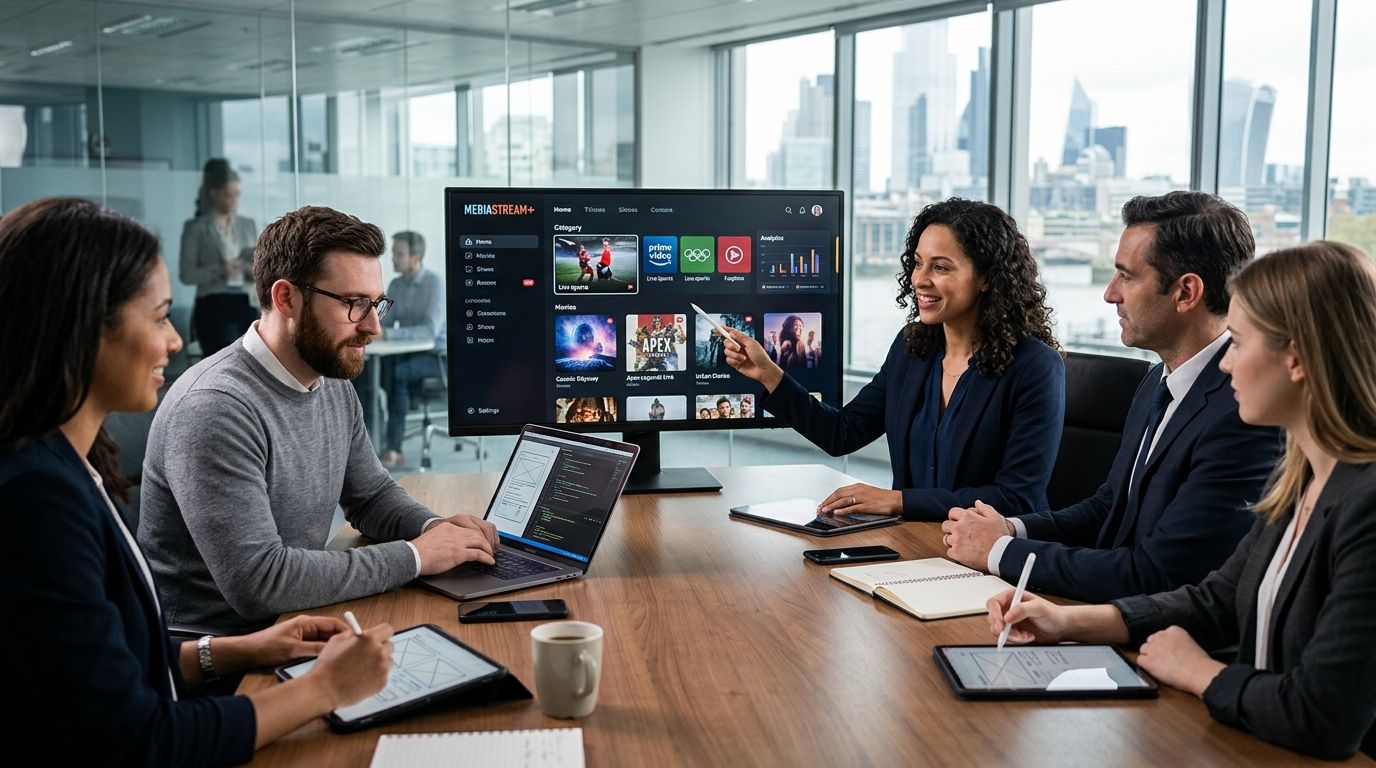
OTT app development means building a streaming platform that delivers video to smart TVs, mobile, and web with subscriptions, advertising, and analytics built in — with the aim of owning the viewer relationship instead of renting space inside someone else’s app. Off-the-shelf white-label players get content online fast; a custom build covers the monetization model, brand experience, and data rights that make a streaming business viable.
TL;DR
- An OTT app delivers your video to TV, mobile, and web under your brand and your billing.
- White-label platforms launch fast but cap monetization and keep your viewer data.
- Budget decisions hinge on scope: single-platform VOD costs less than live TV everywhere.
- Choose a partner with real streaming work: playback, DRM, and CDN experience.
Why OTT app development matters for media businesses
Audiences moved to connected TVs, and the money followed: streaming now carries the majority of TV viewing time in the US. The strategic question for publishers, sports leagues, churches, and niche media brands is not whether to stream — it is who controls the viewer account, the billing, and the data. On a platform you rent, those belong to the vendor; in a custom app, they belong to you.
For founders and media executives, the build question is concrete: does your monetization model — hybrid ads plus subscriptions, pay-per-event, regional rights windows — exist in any white-label plan tier? If not, that gap is what custom media and entertainment app development closes.
What a custom OTT platform should do
Play everywhere viewers watch
Smart TVs (Roku, Fire TV, Apple TV, Android TV), iOS and Android, and web form the surface area. Each platform has its own store, playback requirements, and review process — a serious plan prices all of them, not just the phone app.
Monetization built for your model
Subscriptions (SVOD), advertising (AVOD), pay-per-view, or hybrid. The ad layer needs server-side ad insertion and reporting that advertisers accept; the subscription layer needs billing, plan changes, and win-back flows. This is where custom builds earn their cost, because your revenue logic becomes the product.
Content operations and recommendations
Ingestion, metadata, DRM (digital rights management), and a recommendation engine that keeps watch time growing. Teams adding AI-driven personalization in 2026 typically draw on generative AI development expertise for discovery, trailers-on-demand, and conversational search.
Analytics you own
Watch time, churn points, and content performance in a dashboard the business actually reads — on infrastructure where the viewer data is yours to keep.
Build vs buy for OTT apps
| Option | Best for | Key limitation |
|---|---|---|
| White-label streaming platform | Brands validating demand with standard VOD | Limited monetization control; vendor owns viewer data |
| Custom OTT platform | Brands whose monetization or rights model is the differentiator | Upfront investment; needs a disciplined discovery phase |
| Hybrid (vendor for delivery, custom apps) | Teams wanting speed on infra with brand-owned apps | Two systems to integrate and maintain |
Most niche media brands start on the hybrid row: rent the video infrastructure, own the apps and the accounts, consolidate when the business case is proven.
How to choose an OTT app development partner
- Review their streaming portfolio. Playback engineering, DRM, and CDN tuning are specialist work — a team that has shipped TV apps will anticipate questions you haven’t thought of. Compare that against guides such as how to choose a cloud application development partner, because streaming lives or dies on cloud architecture.
- Ask about device coverage in the plan. Each TV platform is a separate build with its own store review; pricing should name every target device, not assume them.
- Insist on a discovery phase before a quote. Pricing an OTT platform before mapping your monetization and rights model is how projects blow their timelines.
- Check who owns the code, the data, and the accounts. Store accounts, CDN, and analytics must all be in your name.
- Plan the budget honestly. Streaming budgets slip on integrations and device QA — read a guide on custom software development cost before you commit.
Common mistakes media brands make
- Copying a Netflix-shaped feature list. Your viewers’ habits and your rights windows should drive scope, not a rival’s app.
- Launching without live-event QA. Live streaming fails differently from VOD; test at real concurrency before your big event, not during it.
- Ignoring TV-first design. Most watch time happens on the 10-foot interface, and it is not a resized phone app.
- Underestimating content operations. Metadata, artwork, and rights expirations need an owner from day one.
One last thing
The brands getting real returns from OTT app development in 2026 are not the ones with the biggest catalogs — they are the ones that own the account, the billing, and the data for the viewers they already have. Scope for that first.