What is Industry 4.0?
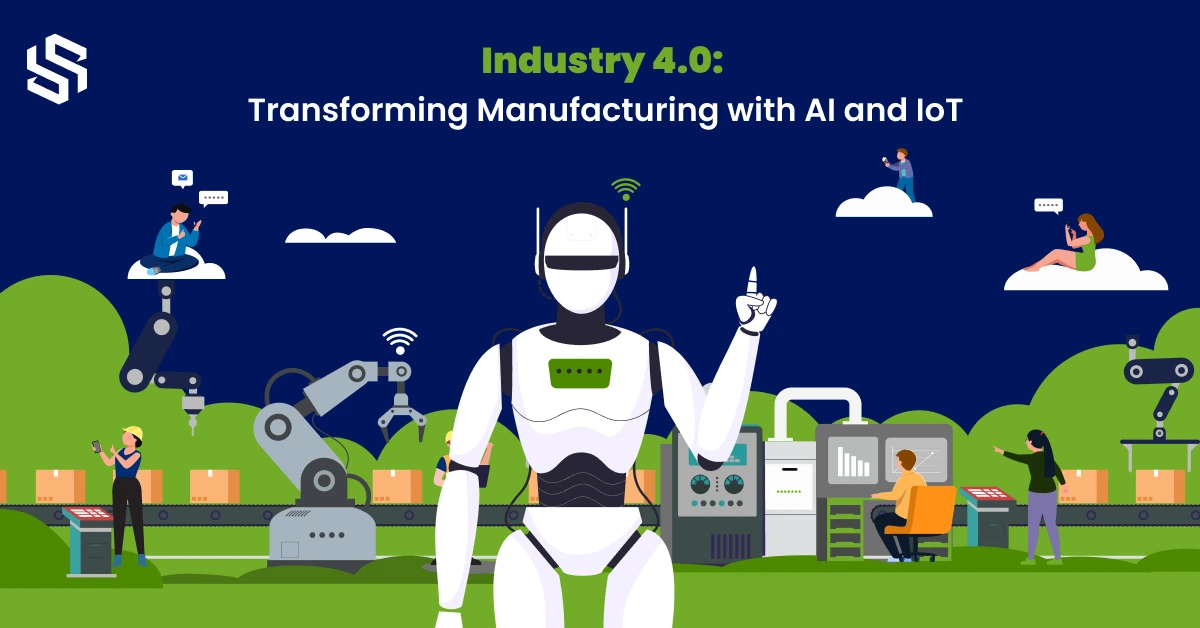
In manufacturing, Industry 4.0, or the Fourth Industrial Revolution is a ground-breaking process. It is characterized by a profound shift as advanced digital technologies merge with traditional methods of manufacturing. It has led to the evolution of industrial activities into smart systems that are interconnected and driven by data.
The effects of Industry 4.0 are immense and have revolutionized manufacturing processes and business operations. Here in this blog post, we will be taking an in-depth look at the fascinating world of Industry 4.0 including the innovative technologies and strategies that are reshaping the landscape of manufacturing. This new era will rely on artificial intelligence (AI), the Internet of Things (IoT), and advanced analytics which will lead to more efficient operation, cost-cutting, and unprecedented levels of agility.
Follow along with us as we unpack what Industry 4.0 has got to offer for businesses across the globe in terms of prospects, problems, and possibilities involved within it.
Embrace Industry 4.0 advancements for transformative app solutions.
Reach out now to discuss innovative strategies and tech integration for your project.
Role of Industry 4.0 in Manufacturing
Industry 4.0 has a huge importance in the manufacturing industry as it is a disruptive concept that will change how manufacturing is done, boost productivity, and make the global arena more competitive. This employs up-to-date technologies such as Artificial Intelligence (AI) and the Internet of Things (IoT) to increase efficiency and flexibility within manufacturing ecologies.
Combining AI and IoT allows manufacturers to collect and analyze large volumes of data in real-time, thereby improving decision-making processes on a smarter level and enabling proactive maintenance. Therefore, resource utilization becomes more efficient in manufacturing activities, as downtimes are reduced while minimizing resource wastage.
Streamlining Manufacturing Operations with Web App Automation
Overview of AI and IoT in the Manufacturing Industry
Industry 4.0 is founded on two major pillars- the Internet of Things (IoT) and Artificial intelligence (AI).
Artificial Intelligence (AI) refers to the use of advanced algorithms and machine learning to enable machines and systems to perform tasks that usually require human intelligence. In manufacturing, AI is significant in automating processes, decision optimization, and predictive capabilities.
Conversely, IoT focuses on the connection amongst ordinary items or appliances through the web. With sensors and communication features these linked devices can collect and exchange data instantaneously. For instance, in manufacturing, IoT encourages unhindered data flow hence enabling informed choices, predictive maintenance as well as real-time monitoring of equipment and processes.
Key Concepts of Industry 4.0
1. Understanding AI in Manufacturing
Machine Learning and Deep Learning:
In manufacturing, Artificial Intelligence (AI) is divided into Machine Learning and Deep Learning. These are transformational technologies that enable machines to learn on their own from data and make informed predictions or decisions. In practical application in the manufacturing industry, this includes:
- Predictive Maintenance : When it comes to timely maintenance and minimal downtime, Machine Learning algorithms analyze equipment data to predict possible failures.
- Quality Control : Only unblemished items reach consumers, thanks to Deep Learning models that excel in identifying faults in products through image analysis.
- Process Optimization : Through constant analysis of production data and learning from it, these AI techniques enhance manufacturing processes in terms of efficiency and resource optimization.
Computer Vision and Natural Language Processing:
In manufacturing, Artificial Intelligence (AI) involves two crucial aspects such as Computer Vision and Natural Language Processing (NLP).
- Computer Vision is used to identify defects in products with precision. Quality control and maintaining product integrity, allows machines to “see” visual data.
- Natural Language Processing (NLP) plays a significant role in connecting humans and machines. It enables human-machine interaction, data analysis, and decision-making by interpreting writing or speech. NLP can be used in the context of manufacturing for instantaneous examination of written reports or maintenance logs to support quick decision-making.
Dive into Industry 4.0-driven services.
Discover how our cutting-edge methodologies and technology expertise can revolutionize your app development journey.
2. IoT in Manufacturing
The fourth industrial revolution has been primarily driven by the Internet of Things (IoT).
Sensor Networks and Data Collection:
At the core of IoT in manufacturing are Sensor Networks and Data Collection. Strategically placed throughout the production floor, sensors constantly collect data from machines. This information is then used in real-time monitoring and analysis which gives insights into the performance, efficiency, health etc of different manufacturing processes and assets.
Connectivity and Smart Devices:
IoT is all about Connectivity and Smart Devices. These devices which are interconnected create a strong network for sharing information as well as data on a real-time basis. In manufacturing, this network ensures that there is seamless coordination as well as communication among machines and systems. It facilitates dynamic changes, predictive maintenance, and agile responses to varying conditions thus increasing overall operational efficiency.
3. The Convergence of AI and IoT in Industry 4.0
Industry 4.0 has witnessed an unprecedented convergence of AI with IoT. Artificial Intelligence (AI) processes huge amounts of data generated by IoT devices to make it actionable for manufacturers who can use this to improve their operations through decision-making based on data.
Benefits of Industry 4.0
1. Improved Efficiency and Productivity
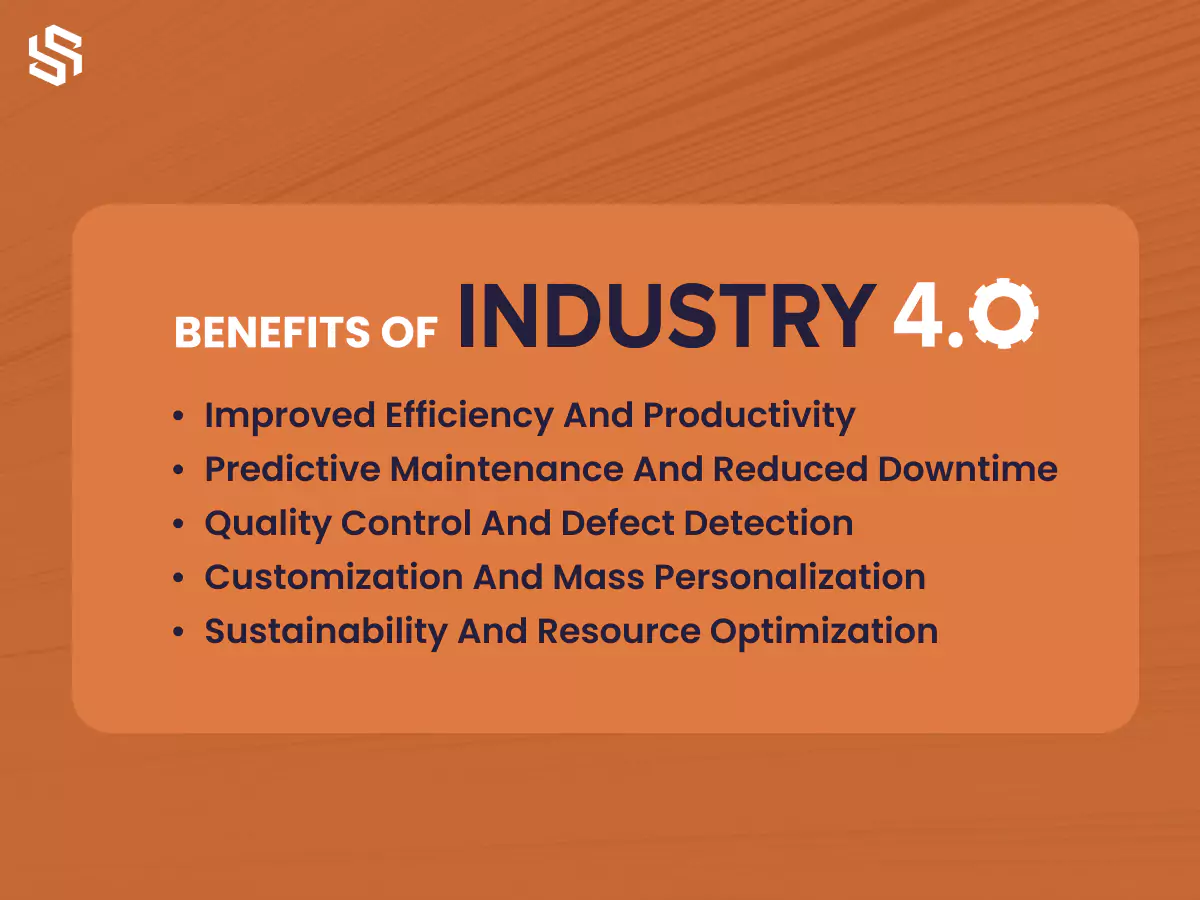
Industry 4.0 has a reputation for greatly enhancing efficiency and productivity in manufacturing processes. Through the integration of cutting-edge technologies, Industry 4.0:
- Streamlines Operations: Automation and data-driven decision-making streamline operations to remove the bottlenecks and reduce the need for manual intervention.
- Replacement of Manual Labor with Machines: Where repetitive and laborious tasks are concerned, automation allows employees to concentrate on more imaginative and strategic parts of their work.
- Reduces Errors: Furthermore, thanks to advanced AI algorithms and real-time monitoring, manufacturing errors have been greatly minimized, ensuring uniformity as well as quality of products.
In sum, such improvements result in a significant increase in efficiency and a notable enhancement in total productivity.
2. Predictive Maintenance and Reduced Downtime
Predictive maintenance is a new way of thinking about maintenance which is integral to the Industry 4.0 concept and it leads to less downtime and cost savings:
- AI-driven Predictive Maintenance: The data from sensors and equipment are analyzed by AI algorithms in order to predict when machines will fail. This makes it easier for factories to schedule maintenance before a machine breaks down unexpectedly.
- Reduced Downtime: Manufacturers can use predictive maintenance to plan their plant’s downtime, thereby reducing the effect on production schedules and operational continuity as a whole.
- Cost Savings: In addition to preventing major equipment failures, this saves money on repairs as well as lost revenue due to downtimes.
3. Quality Control and Defect Detection
Industry 4.0 has taken quality control and defect detection to a whole new level:
- Computer Vision: Advanced computer vision systems integrated with artificial intelligence algorithms can quickly and accurately catch defects in products as they pass along the production line.
- Real-time Analysis: The capacity to identify defects in real-time ensures that only the finest products are disseminated into the market, thereby improving brand reputation and customer satisfaction.
- Data-Driven Continuous Improvement: The data obtained from quality control procedures helps in refining the manufacturing processes continuously, thus minimizing defects and waste.
4. Customization and Mass Personalization
With Industry 4.0, customization and mass personalization become feasible on a scale previously unattainable:
- Tailored Products: Manufacturers are able to adjust their products to fit individual customer preferences and requirements, which promotes customer loyalty and serves niche market needs.
- Flexible Production: Agile manufacturing processes allow for quick changes in product design and features to adapt to dynamic consumer demands.
- Data-Driven Insights: AI & IoT data provide insights into consumer preferences that allow organizations to refine their products and marketing strategies.
5. Sustainability and Resource Optimization
The fourth industrial revolution supports sustainable growth and resource efficiency as the foundation of modern manufacturing:
- Optimized Resource Utilization: Making decisions based on data allows for efficient allocation of resources, thus minimizing wastages and energy use.
- Lowering Environmental Footprint: Whenever manufacturers reduce resource waste and use it more wisely, they limit the harm done to nature.
- Regulatory Compliance: More stringent environmental regulations require sustainable practices that reduce non-compliance risks.
Industry 4.0 not only seeks economic gains but also environment-friendly operations and product quality as seen in present-day factories.
Leverage Industry 4.0-savvy developers for your app project. Build with the expertise needed to integrate IoT, AI, and other advanced technologies seamlessly.
Use Cases and Applications
1. Smart Factories: AI-Driven Automation
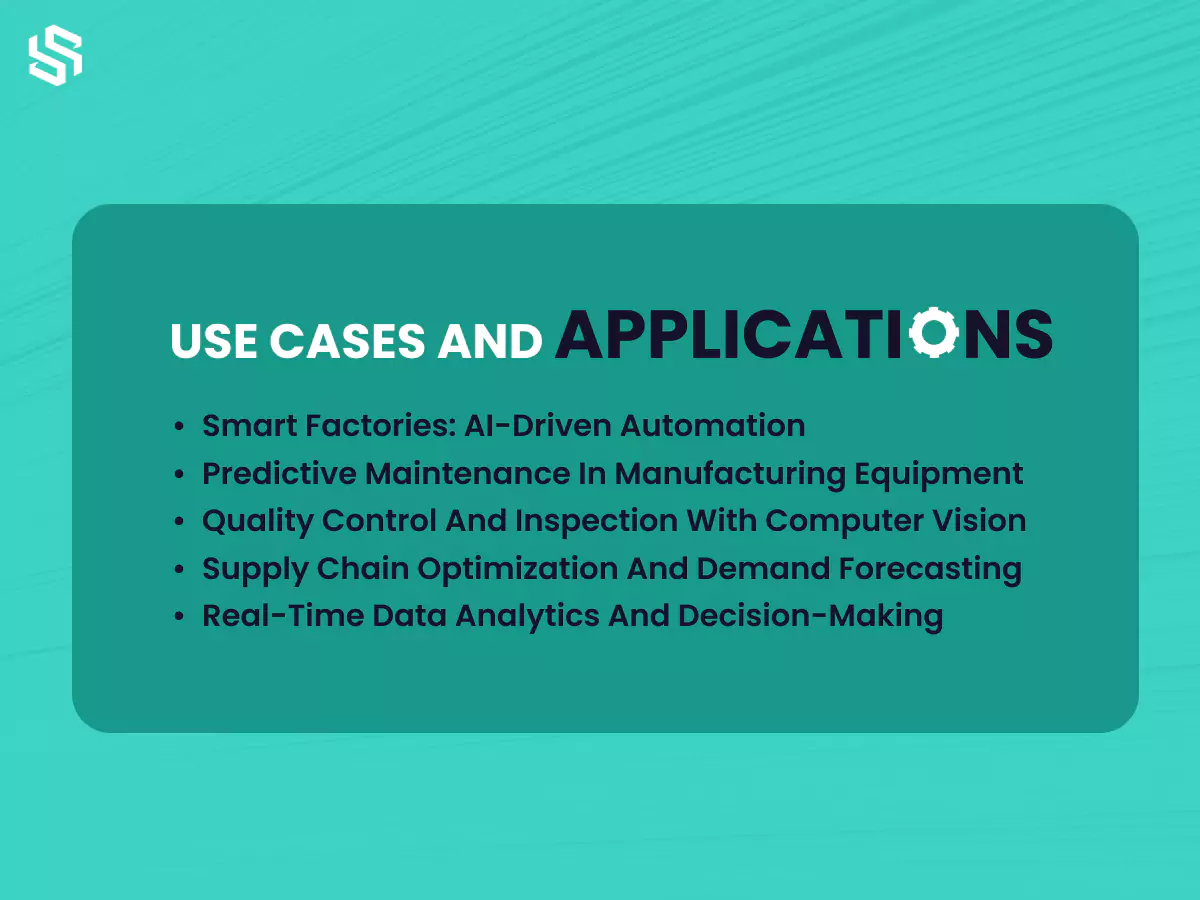
The smart factories represent the highest level of achievement among Industry 4.0 in which AI-driven robotics and automation have been used to revolutionize manufacturing.
- Optimized Production: Through AI-controlled automation, the time and cost of production are shortened while maintaining high standards.
- Error Reduction: The occurrence of human errors is reduced by minimizing human intervention, thus leading to more reliable and consistent products.
- Flexibility: Manufacturers can adapt themselves to changes in product variety or market preferences by rapidly reconfigurable production lines.
2. Predictive Maintenance in Manufacturing Equipment
The face of manufacturing is revolutionized by predictive maintenance adoption with AI and IoT:
- Data-Driven Predictions: Analyzing sensor data from equipment, AI algorithms can predict when maintenance is needed to prevent unexpected breakdowns.
- Downtime Reduction: Planned maintenance activities are scheduled during optimal times, minimizing production downtime and enhancing overall operational continuity.
- Cost Savings: Manufacturers save on repair costs as well as minimize revenue losses due to unplanned downtime by proactively addressing equipment issues.
3. Quality Control and Inspection with Computer Vision
In Industry 4.0, computer vision systems serve as vigilant guardians of product quality and integrity, which are both essential in any production process:
- Swift Defect Detection: Computer vision coupled with AI algorithms that identify defects rapidly and accurately during the manufacturing process is responsible for allowing only those products free from defects to make it into the market.
- Consistency: Quality assurance procedures ensure that every product is produced at the same high level, creating customer loyalty and brand value.
- Continuous Improvement: Data collected from inspections is fed back into the manufacturing process for ongoing refinement, reducing defects and waste over time.
4. Supply Chain Optimization and Demand Forecasting
Artificial Intelligence (AI) and the Internet of Things (IoT) can be used to optimize supply chains, thus enhancing efficiency and resilience.
- Real-time Tracking: In this case, IoT sensors come in handy as they are able to show where goods are physically located within the supply chain from the time they leave a manufacturing facility until a customer collects them.
- Data-Driven Forecasting: AI-based demand forecasting takes into account previous data, market trends, and live data to make accurate predictions on consumer demand.
- Inventory Management: By combining AI with IoT, organizations can now manage stock levels more precisely without necessitating products having to remain idle.
5. Real-time Data Analytics and Decision-Making
Manufacturers use AI abilities for real-time data analytics and decision-making:
- Data-Driven Insights: AI algorithms help in extracting useful information from huge amounts of raw data produced by sensors, machines, and processes.
- Informed Decisions: In this connection, manufacturers can make use of the knowledge acquired to inform their decisions regarding production, logistics, and resource allocation.
- Adaptability: Therefore, real-time data analysis is what allows companies to quickly respond to such changes that optimize operations and resources instantaneously.
From improving efficiency and product quality to allowing flexible response to dynamic market conditions, these various applications of Industry 4.0 imply how transformative it is on manufacturing.
Impact of Generative AI on Workplace Communications
Challenges and Considerations
1. Data Security and Privacy Concerns
In Industry 4.0, the volume of data collected as well as shared keeps growing each passing day, making data security and consumer privacy major concerns:
- Data Security: In order to prevent disruptions, safeguard intellectual property and prevent cyber threats or breaches from accessing sensitive manufacturing data, it is important that such data is protected.
- Consumer Privacy: Companies need to comply with data privacy laws so that they handle consumer information responsibly and ethically, avoiding potential legal backlashes and reputational damages.
2. Workforce Training and Skill Gaps
The transition to Industry 4.0 has made workforce training and bridging skill gaps more important than ever before:
- Upskilling: For the workforce to gain maximum benefits from this advanced technology, they need new skills that range from data analysis to the efficient operation of sophisticated machinery.
- Reskilling: In Industry 4.0, current staff could need retraining to fit into new job requirements.
- Talent Acquisition: Attracting and recruiting AI, IoT, and other talents of Industry 4.0 is not easy or straightforward.
3. Integration with Legacy Systems
Integrating Industry 4.0 technologies with their existing legacy systems presents both complexity and cost challenges:
- Interoperability: Ensuring smooth communication between old and new technologies is important during the transition.
- Costs: Compatibility issues must be addressed, and the systems upgraded to enable them to interface with modern technologies, an expensive undertaking.
- Disruption: The incorporation could affect some operations leading to a need for planning so as to ensure that there is no downtime.
4. Ethical Considerations in AI-Driven Manufacturing
The ethical issues in the responsible utilization of AI in manufacturing must be addressed.
- Bias Mitigation: To ensure fairness in decision-making it is crucial to detect and mitigate biases that exist within AI algorithms due to historical data.
- Transparency: For trust to be built among workers, purchasers, and regulatory agencies, manufacturers must be transparent about AI-driven processes.
- Accountability: Creating clear lines of accountability for AI-driven decisions and actions is vital for addressing any possible ethical dilemmas.
5. Regulatory Compliance and Standards
Industry 4.0 is a complex issue as far as compliance with regulations and industry standards are concerned:
- Data Regulations: Manufacturers must navigate complex data protection regulations, ensuring the secure handling of data from collection to storage and processing.
- Safety Standards: Compliance with safety standards is crucial, particularly when integrating AI and automation into manufacturing processes to protect workers and consumers.
- Environmental Practices: Adherence to environmental regulations is necessary to minimize the ecological impact of manufacturing processes.
Taking on these challenges while considering them is pivotal for the successful implementation and sustainable growth of Industry 4.0 in manufacturing that encourages responsible use of technology, observance of rules, and care both for employees and buyers.
Experience the power of Industry 4.0 in app development.
Request a free quote to unlock next-gen solutions and competitive advantages.
Case Studies
Successful Implementations of Industry 4.0 in Manufacturing
Indeed, the principles of Industry 4.0 have been adopted by many manufacturing companies and resulted in significant improvements within them. Here are some case studies that demonstrate how this has been done successfully and the benefits that they have achieved.
1. Company A: Automotive Manufacturing
- Challenge: The Company was dealing with a cost increase in production and quality issues emanating from manual assembly processes.
- Solution: They utilized IoT-connected sensors on their assembly lines, AI-driven quality control techniques, and predictive maintenance as their Fourth Industrial Revolution solution.
- Benefits: Reduced production costs by 20%, better product quality, and minimized downtime by 30%.
2. Company B: Food Processing
- Challenge: The Company’s main issue was fluctuating demand and the need for more flexible manufacturing processes.
- Solution: They used AI-based demand forecasting systems along with automated production scheduling.
- Benefits: Lowered overproduction by 15%, increased delivery performance rates, lowered operational costs by 10%.
3. Company C: Pharmaceutical Manufacturing
- Challenge: Company C had regulatory compliance issues to address and also had to improve traceability within its supply chain.
- Solution: Employed blockchain technology as a controlled sharing platform for data in addition to tracing all through the manufacturing process then distribution.
- Benefits: Better regulatory compliance, greater transparency, a reduction in time required to recall products at half.
Lessons Learned from Industry 4.0 Initiatives
Embracing Industry 4.0 is a journey marked by valuable insights and lessons. Here are some lessons learned from early adopters to guide others in their Industry 4.0 endeavors:
1. Continuous Learning and Training
- Insight: Investing in workforce upskilling is paramount.
- Lesson: Ongoing training programs and fostering a culture of learning are crucial to ensure employees can adapt to evolving technologies effectively.
2. Data Governance and Security
- Insight: Data is a valuable asset, and its protection is non-negotiable.
- Lesson: Robust data governance strategies and cybersecurity measures are essential to safeguard sensitive manufacturing data from threats.
3. Pilot Projects and Scalability
- Insight: Start with small, manageable projects before scaling up.
- Lesson: Piloting new technologies and processes allows for fine-tuning and identifying potential challenges before broader implementation.
4. Collaboration and Partnerships
- Insight: Collaboration with technology partners can accelerate progress.
- Lesson: Collaborative partnerships can provide access to expertise and resources that may be otherwise challenging to develop in-house.
5. Agility and Adaptability
- Insight: Industry 4.0 initiatives must be flexible and adaptive.
- Lesson: The ability to pivot and adjust strategies in response to changing market conditions and emerging technologies is essential for long-term success.
These case studies and lessons learned underscore the tangible benefits of Industry 4.0 adoption in manufacturing, as well as the importance of careful planning, workforce development, and a commitment to ongoing innovation.
Cost Reduction Strategies for Building Enterprise Web App
Read More About: How AI Is Driving the Future of the Automotive Industry in 2025
Prediction of Future Trends and Innovations
AI and IoT Advancements
The evolution of Artificial Intelligence (AI) and the Internet of Things (IoT) continues to reshape the manufacturing landscape. Here are some future developments in AI and IoT that promise to further transform the industry:
1. AI at the Edge
AI algorithms will increasingly run at the edge (closer to devices and sensors) for real-time decision-making, reducing latency and enhancing responsiveness in manufacturing processes.
2. Explainable AI
There will be a growing emphasis on developing AI systems that provide transparent explanations for their decisions, enhancing trust and facilitating regulatory compliance.
3. IoT Sensor Miniaturization
Advancements in sensor technology will lead to smaller, more efficient sensors, enabling their integration into even more components and devices within the manufacturing environment.
4. 5G Connectivity
The widespread adoption of 5G networks will further enhance the speed and reliability of data transmission in IoT applications, enabling seamless communication between devices.
Human-Robot Collaboration
The relationship between human workers and automated systems, including robots and AI, is evolving. Here are the future trends in human-robot collaboration within manufacturing:
1. Cobots (Collaborative Robots)
Collaborative robots designed to work alongside humans will become increasingly common, enhancing efficiency and safety in manufacturing processes.
2. Skill Augmentation
Rather than replacing humans, AI and robots will increasingly serve as tools for augmenting human capabilities, particularly in complex decision-making and data analysis.
3. Robotics Process Automation (RPA)
RPA will continue to be integrated into routine tasks, freeing up human workers for more value-added activities and creative problem-solving.
Sustainability and Green Manufacturing
The imperative for sustainability and green manufacturing practices will drive significant innovations:
1. Circular Economy Principles
More manufacturers will adopt circular economy principles, focusing on product durability, repairability, and recycling to reduce waste and resource consumption.
2. Energy Efficiency
Advanced energy-efficient technologies, such as energy recovery systems and smart grids, will become standard in manufacturing facilities to reduce environmental impact.
3. Eco-Friendly Materials
The use of sustainable, bio-based materials will increase, further reducing the carbon footprint of manufactured products.
Future of SaaS: Harnessing AI for Growth
Global Adoption of Industry 4.0
The adoption of Industry 4.0 principles and technologies is not limited to a few regions; it’s a global phenomenon. Here are the global trends in the adoption of Industry 4.0:
1. Emerging Markets
Emerging markets will play an increasingly significant role in Industry 4.0 adoption as they leapfrog older technologies and embrace modern manufacturing practices.
2. Cross-Border Collaboration
Cross-border collaboration and knowledge sharing will accelerate the global adoption of Industry 4.0, fostering innovation and competitiveness.
3. Regulatory Alignment
Governments and international bodies will work to harmonize regulations related to data privacy, cybersecurity, and manufacturing standards, facilitating the global expansion of Industry 4.0.These future trends and innovations highlight the exciting developments on the horizon for manufacturing, driven by advancements in AI, IoT, human-robot collaboration, sustainability practices, and the continued global spread of Industry 4.0 principles. Staying abreast of these trends will be essential for manufacturers seeking to maintain a competitive edge in the evolving landscape.
Step into the future of app development with an Industry 4.0 consultation.
Book a call to strategize and implement groundbreaking technological advancements.
Read More About: AI in Agriculture: Harvesting the Future
Conclusion:
In retrospect, Industry 4.0 has wrought a revolution in the manufacturing sector. Its integration of cutting-edge technologies, such as Artificial Intelligence (AI) and the Internet of Things (IoT), has ushered in a new era of manufacturing characterized by unprecedented efficiency, quality, and sustainability. From predictive maintenance that prevents costly downtime to customized, eco-friendly production, Industry 4.0 has left an indelible mark on how goods are made.
The path forward is clear: manufacturers must wholeheartedly embrace Industry 4.0 to maintain a competitive edge in today’s dynamic market. The relentless pace of technological advancement and evolving consumer demands leave no room for complacency.
Syndell, a leading software development company, is your trusted partner in this journey of digital transformation. Whether you’re seeking to harness the power of AI, IoT, or any Industry 4.0 technology, contact Syndell for AI development services that will propel your manufacturing operations to new heights. Get started today with a free quote and hire our expert AI developers to lead the charge toward a future where innovation knows no bounds.
Embrace Industry 4.0 with Syndell and secure your place at the forefront of manufacturing excellence. Your competitors are already on the path of transformation; it’s time to join them and seize the opportunities that await.