In today’s globalized world, businesses operate in an intricate web of suppliers, manufacturers, distributors, and retailers. Imagine millions of products constantly on the move, from raw materials to finished goods reaching your doorstep. The profitability of an organization is strongly impacted by the efficiency of the supply chain, which is this intricate game.
Did you know that a staggering 44% of businesses cite supply chain disruptions as a major cause of lost sales? Inefficiencies like stockouts, delays, and rising logistics costs can significantly hamper your bottom line.
The good news?
Supply chain management software (SCM software) can be your secret weapon in this competitive landscape.
This blog post will delve deep into the world of SCM software, explaining its importance and the transformative impact it can have on your business. We’ll explore how it streamlines operations, boosts visibility, and empowers you to navigate disruptions with confidence.So, buckle up and get ready to unlock the true potential of your supply chain!
How BI is reshaping supply chains?
Comprehensive Features of Supply Chain Management Software
Supply Chain Management (SCM) software is crucial for streamlining all phases of the supply chain process, enhancing operational efficiency, and reducing costs. This software encompasses a variety of functionalities that are vital for businesses looking to optimize their supply chain operations. Below, we delve into the essential features of SCM software, including an extra focus on its integration capabilities with other enterprise systems such as ERP and CRM.
1. Demand Forecasting
Supplier management functionality streamlines interactions with suppliers to ensure that goods and services are delivered on time and meet quality standards. This feature includes supplier selection, contract management, performance assessments, and risk management, all designed to foster stronger, more reliable relationships with vendors.
2. Supplier Management
Demand forecasting is a critical component of SCM software, enabling businesses to predict future customer demand based on historical data, market trends, and statistical algorithms. This feature helps companies optimize their inventory levels, reduce holding costs, and improve service levels by anticipating customer needs before they arise.
3. Procurement
Demand forecasting is a critical component of SCM software, enabling businesses to predict future customer demand based on historical data, market trends, and statistical algorithms. This feature helps companies optimize their inventory levels, reduce holding costs, and improve service levels by anticipating customer needs before they arise.
4. Inventory Management
Inventory management is perhaps one of the most critical features of SCM software. It ensures accurate record-keeping of inventory levels, tracks stock movements, and optimizes the storage of goods. Advanced systems provide real-time data on inventory to minimize shortages and overstocks, and support just-in-time inventory practices.
5. Fleet Management
For companies with logistics and delivery operations, fleet management features help monitor vehicle locations, manage fuel usage, schedule maintenance, and ensure driver safety. This functionality is essential for optimizing delivery routes and improving logistics efficiency.
6. Compliance Management
Compliance management capabilities ensure that all supply chain activities adhere to legal standards and industry regulations. This includes tracking and documenting compliance across multiple jurisdictions, which is vital for businesses operating internationally.
7. Analytics
Advanced analytics in SCM software transform raw data into actionable insights. These tools provide comprehensive dashboards and reporting capabilities that help decision-makers understand performance metrics, identify trends, and make informed decisions to further optimize the supply chain.
8. Integration Capabilities
Extra: SCM software does not operate in isolation. Integration capabilities with other enterprise systems like Enterprise Resource Planning (ERP) and Customer Relationship Management (CRM) are crucial. These integrations allow for a seamless flow of information across various business functions, enhancing data accuracy and decision-making. For example:
ERP Integration:
Connects SCM with financial and human resources data, providing a holistic view of the business operations.CRM Integration:
Links supply chain operations with customer data, which enhances customer service by aligning inventory and logistics operations with customer demand patterns.
These integrations are essential for creating a unified platform where data is centralized, reducing data silos and improving overall business agility.
Have Questions About Our Supply Chain Management Services?
Talk to our experts today and get the answers you need to move forward!
Call Us Now
Read More About: 15 Ways Odoo-Inspired Business Management Software Drives Efficiency
Benefits of Implementing Supply Chain Management Software
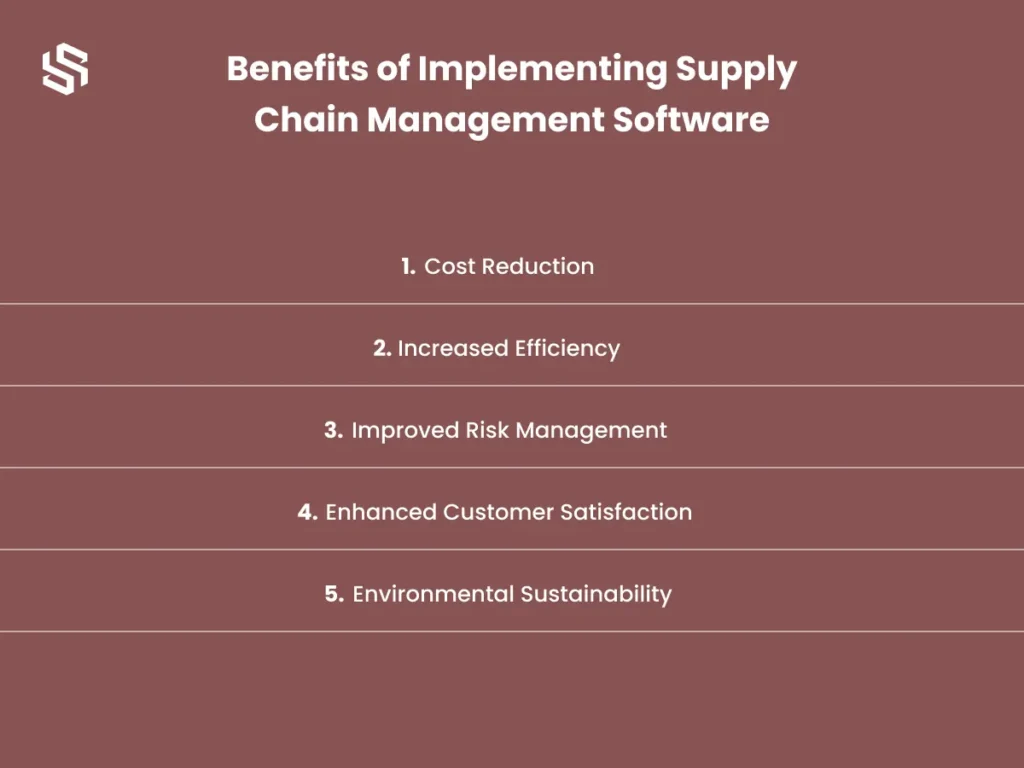
Implementing Supply Chain Management (SCM) software brings multiple strategic benefits to businesses, ranging from financial savings to enhanced operational capabilities. Here’s a closer look at these benefits, including the important aspect of environmental sustainability.
1. Cost Reduction
One of the primary advantages of SCM software is significant cost reduction. By optimizing the supply chain process, businesses can minimize waste, reduce excess inventory, and lower storage costs through improved inventory management. Additionally, SCM software helps in negotiating better terms with suppliers and automates routine tasks, which reduces labor costs and minimizes the likelihood of costly errors.
2. Increased Efficiency
SCM software enhances efficiency across the supply chain. Automation of routine tasks such as order processing, invoicing, and shipping reduces the time these tasks take and increases the speed of operations. Real-time data provided by SCM systems allows for quicker decision-making and more responsive management of supply chain activities, from procurement to delivery.
3. Improved Risk Management
Risk management is greatly enhanced by the implementation of SCM software. These systems provide tools to monitor and manage risks associated with supply chain operations. Predictive analytics can forecast potential disruptions, and real-time tracking ensures that any issues can be addressed promptly. This proactive approach prevents delays, reduces the impact of disruptions, and maintains continuity in supply chain operations.
4. Enhanced Customer Satisfaction
SCM software directly contributes to improved customer satisfaction by ensuring that products are delivered more quickly and reliably. With features like demand forecasting and inventory management, businesses can better meet customer demand without delays or backorders. Moreover, enhanced visibility into the supply chain allows companies to provide customers with accurate information regarding product availability and delivery timings.
5. Environmental Sustainability
Beyond economic benefits, SCM software plays a crucial role in promoting environmental sustainability. By optimizing routing and distribution, SCM software reduces fuel consumption and carbon emissions. Efficient inventory management leads to less waste of materials and resources, as businesses can more accurately match supply with demand. Additionally, many SCM systems include features for managing reverse logistics, which supports recycling efforts and the efficient handling of returns, further reducing the environmental footprint of business operations.
Challenges in Supply Chain Management
Effective supply chain management is crucial for business success, but it comes with its set of challenges. These issues can significantly impact operations if not managed properly. This section outlines common challenges faced in supply chain management, including global coordination, cybersecurity threats, adapting to technology, and handling disruptions from political changes or global events.
1. Global Supply Chain Coordination
Managing a global supply chain introduces complexity in coordination. Different time zones, language barriers, varying regulatory environments, and cultural differences can all complicate communication and operations. Achieving seamless coordination across diverse geographies requires robust SCM systems and effective cross-cultural management strategies to ensure that all parts of the supply chain are aligned and functioning efficiently.
2. Cybersecurity Threats
As supply chains become more digital, they also become more vulnerable to cybersecurity threats. Cyberattacks can lead to significant disruptions, from halting production to compromising sensitive data. Ensuring robust security measures, regular audits, and the integration of secure technologies are critical to safeguarding supply chain operations against cyber threats.
3. Adapting to Changing Technologies
Technology is advancing at a rapid pace, and keeping up can be a challenge. Integrating new technologies such as IoT, AI, and blockchain involves not only a financial investment but also training staff and adjusting existing processes. However, these advancements are often necessary to improve efficiency, accuracy, and transparency within the supply chain.
4. Handling Disruptions Due to Political Changes or Global Events
Supply chains are also vulnerable to disruptions caused by political changes or global events such as tariffs, trade wars, and pandemics. These situations can suddenly alter the rules of engagement, disrupt or block supply lines, and create market volatility. Companies need to have contingency plans in place, such as diversifying suppliers or creating inventory buffers, to manage these risks effectively. Moreover, staying informed and agile allows businesses to respond swiftly to international developments, minimizing their impact on supply chain operations.
Looking to Boost Your Project with Top Tech Talent?
Build your ideal team with our expert developers.
Hire now and see the difference!
Selecting the Right Supply Chain Management Software
Choosing the right Supply Chain Management (SCM) software is pivotal for enhancing business operations, increasing efficiency, and maintaining competitiveness. Several critical factors must be considered to ensure the chosen software meets the unique needs of your business. Below, we discuss these factors and provide a checklist to help guide your selection process.
Key Factors to Consider
1. Scalability
The chosen SCM software should be able to grow and adapt to your business needs over time. It must handle increased demand as your business expands, accommodating more products, customers, and markets without performance degradation. Scalability ensures that the software remains suitable as your business evolves, avoiding the need for frequent replacements.2. Customizability
Each business has unique processes and requirements. The SCM software should be customizable to fit these specific needs. Whether modifying workflows, incorporating specific reporting formats, or adding unique user permissions, customizability allows for a tailored approach that aligns with your business operations.3. User Interface
The effectiveness of SCM software is also dependent on its user interface (UI). A user-friendly interface ensures that employees can easily navigate and utilize the software, reducing training time and minimizing errors. The UI should be intuitive, clean, and supportive of the users’ daily tasks.4. Support Services
Effective support services are crucial for resolving issues quickly and minimizing downtime. Ensure the software provider offers comprehensive support, including training, troubleshooting, and regular updates. Access to responsive and knowledgeable support can greatly enhance the user experience and operational efficiency.Checklist for Determining Specific Needs Before Choosing SCM Software
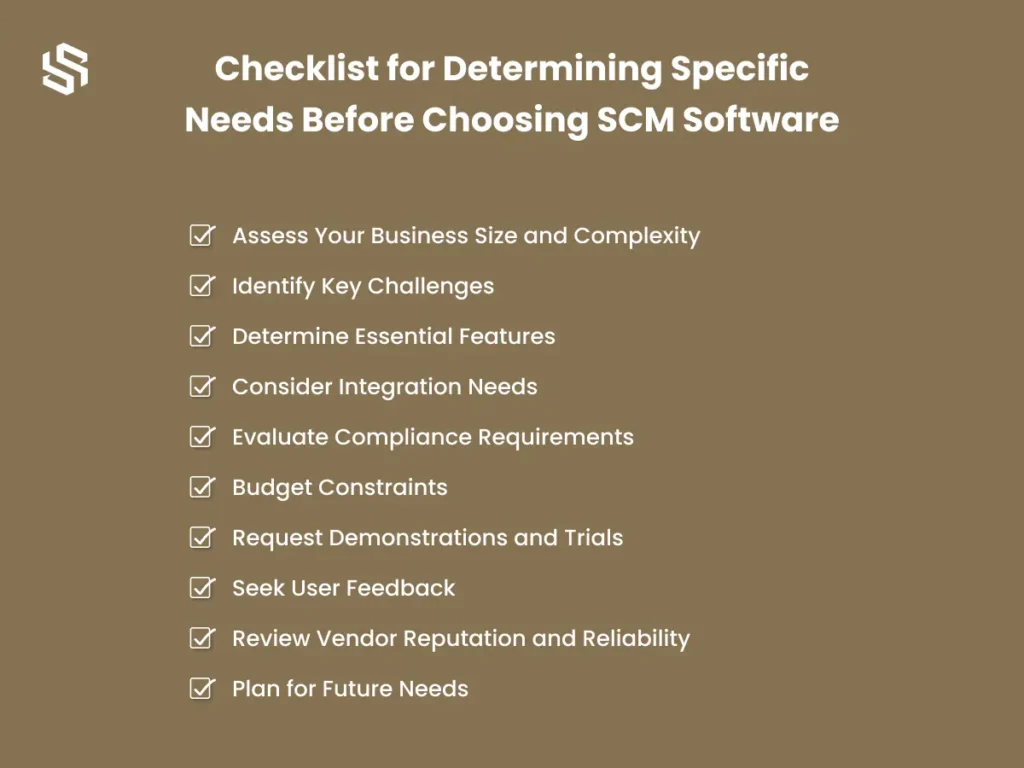
To further assist in selecting the right SCM software, here is a checklist that businesses can use to determine their specific needs:
1. Assess Your Business Size and Complexity: Consider the scale of your operations and the complexity of your supply chain processes.
2. Identify Key Challenges: Pinpoint major pain points in your current supply chain operations that you want the software to address.
3. Determine Essential Features: List out features that are essential for your operations, such as inventory management, procurement, forecasting, etc.
4. Consider Integration Needs: Evaluate the need for the software to integrate with existing systems like ERP, CRM, or data analytics platforms.
5. Evaluate Compliance Requirements: Consider any regulatory compliance needs specific to your industry that the software must support.
6. Budget Constraints: Determine your budget for both initial costs and ongoing expenses such as subscription fees and support services.
7. Request Demonstrations and Trials: Before finalizing, request demos and trials to see how well the software meets your needs in practical scenarios.
8. Seek User Feedback: Get feedback from potential users to assess ease of use and functionality from the perspective of end-users.
9. Review Vendor Reputation and Reliability: Research the vendor’s market reputation and the reliability of their software through reviews and customer testimonials.
10. Plan for Future Needs: Consider future business scenarios and ensure the software can be adapted or upgraded to meet these evolving demands.
How Can Your Business Use Supply Chain Predictive Analytics?
Future Trends and Innovations in SCM Technology
The landscape of supply chain management is rapidly evolving, driven by technological advancements that promise to revolutionize how businesses manage their supply chains. This section explores key technologies such as artificial intelligence (AI), machine learning (ML), the Internet of Things (IoT), and blockchain, and provides real-world case studies that highlight their impact.
1. Artificial Intelligence and Machine Learning
AI and ML are at the forefront of transforming supply chain operations by enhancing decision-making processes and optimizing logistics. These technologies enable predictive analytics, which helps in forecasting demand more accurately and planning inventory accordingly. AI algorithms can also automate complex processes such as procurement and supply chain routing, reducing costs and improving efficiency.
Case Study: A leading retail company implemented AI to manage its inventory more effectively. The AI system analyzes sales data in real-time to forecast demand for products at different times of the year, adjusting inventory levels dynamically. This has led to a 20% reduction in inventory costs and a significant improvement in customer satisfaction due to better product availability.
2. Internet of Things (IoT)
IoT technology connects physical objects throughout the supply chain to the internet, allowing for real-time data collection and analysis. This connectivity enables enhanced visibility across the supply chain, improving tracking of goods, monitoring of storage conditions, and maintenance of equipment. IoT can significantly reduce losses due to damaged goods and prevent delays by predicting potential issues in the supply chain.
Case Study: A global pharmaceutical company uses IoT sensors to monitor the temperature and humidity of shipments in real-time during transit. This ensures that sensitive medications are stored within safe conditions, drastically reducing the rate of spoilage and ensuring compliance with global safety standards.
3. Blockchain
Blockchain offers a secure, transparent way to record transactions, track assets, and manage documents in the supply chain. By creating a decentralized ledger that is accessible to all parties, blockchain enhances trust and reduces the time spent on reconciliation and dispute resolution. It is particularly useful in preventing fraud, ensuring product authenticity, and improving compliance with regulatory requirements.
Case Study: A major coffee producer has implemented blockchain to trace the journey of its beans from farms to consumers. Each step of the supply chain is recorded, providing customers with proof of origin and quality, and helping the company enforce fair trade practices and sustainability commitments.
Ready to Transform Your Supply Chain Management?
Start with a no-obligation quote to see how we can make a difference.
Request Yours Today!
Conclusion
Choosing the right Supply Chain Management (SCM) software is a strategic decision that significantly impacts the efficiency, resilience, and profitability of your business. With rapid technological advancements, SCM software has become essential for optimizing operations, adapting to changes, and maintaining a competitive edge.
The future of supply chain management looks bright with technologies like AI, machine learning, IoT, and blockchain poised to redefine supply chain operations. These innovations will enhance operational capabilities, drive transparency, and promote sustainability within global supply chains. Businesses that harness these technologies will lead their industries towards unprecedented success.
At Syndell, a dedicated software development company, we understand the critical role of innovative SCM solutions in achieving these goals. We offer tailored app development services to create or enhance SCM systems, ensuring they fit perfectly with your business processes. Our team of dedicated developers is skilled in the latest technologies and committed to delivering success on your terms. Whether you need a comprehensive system overhaul or targeted enhancements, we are here to help.
To explore how our solutions can transform your supply chain operations or to get started with our services, contact Syndell today. Step into the future of supply chain management with a partner who is committed to delivering impactful technological solutions.