In the fast-paced world of eCommerce, efficiency and accuracy in order processing are paramount. For businesses striving to maintain a competitive edge, leveraging advanced technologies is no longer optional—it’s essential. One such technology that can significantly enhance your operations is an Order Management System (OMS). At Syndell, an esteemed eCommerce app development company, we understand the critical role an OMS can play in streamlining your order processing. This blog delves into how an OMS can transform your business, ensuring smooth and efficient order handling.
Understanding Order Management Systems
An Order Management System is a digital solution that automates and manages the entire order lifecycle—from order placement to delivery. It integrates various functions such as inventory management, order fulfillment, customer service, and returns processing into a unified platform. By centralizing these processes, an OMS provides real-time visibility and control over your orders, reducing errors and improving overall efficiency.
A robust order management system can significantly reduce operational costs and improve the overall customer experience.
Rick LeBlanc
Key Benefits of Implementing an Order Management System
1. Enhanced Accuracy and Reduced Errors
Manual order processing is prone to errors, which can lead to customer dissatisfaction and financial losses. An OMS minimizes these risks by automating data entry and validation processes. By ensuring that orders are accurately captured, processed, and fulfilled, an OMS reduces the likelihood of mistakes, such as incorrect shipments or billing errors.
2. Improved Inventory Management
Effective inventory management is crucial for meeting customer demands without overstocking or understocking. An OMS provides real-time inventory tracking, allowing you to monitor stock levels across multiple channels and locations. This visibility helps you make informed decisions about restocking and inventory allocation, ensuring that you can fulfill orders promptly and efficiently.
3. Faster Order Fulfillment
Speed is a critical factor in customer satisfaction. An OMS streamlines the order fulfillment process by automating tasks such as order routing, picking, packing, and shipping. This automation reduces the time taken to process orders, enabling faster delivery times and enhancing the overall customer experience.
4. Centralized Order Management
Managing orders from multiple sales channels can be challenging. An OMS centralizes order data from various sources, such as your website, marketplaces, and physical stores, into a single platform. This consolidation simplifies order tracking and management, ensuring that all orders are processed consistently and efficiently.
5. Enhanced Customer Experience
A seamless order processing experience is vital for customer satisfaction and loyalty. An OMS provides customers with real-time order status updates, from order confirmation to delivery. This transparency builds trust and keeps customers informed, reducing the likelihood of order-related inquiries and complaints.
6. Efficient Returns Management
Handling returns can be complex and time-consuming. An OMS streamlines the returns process by automating return authorization, tracking, and restocking. This efficiency ensures that returns are processed quickly and accurately, minimizing disruptions to your operations and maintaining customer satisfaction.
7. Data-Driven Insights
An OMS generates valuable data and insights into your order processing operations. By analyzing this data, you can identify trends, pinpoint inefficiencies, and make data-driven decisions to optimize your processes. These insights enable continuous improvement, helping you stay ahead of the competition.
Optimize your order management system for maximum efficiency and accuracy. Let’s simplify your operations and boost productivity.
Optimize Now!
Must-Have Features in an Effective Order Management System
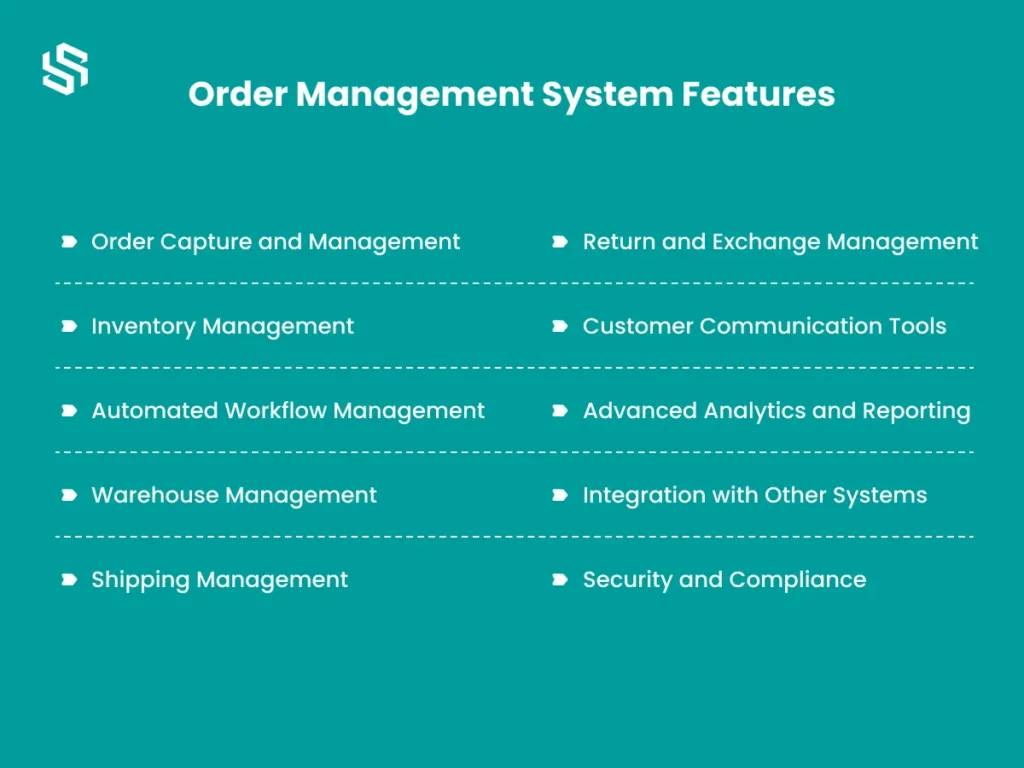
While specific features may vary between providers, some core functionalities are common across most OMS solutions:
1. Order Capture and Management:
A Centralized capture of orders from all sales channels (e.g., online, in-store, marketplaces), automatic validation, and order status updates.
Benefits:
- Reduces errors by having a single source of truth.
- Simplifies order tracking and management.
- Enhances customer service with faster order processing.
2. Inventory Management:
Real-time inventory visibility across all channels, allocation of stock to orders, and low-stock alerts.
Benefits:
- Prevents stockouts and overstock situations.
- Provides accurate inventory data to customers and staff.
- Improves inventory turnover rates.
3. Automated Workflow Management
Automation of routine tasks such as order routing, status updates, and notifications.
Benefits:
- Saves time and reduces manual errors.
- Ensures timely order processing and fulfillment.
- Frees up staff to focus on more strategic tasks.
4. Warehouse Management
Optimization of picking, packing, and shipping processes, including integration with barcoding and warehouse management systems (WMS).
Benefits:
- Maximize storage efficiency.
- Minimize order fulfillment errors.
- Automate tasks, boost output.
- Keep inventory records current.
- Ensure timely, accurate shipments.
5. Shipping Management
Integration with various shipping carriers, automated shipping label generation, and real-time shipment tracking.
Benefits:
- Choose best-priced shipping options.
- Simplify shipping processes.
- Provide accurate shipment updates.
- Ensure consistent method selection.
- Keep customers informed, satisfied.
6. Return and Exchange Management
Streamlined returns process, including automated return authorization, tracking, exchanges, refunds, and restocking.
Benefits:
- Simplifies the returns process for customers and staff.
- Ensures accurate inventory updates post-return.
- Enhances customer loyalty with hassle-free returns.
7. Customer Communication Tools
Built-in tools for automated order confirmations, shipping updates, and delivery notifications.
Benefits:
- Keeps customers informed throughout the order lifecycle.
- Reduces customer inquiries and improves satisfaction.
- Enhances the overall customer experience.
8. Advanced Analytics and Reporting
Comprehensive analytics and customizable reports on order trends, inventory levels, and customer behavior.
Benefits:
- Provides actionable insights for strategic decision-making.
- Helps identify and resolve bottlenecks in the order process.
- Improves forecasting and inventory planning.
9. Integration with Other Systems
Seamless integration with ERP, CRM, shipping carriers, and accounting systems.
Benefits:
- Ensures data consistency and accuracy across the organization.
- Streamlines operations by eliminating data silos.
- Enhances visibility into order and inventory data.
10. Security and Compliance
Robust security features and compliance with industry standards (e.g., PCI DSS for payment processing).
Benefits:
- Protects sensitive customer and business data.
- Ensures compliance with legal and regulatory requirements.
- Reduces risk of data breaches and associated costs.
How Retail Automation Can Transform Your Business
Discover how to streamline your order processing with our expert solutions. Let’s improve your system and enhance customer satisfaction.
Get Started!
Strategies and Best Practices for Operational Efficiency
To maximize the benefits of an OMS, businesses should adopt strategies and best practices that promote operational efficiency. Here are some key recommendations:
1. Integrate with Other Systems
An OMS should seamlessly integrate with other systems such as Enterprise Resource Planning (ERP), Customer Relationship Management (CRM), and Warehouse Management Systems (WMS). This integration ensures a smooth flow of information across the organization, reducing the risk of data silos and enhancing overall efficiency. Syndell’s OMS solutions are designed to integrate with a wide range of systems, providing a holistic approach to order management.
2. Implement Real-Time Inventory Tracking
Real-time inventory tracking is essential for accurate order processing. By implementing technologies such as barcode scanning and RFID, businesses can gain real-time visibility into inventory levels and reduce the risk of stockouts and overstock situations. Syndell’s OMS solutions support real-time inventory tracking, enabling businesses to maintain optimal stock levels and improve order fulfillment accurac
3. Automate Routine Tasks
Automation is a key driver of operational efficiency. By automating routine tasks such as order routing, inventory updates, and customer notifications, businesses can reduce manual workload and minimize the risk of errors. Syndell’s OMS solutions include advanced automation features that streamline order processing workflows, allowing businesses to focus on more strategic activities.
4. Optimize Order Fulfillment
Efficient order fulfillment is critical for meeting customer expectations. Businesses should implement strategies such as batch processing, wave picking, and cross-docking to optimize order fulfillment processes. Syndell’s OMS solutions include features that support these strategies, enabling businesses to fulfill orders quickly and accurately.
5. Monitor and Analyze Performance
Continuous monitoring and analysis of order processing performance are essential for identifying areas for improvement. Businesses should regularly review key performance indicators (KPIs) such as order processing time, fulfillment accuracy, and customer satisfaction to identify bottlenecks and implement corrective actions. Syndell’s OMS solutions include comprehensive reporting and analytics tools that provide actionable insights for continuous improvement.
How to Integrate OpenAI into Your Web App to Boost ERP Sales Forecasting
An efficient supply chain management is all about building a stronger and better relationship with your suppliers and customers.
Chukwuma Onwugbufor
Why Choose Syndell for Your Order Management System?
At Syndell, we specialize in shopify ecommerce development services and understand the unique challenges faced by businesses in this industry. Our Order Management System is designed to address these challenges, providing a comprehensive solution that enhances your order processing capabilities. Here’s why you should choose Syndell:
Customization
We recognize that every business is unique. Our OMS can be tailored to meet your specific needs, ensuring that it aligns with your existing workflows and processes.
Integration
Our OMS seamlessly integrates with your existing systems, such as ERP, CRM, and accounting software, providing a unified platform for managing your operations.
Scalability
As your business grows, our OMS can scale with you. Whether you’re expanding to new sales channels or increasing order volumes, our system can handle the demands of your growing business.
Support
At Syndell, we are committed to your success. Our team of experts provides ongoing support and training, ensuring that you can maximize the benefits of our OMS.
Upgrade your order management system to ensure smooth operations and happy customers. Let’s work together to drive your business success.
Schedule a Call!
The Future of Order Management System (OMS)
Artificial Intelligence (AI):
AI can further improve order processing efficiency by automating tasks like order routing, demand forecasting, and fraud prevention.
Machine Learning (ML):
ML algorithms can analyze historical data to predict peak seasons and optimize inventory levels, preventing stockouts and delays.
Omnichannel Fulfillment:
An OMS will play a critical role in supporting omnichannel fulfillment strategies, allowing customers to buy online and pick up in-store or choose various delivery options.
A Case Study of On-demand Clothing Manufacturing Web Application
Conclusion
In today’s competitive eCommerce landscape, an efficient and accurate order processing system is crucial for success. An Order Management System offers numerous benefits, from enhanced accuracy and faster fulfillment to improved customer experience and data-driven insights. At Syndell, we are dedicated to helping businesses like yours thrive by providing cutting-edge ecommerce app development services. Implementing our Order Management System can transform your order processing operations, ensuring that you stay ahead of the competition and deliver exceptional service to your customers.
Contact Syndell today to learn more about how our Order Management System can revolutionize your order processing and drive your business forward.