
Did you know that the industry for online auctions is thriving? In 2020 alone, global online auction sales reached a staggering $79 billion. Building your own auction website can tap into this lucrative market and unlock incredible opportunities for success.
With the help of our detailed instructions, you’ll be able to build an engaging website where you may sell one-of-a-kind goods, collectibles, or services. You may easily navigate the development process, from early planning and design to the final launch, by adhering to our complete methodology.
Here are some remarkable statistics that highlight the potential of the auction industry:
- The online auction market is projected to grow at a CAGR of 7.8% from 2021 to 2028, reaching $156.6 billion by 2028.
- In 2020, over 1.8 billion people worldwide made online purchases, a number expected to reach 2.14 billion by 2021.
- Online auctions offer a global reach, enabling you to attract customers from around the world and expand your market exponentially.
- The popularity of online auctions is soaring, with 83% of consumers stating that they enjoy participating in online bidding.
Entering the world of auction websites development right now is the best option. You may build a successful and lucrative auction platform by using the knowledge and insights you learn from our step-by-step manual. Building an online auction website may begin right away as we set off on this thrilling trip.
How to Build an Auction Website like eBay – Complete Guide
Why build an online auction website?
Building an online auction website offers numerous advantages over traditional auction methods. While auctions have a long history, the shift to online platforms has revolutionized the industry. Here are some compelling reasons why you should consider building an online auction website:
1. Accessibility and Convenience
An online auction website allows bidding from anywhere, anytime, attracting a larger audience and encouraging active participation.
2. Cost Efficiency
Building an online auction website eliminates expenses associated with physical spaces, reduces staffing requirements, and allows resource allocation for platform enhancement and marketing.
3. Elimination of Intermediaries
Direct interaction between buyers and sellers fosters transparency and trust and reduces complexities in transactions.
4. Scalability
Modern online auction platforms offer effortless growth, accommodating increased traffic, bidders, and sellers without major infrastructure adjustments.
5. Global Market Reach
Online auctions break down geographical barriers, expand market reach, attract diverse participants, and potentially increase bids and sales.
6. Lower Transaction Costs
Participants avoid hefty handling charges, creating a competitive pricing environment that benefits all parties involved.
7. Multi-Lingual Support
Language flexibility enhances user experience, allowing users from different countries and language backgrounds to easily navigate and participate in auctions, widening the potential customer base.
You may revamp your auction company and take advantage of the digital era by embracing the potential of online auction platforms. An online auction website’s simplicity, cost-effectiveness, scalability, and worldwide market reach may help your business succeed.
Turn Your Vision into Reality!
To Build Your own Auction Website.
Steps to build an auction website
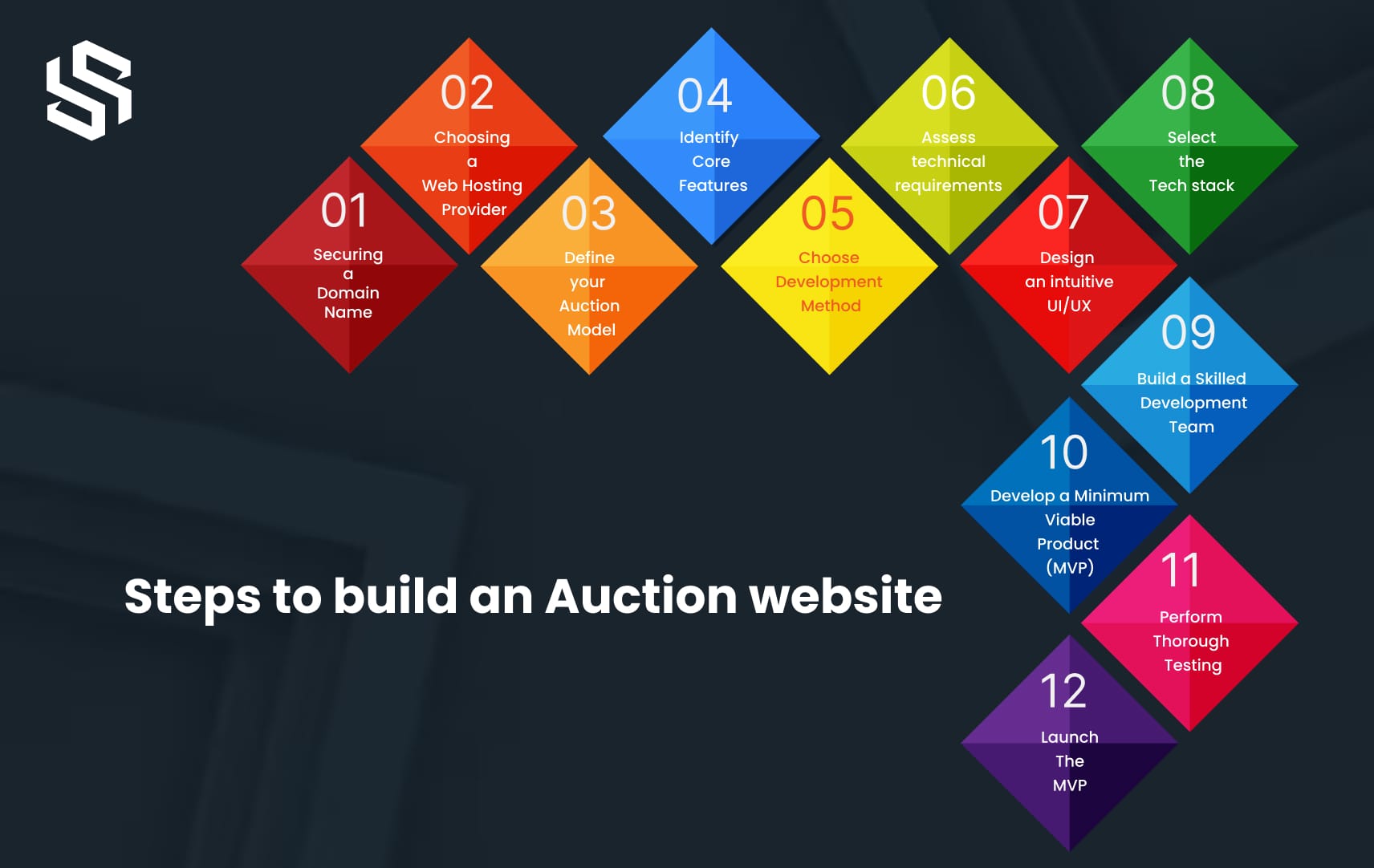
Do you want to create an online marketplace for bidding? If you’re an entrepreneur attempting to start a new business or a hobbyist hoping to create a marketplace for people to buy and sell goods, creating an auction website may be an interesting and rewarding endeavor.But before you start designing your website, there are a few essential steps you need to take to ensure your website is secure, functional, and user-friendly.
1. Securing a Domain Name
In essence, your domain name serves as your internet address. It helps consumers remember and discover your website. Therefore, it’s essential to choose a domain name that is distinctive, apparent, and value-driven. You may build brand awareness, boost credibility, and enhance website traffic with a catchy domain name.
Tips for Picking a Domain Name for Your Auction Website
Here are a few factors to consider while selecting a domain name for your auction website:
1. Keep it short and catchy
Your domain name should be simple to say and keep in mind. Shorter domain names are often preferable since they are simpler to type and remember. Consider the short and memorable domain names eBay.com and Amazon.com.
2. Choose top-level domain (TLD) names
TLDs, which include.com .org,.net, etc., are the name extensions that follow your domain name. These TLDs are the most well-known and identifiable, providing authority to your website. Therefore, picking a TLD that fits your business type is advised.
3. Make it relevant
People should be able to figure out what your website is about from its domain name. For instance, a domain name like “VintageCarAuction.com” might be wise if you were creating an auction website for classic vehicles.
4. Check the history of the domain name
It’s crucial to use the Wayback Machine to look into the history of a domain name before purchasing it. With the help of this tool, you may examine how the website appeared in the past and determine whether it included spam or engaged in criminal activity.
5. Check the domain rating
Domain ratings are provided by SEO tools like Ahrefs, SEMRush, Moz, and others to show the value and authority of a website. It is advised to pick a domain name with a higher rating since it will likely appear higher in search engine results.
Breaking Down The Cost of Developing a Mobile App Like Tabby
2. Choosing a Web Hosting Provider
The success of your auction website depends on your choice of web hosting provider. The infrastructure and support required to keep your site up and working efficiently will be provided by your web host. When picking a web hosting company for your auction website, keep the following elements in mind:
1. Reliability
High uptime implies that users should always be able to access your website, which is what your web hosting provider should deliver. Select a company with a solid history of dependability and uptime.
2. Security
All websites must be secure, but auction websites are especially so since they often handle the transmission of highly sensitive financial and personal data. Look for a web host that offers strong security features, such as SSL certificates, firewalls, and DDoS protection.
3. Scalability
You’ll need a web host that can grow with your needs as your auction website expands and draws more visitors. A flexible hosting company will be able to handle growing traffic and bandwidth needs for your website.
4. Support
You’ll need trustworthy help from your hosting provider if something goes wrong with your website. Choose a service provider who provides live chat, email, and phone assistance around-the-clock.
5. Cost
The cost will always be a consideration when selecting a web hosting company. Find a service that offers reasonable prices without compromising on quality or dependability.
You’ll need to buy a domain name and set up your website once you’ve decided on a hosting provider. The majority of web hosting providers provide tools to assist you in installing well-liked content management systems like WordPress, which may make it simple to create and maintain your auction website.
Do you have a question regarding where to get a domain name and sign up for web hosting?
There are many online services and web hosting providers that allow you to find and purchase a domain name. Here are some of the popular ones:
1. Google Domains: Google Domains offers a simple and user-friendly interface to purchase domain names.
2. NameCheap: NameCheap offers affordable domain name registration and web hosting services.
3. Domain.com: Domain.com offers a wide range of domain extensions and web hosting plans.
4. GoDaddy: GoDaddy is one of the largest domain registrars and web hosting providers in the world.
3. Define your auction model
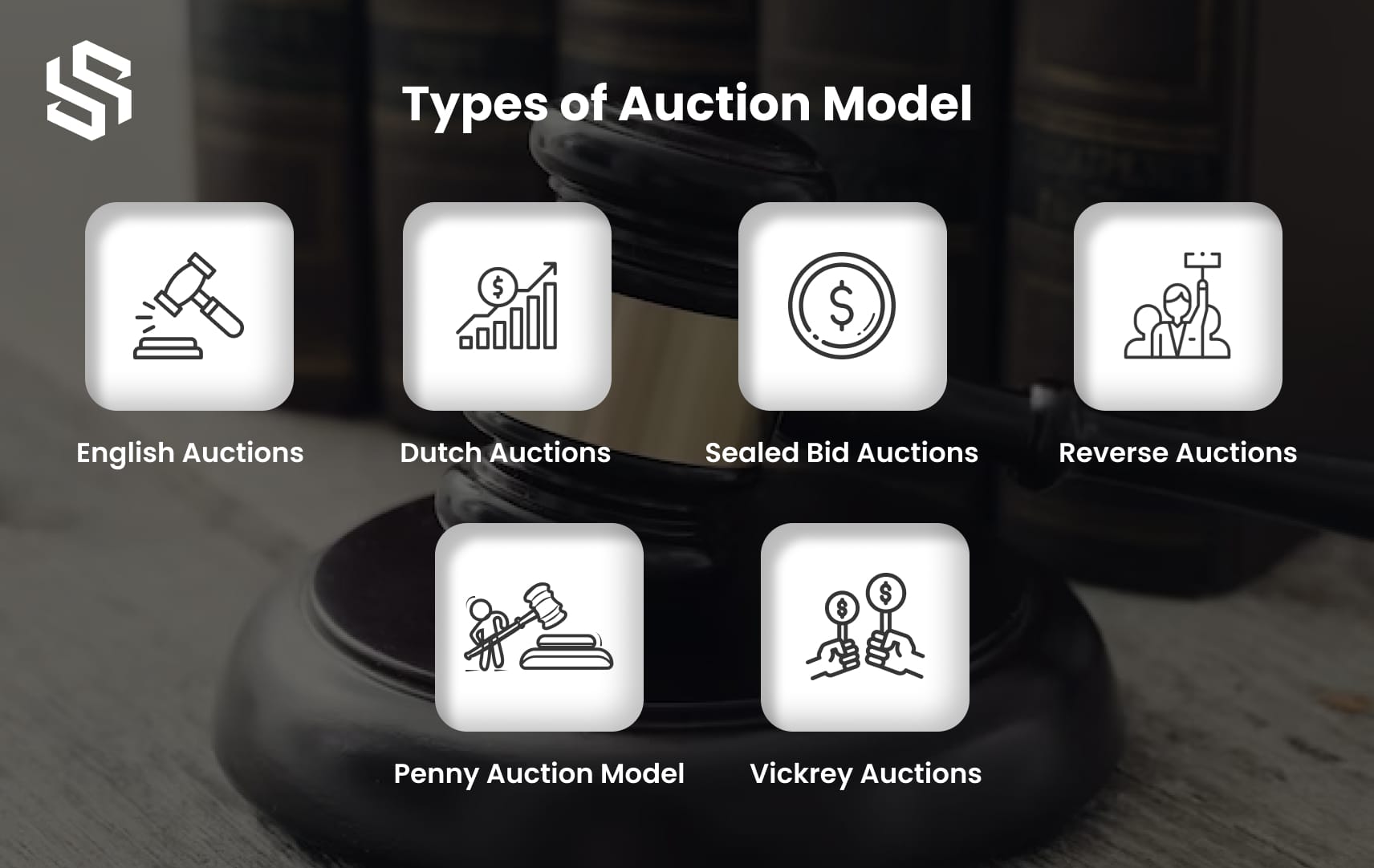
Creating your own auction website requires you to choose the right auction model. You may optimize revenues and accomplish your company objectives with the aid of a well-designed auction model. Here is a list of distinctive auction models that you may take into account when developing your own auction website.
1. English Auction Model
Most people are probably familiar with the English auction model. In this technique, the price of an item starts off low and rises as more bidders participate in the auction. At the conclusion of the auction, the object is won by the bidder who placed the highest bid. The excitement and competitiveness it fosters among bidders make this approach perfect for rare or collectible products.
2. Dutch Auction Model
The Dutch auction model is the reverse of the English auction model. As bidders put in their offers, the price of an item lowers from its high starting point. The item is won by the first bidder who makes a bid equal to the going rate. Since the price reduces quickly, this auction mechanism is ideal for merchants that need to move products quickly.
3. Sealed Bid Auction Model
A sealed bid auction model is also known as a blind auction. In this model, bidders submit their bids without knowing what others have bid. The highest bidder wins the item, and the price is typically lower than what the bidder would have paid in an English auction. This model is ideal for high-value items, as it allows bidders to submit their highest bid without revealing their hand.
4. Vickrey Auction Model
In the Vickrey auction concept, instead of paying their own price, the top bidder pays the second-highest bid. As bidders do not want to overbid and wind up having to pay more than necessary, this strategy is intended to encourage them to submit their genuine value for an item. For sellers who wish to be sure that the asking price for a product is reasonable and accurately represents its worth, the Vickrey auction model is suitable.
5. Reverse Auction Model
The reverse auction model is also known as a procurement auction. In this model, buyers post what they want to buy, and sellers compete to offer the lowest price. The buyer selects the seller who offers the best price. This model is ideal for businesses that need to purchase large quantities of items or services, as it allows them to find the best deal quickly.
6. Penny Auction Model
In recent years, the penny auction concept has become more and more well-liked. In this concept, each bidder pays a modest fee to submit a bid, and each bid marginally raises the price of the object. When the bidding ceases, the auction comes to a conclusion, and the object is won by the last bidder at the agreed-upon amount. Due to the fact that the cost of the bids may build up very fast, this approach is suitable for sellers who wish to maximize revenues.
Get ready for auction excellence with our website development services.
Contact us today to pave the way for extraordinary auctions.
4. Identify Core Features
When building an auction website, it’s essential to identify the core features that will make your platform attractive and user-friendly. These features are the foundation of your website and play a significant role in providing a seamless auction experience. Here are the key features to consider:
User Registration and Profiles
Allow users to create accounts and build profiles.This feature enables them to participate in auctions, track their bidding history, manage their personal information, and receive notifications about ongoing auctions.
Item Listing and Management
Provide a user-friendly interface for sellers to list items for auction. Include options to add detailed descriptions, images, starting bids, reserve prices (if applicable), and auction durations. Enable sellers to manage their listings, update information, and monitor bidding activity.
Bidding System
Develop a robust bidding system that allows users to place bids on listed items. Ensure real-time bid updates, automatic bid increments, and the ability to set maximum bid limits. Implement bid notifications to keep users informed about competing bids.
Automatic Bidding (Proxy Bidding)
Offer automatic bidding functionality where users can set their maximum bid, and the system will incrementally increase their bids to maintain their position as the highest bidder, up to their specified limit.
Auction Countdown Timer
For each auction, show a countdown timer to emphasize the urgency and show how much time is left for visitors to submit bids. This promotes prompt bidding and increases involvement.
Reserve Price and Buy Now Option
Give sellers the option to specify a reserve price, or the lowest sum they are prepared to accept for a certain item. Give customers who want to buy anything right away at a set price the option to “Buy Now” as well.
Watchlist and Notifications
Provide customized suggestions based on users’ interests, add products to their watchlist, receive notifications when they are outbid or when auctions are about to conclude, and add items to their watchlist.
Auction Search and Filtering
Enable users to search for specific items or browse through categories. Implement filters based on item type, price range, location, and other relevant criteria. A user-friendly search functionality enhances the overall user experience.
Auction Notifications
Send automated notifications to users about auction updates, such as outbid alerts, auction ending reminders, and auction results. Keep users informed about their bidding status and any important auction-related information.
Messaging and Communication
Include a messaging system to facilitate communication between buyers and sellers. This allows users to ask questions about items, negotiate terms, and discuss payment and delivery details.
Payment Integration
Integrate a secure payment gateway to facilitate smooth and secure transactions. Support various payment methods and ensure compliance with industry standards for secure online payments.
Feedback and Rating System
Implement a feedback and rating system to build user confidence and trust. Allow participants to rate and comment on their experiences with the auction.
Auction Analytics and Reporting
To monitor bidding trends, assess auction results, and produce insights, offer extensive analytics and reporting capabilities. Making educated business decisions, identifying popular products or categories, and optimizing your website may all be aided by this data.
Mobile Responsiveness
Create a mobile-friendly auction website to provide a smooth browsing and bidding experience on smartphones and tablets. Reaching a larger audience and accommodating people who prefer mobile devices require responsive design.
5. Choose Development Method
The success of your project depends on your choice of development approach when creating an auction website. The development strategy you pick will determine how your website is built and deployed, as well as how much flexibility and control you have over its functions. Here are some development method to think about:
1. Custom Development
Custom development involves building a website from scratch, using your own code or a codebase that you’ve purchased or licensed. This method gives you complete control over the design and functionality of your website, but it can be time-consuming and expensive. You’ll need to hire a team of developers and designers to build the site, and ongoing maintenance and updates will be your responsibility.
Pros:
– Complete control over design and functionality – Ability to build unique features tailored to your specific needs – No limitations on what you can create
Cons:
– Expensive and time-consuming – Ongoing maintenance and updates can be a burden – Requires a highly skilled development team
2. Content Management System (CMS)
You may create an auction website using a CMS like WordPress or Joomla. These platforms have pre-made plugins and themes that you may utilize to give your site more functionality. In spite of the fact that this approach is less expensive than bespoke development, you’ll still need to employ a developer to adapt the site to your requirements.
Pros:
– Less expensive than custom development – Pre-built templates and plugins make it easier to get started – Ongoing maintenance and updates are usually provided by the CMS provider
Cons:
– Limited control over design and functionality – Plugins can be expensive and may not integrate seamlessly with your site – Customization can still be time-consuming and require a skilled developer
3. Website Builder
With a drag-and-drop interface, website builders like Wix or Squarespace enable you to create a website without knowing any coding. The greatest restrictions are associated with this approach, which is also the least expensive and easiest to use.
Pros:
– A Least expensive option – No coding knowledge required – Easy to get started
Cons:
– Limited control over design and functionality – Limited customization options – Not suitable for complex websites
How to Create an Online Furniture Store App
6. Assess Technical Requirements
Analyzing the technological specifications that will influence the creation and functionality of your web application is crucial at this stage of developing an auction website. You may select the relevant technology and tools to develop an effective solution by taking these needs into account. The following are important details to concentrate on at this stage:
- Define website structure and layout.
- Create wireframes for visual representation.
- Estimate expected traffic and optimize server infrastructure.
- Prioritize fast page loading speed.
- Ensure compatibility across browsers and devices.
- Adhere to legal compliance and implement security measures.
7. Design an Intuitive UI/UX
Designing an intuitive user interface (UI) and user experience (UX) is a critical step in building an auction website that entices customers. This means designing your website in a way that is easy to use and navigate and that provides bidders with all the information they need to participate in your auctions. This will involve designing clear and concise auction listings, providing easy access to bidding options, and designing a responsive layout that works well on all devices.
Consider the following tips to enhance the UI/UX design of your auction website:
- Keep navigation simple: Avoid complex menus and prioritize a user-friendly interface.
- Showcase high-quality product images: Use visually appealing and detailed images to enhance the user experience and engage potential buyers.
- Offer reliable payment options: Provide secure and trusted payment methods to instill confidence in users. Clearly communicate your refund policy.
- Optimize color palette: Utilize a vibrant color scheme and strategically highlight buttons to guide users and encourage action.
- Feature daily deals: Create a dedicated section for exclusive daily deals or a “Deal of the Day” to generate excitement and maintain user interest.
8. Select the Tech Stack
The technologies that will be utilized in creating the solution must be decided upon before beginning to construct a bespoke auction website. The tech stack for your auction website consists of these technologies.
The tech stack is a combination of software tools and programming languages that determine the functionality, scalability, and security of your online auction platform. It is essential to carefully select the components of your tech stack to ensure a successful development process.
| Component | Technologies |
|---|---|
| Front-end | HTML, CSS, JavaScript, Angular, React, Vue.js |
| Back-end | Node.js, Ruby on Rails, Django, Java, PHP |
| Database | MySQL, PostgreSQL, MongoDB, Redis, Firebase |
| Payment Gateway | PayPal, Stripe, Braintree, Authorize.Net, Square |
| Messaging API | Twilio, SendGrid, Firebase Cloud Messaging (FCM) |
| Analytics | Google Analytics, Mixpanel, Segment, Amplitude |
| Cloud Services | Amazon Web Services (AWS), Google Cloud Platform (GCP) |
Want to transform your auction website into a powerhouse of innovation and reliability?
9. Build a Skilled Development Team
Building a skilled development team is crucial for the successful development of your auction website. You need to assemble a team of talented professionals who possess the necessary technical expertise and experience in web development. A skilled development team will ensure the smooth execution of your project, adherence to timelines, and the delivery of a high-quality auction website that meets your requirements. This step involves hiring developers, designers, and other necessary roles, either through in-house recruitment or by hiring dedicated developers. Collaborating with a competent development team will significantly contribute to the overall success of your auction website.
When assembling a team of developers for your auction website project, it’s important to kick off the collaboration on the right foot. Here are essential activities to consider during the initial meeting:
- Clearly communicate the product vision and requirements to align developers with project objectives.
- Determine the appropriate development methodology for the project.
- Select a tool like Jira or Trello to organize and track tasks effectively.
- Collaborate with developers to create a comprehensive task backlog.
- Configure collaboration tools like Slack or Microsoft Teams for effective team communication and coordination.
- Establish code quality standards for consistency and a high-quality final product.
10. Develop a Minimum Viable Product (MVP)
It might be tempting to start out by trying to get the ideal result. However, this strategy could be time-consuming, costly, and ultimately ineffective. For your auction website, experts advise creating a Minimum Viable Product (MVP). What precisely is an MVP, then?
A minimum viable product (MVP) is essentially a simplified version of your website that only has the essential elements. This method enables you to quickly launch your website and find a product-market fit. You may shorten the development process, save money, and concentrate on making a product that appeals to your target market by integrating only the important elements.
By monitoring consumer reactions, an MVP reduces risk and allows for rapid turning when necessary. You may produce a final solution that is more reliable, scalable, and secure by using the MVP methodology.
11. Perform Thorough Testing
It is important not to skip quality assurance (QA), which is a crucial phase in the software development process. Before the official launch, thorough testing is necessary to find faults, mistakes, and security problems. To achieve the greatest level of product quality, a variety of testing approaches, including unit testing, integration testing, and regression testing, should be used.
Combining manual and automated testing is recommended for comprehensive testing coverage. Manual testing involves running through the product’s functionality, while automated testing utilizes scripts and tools for efficient issue identification. Both methods are crucial to ensure a functioning product without any flaws.
Once issues are identified, they can be addressed by the development team before the final launch. This process minimizes the risk of deploying a faulty product and guarantees a high-quality user experience.
12. Launch the MVP
Releasing your minimum viable product (MVP) is a crucial milestone in the development cycle of your auction website. After completing testing and quality assurance, it’s time to make your website live.
You have two options for releasing your MVP: a limited release to a select group or a public release for everyone. A limited release allows you to gather feedback from a small audience before scaling up, while a public release reaches a broader audience. Ensure your website can handle the traffic for a public release.
Remember, releasing your MVP is not the end. Continuously analyze user needs, gather feedback, and develop additional features to stay relevant in the evolving market.
Conclusion
Building an auction website is an exciting endeavor that requires careful planning, strategic decision-making, and the right expertise. Whether you choose to develop the website in-house or hire dedicated developers, it is essential to have a clear vision and a solid plan in place.
Syndell, a trusted website development company, can guide you through the entire process, from concept to reality. Their experienced team of developers can help you design an intuitive user interface, select the right tech stack, and build a minimum viable product (MVP) that meets your business goals.
If you’re looking for a reliable partner in auction website development, Syndell is here to assist you. With our expertise and experience, we can help you turn your vision into a reality. Contact us today to discuss your auction website development project, explore your options, and take the first step towards creating a successful online auction platform.