Thinking of starting your own Fintech web app but worried about the costs? You’re in the right place! Welcome to our guide on ‘How To Build a Low-Cost Fintech Web App with Node.js.‘ We’ll show you how to make your Fintech dream come true without breaking the bank.
Stay with us as we simplify the process and help you understand how to create a great Fintech web app using Node.js, all while keeping costs down and how syndell’s dedicated node.js developers can help you building your dream app.
Let’s make your Fintech app a reality without skimping on quality and innovation!
Market Of Fintech Web Application
Fintech web application market growth will accelerate dramatically through 2024 for various reasons. People are transitioning towards digital banking, shopping online more often and seeking fresh financial products and services.
Market Size:
2023 is anticipated to see global fintech market revenues reaching $174 billion; by 2024, that number should surge up to an expected $324 billion, growing at an anticipated 28.8% rate. Furthermore, fintech web application market is projected to experience even faster growth at 35% annually.
User Base and Transactions:
By 2024, approximately 4.2 billion people worldwide will use digital banking and the e-commerce market is predicted to hit $5.5 trillion – necessitating fintech web applications capable of handling online payment processing services such as PayPal.
Investment in Fintech:
The global investment in fintech is projected to reach a massive $240 billion by 2024, showcasing the industry’s attractiveness for investors.
Driving Factors:
Digital Banking Adoption: People prefer digital banking due to its convenience. Fintech web applications such as finZero offer real-time payments, mobile check depositing and peer-to-peer payments that traditional banks might not.
E-commerce Boom: With more people shopping online, fintech web applications that enable online payments have seen increased use among shoppers. Such apps offer various payment methods like credit/debit/prepaid cards/wallets for digital wallets etc.
Innovative Financial Services Demand: FinTech Web Applications Meet Demand for Innovative Financial Services: Fintech web apps offer innovative financial services such as personal financial management, robo-advisory and cryptocurrency trading – offering alternatives to traditional banks.
The Future of Artificial Intelligence(AI) in FinTech Industry
Key Trends:
Artificial Intelligence and Machine Learning: These technologies facilitate personalized financial services with greater efficiency. AI chatbots offer customer assistance and financial advice; while machine learning helps detect fraudsters to enhance credit scoring.
Blockchain Technology Growth: Blockchain technology has rapidly advanced over recent years as it provides secure and transparent financial services utilizing it, such as faster cross-border payment options with blockchain based payment systems offering quicker settlement times at lower costs.
Open Banking Adoption: Open banking is a new regulatory framework which permits consumers to share financial data with third-party providers, thus spurring innovation in fintech web applications.
Thinking of revolutionizing the fintech landscape with a cutting-edge app?
Let’s turn your vision into a seamless reality using Node.js. Reach out to us today, and let’s start crafting your next-gen financial solution!
Step By Step Guide On How To Build Fintech App Using Node.js
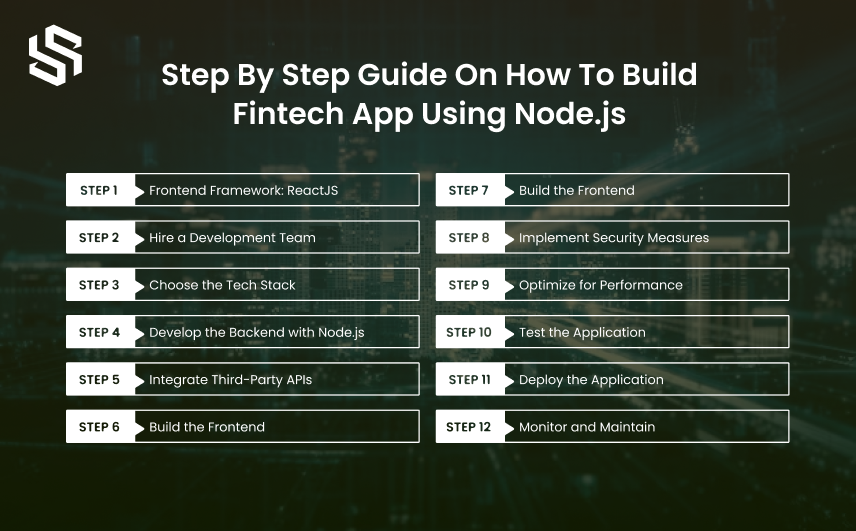
Building a fintech web application using Node.js involves several steps. It is crucial that a project plan and collaboration with the development team are established before starting development of any app using this framework. Here’s a step-by-step guide:
1. Define the Scope and Requirements:
- Clearly define the purpose, features, and functionalities of your fintech application.
- Gather input from stakeholders and potential users to understand their needs and expectations.
2. Hire a Development Team:
- As a business owner, identify and hire a skilled development team with expertise in Node.js, JavaScript, and related technologies.
- Collaborate with the team to understand their capabilities and align them with your project requirements.
3. Design the User Experience (UX/UI):
- Hire designers to develop an attractive interface tailored specifically towards the audience of interest.
- Make sure the design ties back into the brand identity and increases user engagement.
4. Choose the Tech Stack:
- Work closely with your development team to select an appropriate tech stack. When building a Node.js-based fintech application, Express.js and React or Angular may be useful frameworks; frontend frameworks could include React.js or Angular.js as frontend options.
5. Develop the Backend with Node.js:
- Launch the development process by prioritizing Node.js and Express.js as backend technologies.
- Create and implement APIs necessary for user authentication, payment processing, data storage and other core features.
6. Integrate Third-Party APIs:
- Integrate relevant APIs for functionalities such as payment gateways, identity verification, and any other third-party services required for your fintech app.
7. Build the Frontend:
- Develop the frontend using frameworks such as React.js or Angular.js for creating an engaging user interface that responds well with users and designers to ensure it matches UX/UI design goals.
- Collaborate closely with them as needed so the frontend matches its UX/UI vision.
8. Implement Security Measures:
- Work closely with your development team to incorporate robust security measures to protect user data, transactions, and sensitive information.
9. Optimize for Performance:
- Collaborate with the development team to optimize the application for performance, ensuring fast load times and responsiveness.
10. Test the Application:
- Apply vigorous testing procedures on the application in order to identify and resolve any bugs or issues with it.
- Conduct functional, usability, security and performance testing of your app in order to meet quality standards.
11. Deploy the Application:
- Collaborate with your development team to deploy the fintech app on a suitable hosting platform and configure it for production.
12. Monitor and Maintain:
- Establish a maintenance plan and work with your development team to monitor the application’s performance, handle updates, and address any issues that arise.
Types Of Fintech App With Their Features & Tips How To Build Them Cost Effectively
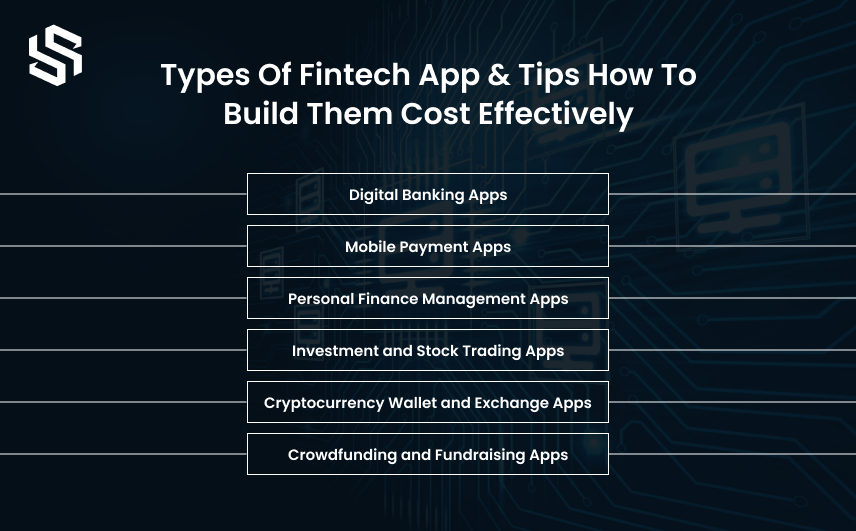
Digital Banking Apps:
Digital banking apps bring traditional banking services directly into users’ hands, enabling them to manage accounts, pay bills and utilize various financial services from mobile phones or computers – providing convenience, efficiency and accessibility when banking services are necessary. These applications enhance banking practices.
Features:
Account Overview and Transaction History:
Node.js provides users with real-time account and transaction history that offers them a clear view into their finances.
Funds Transfer Within Accounts and to Other Banks:
Implement secure fund transfer functionality using Node.js, to facilitate smooth transactions both between accounts and to external banks.
Bill Payments and Utility Payments:
Use Node.js to integrate APIs that enable users to pay bills and utilities directly within an app for convenient expense management.
ATM/Branch Locator:
Integrate geolocation services into Node.js to enable users to quickly locate nearby ATMs and branches for enhanced banking experiences.
Notifications for Transactions and Account Updates:
Implement Node.js to notify users quickly about transactions, updates and important account activities – improving engagement and trust between user and business.
Secure Login and Authentication:
Prioritize security by employing Node.js to implement robust authentication mechanisms that protect user data while guaranteeing an uninterrupted login process.
Cost-Effective Development Tips:
Open Source Libraries and Modules:
Take advantage of the vast library available for Node.js to expedite development without compromising quality. Open-source libraries provide cost-effective solutions that speed development with speed while maintaining quality standards.
Reusable Components:
Encourage the development team to use reusable components within an app for efficiency and to save both development time and costs. Doing this increases efficiency while decreasing development times and costs.
Scalability Planning:
Make sure your app is designed with scale in mind; Node.js allows easy scaling as user numbers increase, eliminating costly upgrades later.
Cross-Platform Development:
Consider cross-platform development using React Native for improved code reuse and reduced development times and costs. This strategy offers code reuse benefits as well as reduced development times and costs.
Outsourcing:
Consider outsourcing development to regions offering cost-efficient yet skilled developers. Partnering with an established development team could significantly decrease expenses.
Transform your online banking app idea into reality with Node.js. Let’s build it together.
Mobile Payment Apps:
Mobile payment apps enable people to perform digital transactions securely and effortlessly from their smartphones – be it purchases for goods and services or money transfers. Mobile payment apps offer users a convenient, user-friendly solution for transacting while on the go.
Features:
User Registration and Profiles:
Create a smooth user registration process with Node.js that enables users to easily register for accounts and manage them effortlessly.
Linked Bank Accounts/Cards:
Node.js can securely connect users’ bank accounts or cards to an app for hassle-free transactions.
QR Code or NFC-Based Transactions:
Node.js provides users with multiple transaction options and enhances their payment experience, giving them more ways to complete transactions and enhance the payment experience.
Transaction History:
Utilize Node.js to record and display transaction history for users within your app, enabling them to keep tabs on their financial activities within it.
Security Features (Biometrics, PIN):
Use Node.js to implement robust security features such as biometric authentication and PIN codes to safeguard user transactions and data.
Notifications and Alerts:
Node.js offers real-time notifications and alerts that keep users up-to-date about transactions, account updates, and app-related info.
Node.js Streams: Types, Use Cases, and Examples
Cost-Effective Development Tips:
Opt for Agile Development:
Adopt an agile development approach when using Node.js to enable incremental development and cost-effective modifications during the development process.
Use Pre-built Components:
Utilize pre-built components and libraries available for Node.js development; these resources can significantly cut development time and costs.
Focus on MVP (Minimum Viable Product):
Start by developing a Minimum Viable Product (MVP). This approach allows you to launch quickly while gathering user feedback to inform further improvements, thus minimizing initial costs.
Streamlined User Experience (UX):
Prioritize an intuitive UX design that reduces development complexity while providing users with an efficient user interface they can navigate easily.
Regular Testing and Feedback Incorporation:
Carry out rigorous testing during development, promptly addressing bugs and issues as you discover them. Collect user feedback and make adjustments as needed for improved functionality and user satisfaction.
Personal Finance Management Apps:
Personal finance management apps provide users with an effective tool for organizing and tracking all aspects of their finances in one location, from account management and expense tracking, budget setting and bill reminders through to visualizing financial data for informed decision-making.
Features:
Account Aggregation (Linking Multiple Accounts):
Node.js offers users an effective means for consolidating multiple financial accounts into one app, enabling users to link and manage them from various financial institutions simultaneously.
Expense Tracking and Categorization:
Node.js provides users with an efficient solution for tracking expenses and categorizing them for better financial insight and budget planning.
Budget Planning and Tracking:
Develop budget planning and tracking features using Node.js to enable users to set budgets and monitor spending against those budgets.
Bill Payment Reminders:
Implement bill payment reminders using Node.js to make sure users never miss a bill payment and maintain healthy finances.
Financial Goal Setting:
Letting users set financial goals within an app using Node.js can keep them focused and motivated towards reaching their desired financial objectives.
Data Analytics and Visualization:
Make use of Node.js to analyze user financial data and present it visually appealing graphs or charts to help users better comprehend their finances.
Cost-Effective Development Tips:
Prioritize Essential Features:
Start development by prioritizing core features to control costs early. Advanced features may be added through updates later.
Utilize Open-Source Libraries:
Make use of open source libraries available for Node.js to reduce development time and costs while upholding quality. These libraries will save time and costs without compromising quality standards.
Simple and Intuitive UX/UI:
Prioritize an easy and intuitive user interface which reduces development effort as well as user learning curves.
Regular Iterations and Feedback:
Implement an iterative development approach, releasing versions with minimum features to gather user feedback and use this to inform future phases.
Efficient Database Management:
Optimize database utilization within an app in order to enhance performance while decreasing hosting fees and costs.
Ready to build your Personal Finance Management App with Node.js?
Investment and Stock Trading Apps:
Investment and stock trading apps enable users to easily invest in various financial instruments, including stocks and ETFs. By offering real-time market data, portfolio management features, investment analytics tools, secure transactions and real-time transaction updates – investment apps give investors everything they need for informed investment decisions.
Features:
User Onboarding and KYC (Know Your Customer):
Use Node.js to implement an efficient user onboarding process with KYC functionality, ensuring compliance with regulatory requirements while offering users a seamless transition into your services.
Real-time Market Data and News:
Leverage Node.js to integrate APIs providing real-time market data and news updates, keeping users up-to-date on market trends and events.
Portfolio Management:
Use Node.js to develop portfolio management features that allow users to track and oversee their investments from a central location.
Buy/Sell Orders for Stocks, ETFs, etc.:
Implement secure buy/sell order functions for various financial instruments using Node.js, so users can conduct transactions with confidence.
Investment Tracking and Analytics:
Utilize Node.js to develop investment tracking features, allowing users to monitor their investments and access analytics for informed decision-making.
Secure Transactions:
Prioritize security in transactions by employing stringent security measures with Node.js and ensuring users’ financial data and transactions remain protected and uncompromised.
Top NPM Packages Every Node JS Developer Should Know
Cost-Effective Development Tips:
API Integration:
Utilize third-party APIs for market data, news updates and KYC verification in order to reduce development time and costs associated with building these features from scratch.
Lean Development Approach:
Adopt a lean development approach, prioritizing essential features initially before gradually adding more functionalities based on user feedback and market demand.
Wireframes and Prototypes:
Build wireframes and interactive prototypes of your app’s layout, navigation and interactions as an iterative process in order to identify design flaws early. This approach helps pinpoint problems faster.
Scalability Planning:
Scalability should be at the forefront of app design in order to accommodate an ever-expanding user base without incurring costly overhauls. Node.js provides excellent scalability and cost efficiency when expanding an app in future expansions.
Transform finance with a Node.js-powered Investment & Stock Trading App.
Cryptocurrency Wallet and Exchange Apps:
A cryptocurrency wallet and exchange app provides users with secure ways to store, manage, buy, and sell various cryptocurrencies. Features available through these applications include user authentication, wallet creation/management/real-time market data feeds/buy/sell functionalities/transaction tracking features as well as enhanced security measures like two-factor authentication (2FA).
Features:
User Authentication and Security:
Node.js provides robust user authentication and security measures that ensure secure logins and protection from unintended access.
Cryptocurrency Wallet Creation and Management:
Utilize Node.js to easily and securely manage users’ cryptocurrency holdings with an easy-to-use wallet, giving them control of their investments.
Real-time Market Data and Charts:
Integrate APIs using Node.js to access real-time market data and display interactive charts, helping users make educated decisions regarding their cryptocurrency investments.
Buy/Sell Cryptocurrencies:
Implement a seamless buy/sell interface using Node.js, enabling users to trade various cryptocurrencies easily.
Transaction History and Tracking:
Create a transaction history feature using Node.js to enable users to track and review past cryptocurrency transactions within your app.
Two-Factor Authentication (2FA):
Utilize Node.js to integrate secure two-factor authentication (2FA) mechanisms and increase app security while protecting user accounts.
Cost-Effective Development Tips:
Modular Architecture:
Use modular architecture by breaking your application down into smaller, reusable modules for increased code reuse, maintenance ease and decreased development times. This approach ensures code reusability as well as faster development times for quicker results.
Microservices Approach:
Node.js makes creating and managing microservices easy, providing for independent development, deployment and scaling capabilities across app components.
Automated Testing:
Use testing frameworks like Jest or Mocha for automated Node.js application testing – they help detect bugs early, which reduces costs associated with fixing issues later. Automated tests help your team detect issues early while saving you money by helping identify any flaws early.
Optimize Network Calls:
Reduce HTTP requests by consolidating assets such as CSS and JavaScript files into one request, and take advantage of asynchronous calls in Node.js for efficient concurrent network operations.
Let’s Secure Your Crypto Future!
Reach out now to hire our dedicated developers and make waves in the crypto space.
Crowdfunding and Fundraising Apps:
Crowdfunding and fundraising apps provide users with a platform for creating campaigns, sharing projects, and gathering funds from an active backer community. Features of such an app may include user registration, campaign creation/management/administration/secure payment processing/social sharing / communication between backers/campaign analytics & reporting etc.
Features:
User Registration and Profile Management:
Node.js makes registration easy for users, enabling them to create accounts and manage profiles within your app.
Campaign Creation and Management:
Node.js provides the capability for users to easily create, edit and manage crowdfunding campaigns by setting goals, providing project details and setting rewards.
Payment Processing:
Integrate secure payment gateways using Node.js to provide smooth and safe transactions for backers, creating an enjoyable fundraising experience.
Social Sharing and Engagement:
Integrate features that enable users to share their campaigns on social media, connect with potential backers, and increase campaign visibility and reach.
Backer Updates and Communication:
Build a communication system using Node.js that allows campaign creators to update backers about the progress of their projects while building rapport among supporters.
Campaign Analytics and Reporting:
Use Node.js to provide campaign creators with analytics and reporting tools, enabling them to monitor campaign performance, analyze donor behaviors, and make informed decisions.
Node.js Performance Optimization: Tips for Increasing Application Speed
Cost-Effective Development Tips:
Microservices Approach:
Adopt a microservices architecture. Node.js makes creating and managing microservices easy, providing for independent development, deployment and scaling capabilities of different app components.
Efficient Error Handling:
Build an efficient error handling mechanism. Logging and handling errors properly helps identify problems quickly for faster debugging and reduced development times.
Continuous Integration/Continuous Deployment (CI/CD):
Implement CI/CD pipelines to streamline and accelerate deployment processes while also increasing consistency and decreasing human error. Doing this not only speeds up deployment times but ensures consistency as well as reduces human errors during deployments.
Outsource Non-Core Tasks:
Consider outsourcing non-core development tasks like user experience design or backend programming tasks to specialized professionals or agencies so your team can focus on core functionality development.
Ready to launch your crowdfunding app?
Some Extra Tips For Building Fintech Web App At Low Cost Using Node.Js
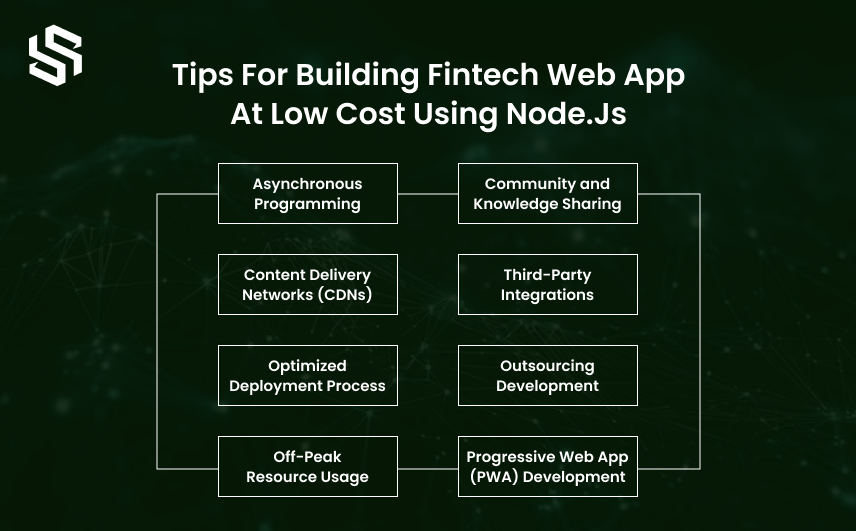
1. Asynchronous Programming:
Utilizing Node.js’ asynchronous nature will ensure your application can effectively handle multiple requests with limited resources, decreasing hosting costs while simultaneously accommodating a higher load.
2. Content Delivery Networks (CDNs):
Utilize CDNs to cache and deliver static assets (images, CSS, JavaScript) closer to users – this reduces server load, latency and costs as it brings static assets directly to them.
3. Optimized Deployment Process:
Automating your deployment process using tools such as Jenkins or GitLab CI/CD pipelines will streamline deployments, reduce errors, save time and ultimately result in cost savings.
4. Off-Peak Resource Usage:
Use cloud services during off-peak hours or when they offer lower costs. Many cloud providers provide flexible pricing models, allowing you to optimize costs based on usage patterns.
5. Community and Knowledge Sharing:
Engaging your development team in the Node.js community is beneficial in terms of knowledge sharing and finding solutions to common development hurdles – ultimately optimizing development efforts and costs.
6. Third-Party Integrations:
Integrate trusted third-party services and APIs for functionalities like payment processing, authentication and analytics – this will save development time and cost while taking advantage of existing, reliable solutions.
7. Outsourcing Development:
Consider outsourcing certain development tasks or projects to a node.js development company for cost-cutting benefits that allow your development team to gain expertise without making long-term commitments like full-time hires. This approach may prove more cost effective.
8. Progressive Web App (PWA) Development:
Consider creating a Progressive Web App (PWA) using Node.js to provide users with a native-like experience and reduce development efforts across platforms – which in turn saves costs.
Here’s an estimated cost breakdown for building various types of web apps using Node.js, along with potential percentage savings by following the cost-effective development tips provided:
| Type of Web App | Estimated Cost | Potential Savings (%) |
|---|---|---|
| Digital Banking App | $100,000 – $150,000 | Up to 30% |
| Mobile Payment App | $70,000 – $200,000 | Up to 35% |
| Personal Finance Management App | $80,000 – $250,000 | Up to 40% |
| Investment and Stock Trading App | $100,000 – $300,000 | Up to 25% |
| Cryptocurrency Wallet and Exchange App | $120,000 – $350,000 | Up to 30% |
| Crowdfunding and Fundraising App | $90,000 – $230,000 | Up to 25% |
These potential percentage savings are based on the application of cost-effective development tips provided earlier for each type of web app. By leveraging these tips, you can significantly reduce development costs and allocate these savings to other crucial areas of their fintech business.
A Comprehensive Guide to the Best Node.js Framework
Start building your fintech app now and lead the financial tech revolution!
Hire Dedicated Node.js Developer
How Syndell’s Dedicated Node.js Developers Can Help You
Syndell’s Dedicated Node.js Developers offer unlocked potential in reinventing your fintech web app, crafting high-quality solutions at cost that meet all of your specific requirements. Bring fintech into the 21st Century with their expertise ensuring seamless functionality and optimal performance – take the step with Syndell today to transform its fintech web apps!
Why Syndell? Our expert Node.js developers are dedicated to excellence, using cutting-edge technologies to craft robust and scalable fintech apps at competitive costs – while without compromising on quality or making innovation available to businesses of any size.
Take an exciting, transformational journey with Syndell’s 15-day trial, giving you a glimpse of our capabilities and value proposition. Experience first-hand how Syndell can expand and elevate your fintech venture while offering unmatched reliability and value for the long haul.
Are You Ready to Unlock the Full Potential of Fintech Aspirations? Reach Out Now For Additional Details, and Let’s create the Future of Finance Together.
Exploring the development of affordable fintech web apps with Node.js, our blog is enriched with expert insights. Yash Bhimani, a distinguished figure in the field, has reviewed and endorsed our content, underscoring our commitment to providing precise and trustworthy information. Continuously striving for excellence, we ensure our readers receive top-quality guidance to build impactful fintech solutions without breaking the bank.