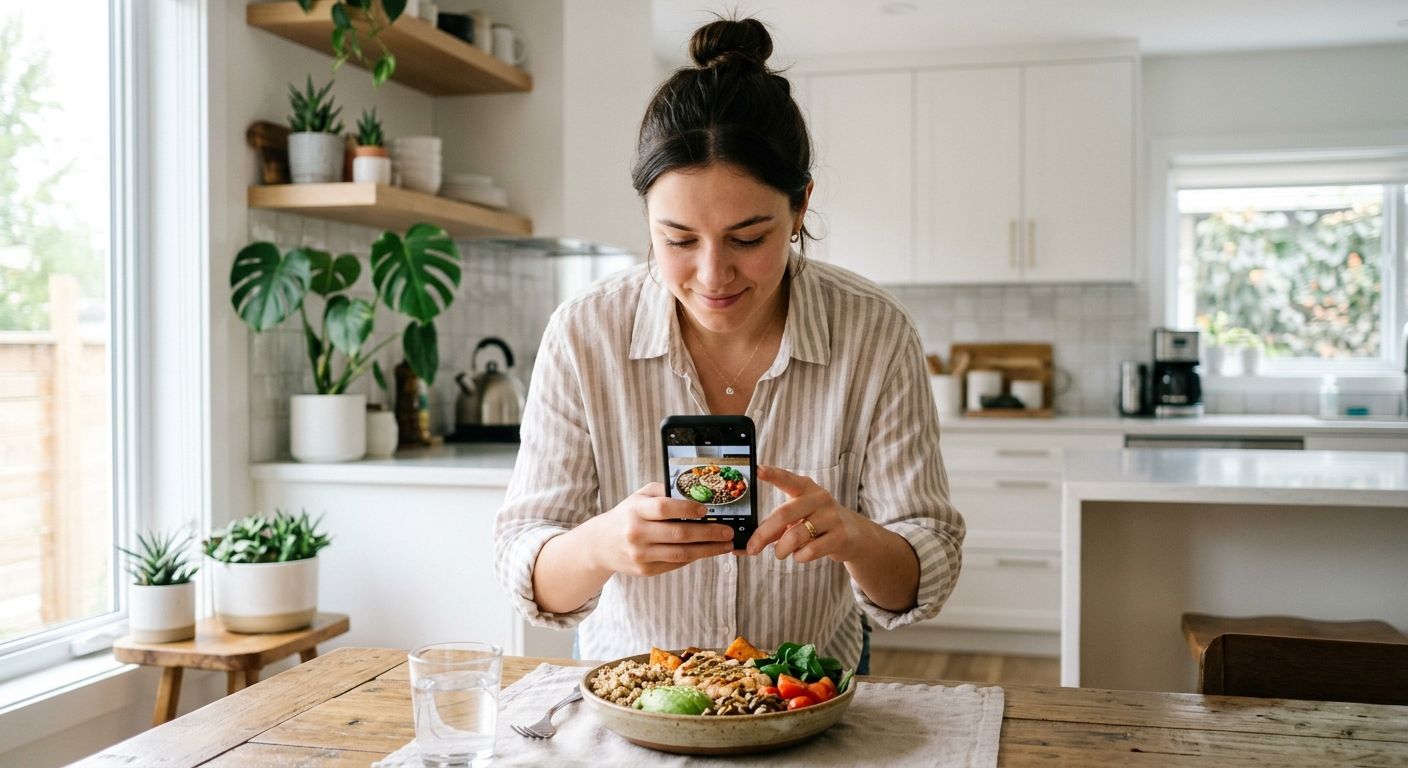
AI nutrition app development is the build of apps that use machine learning to personalize food tracking, meal recommendations, and coaching — from photo-based meal logging to adaptive plans that respond to a user's goals, activity, and biometrics. For founders and product leaders in wellness, weight management, and connected health, the build question is not whether AI personalizes nutrition but which capabilities justify custom work against a crowded app market. This guide walks through that evaluation in 2026.
- AI nutrition apps pay back first in logging friction and adaptive plans.
- Photo-based logging accuracy decides retention more than recommendation engines do.
- Health-adjacent data handling is a design requirement, not a policy page.
- Run a 60-day retention pilot against a control group before scaling spend.
Why AI nutrition apps matter for wellness product leaders
Nutrition apps live or die on logging friction. Manual entry is the single biggest drop-off point: users who log everything for two weeks form the habit, users who fall behind a few days churn. AI attacks exactly that — photo recognition, barcode and restaurant-menu coverage, and predictions that complete an entry before the user finishes typing.
The second lever is adaptivity. Static calorie targets go stale within weeks; plans that adjust to weight trends, logged activity, and stated goals keep the product feeling alive. The economics push builders toward AI in three places: retention through reduced friction, differentiation through genuine personalization, and upsell through coaching tiers — which is why this is a product strategy decision, not a feature backlog item.
Separate the AI capabilities before scoping the build
"AI nutrition app" bundles several distinct capabilities. Score each on its own:
| Capability | What good looks like | Risk if it fails |
|---|---|---|
| Photo meal recognition | One-shot logging with editable confidence | Users give up and churn |
| Food database matching | Coverage of regional and restaurant foods | Wrong entries poison the data |
| Adaptive planning | Plans that respond to trends, not just today | Static feel, plateaus |
| Coaching conversation | Guidance grounded in the user's own data | Generic chatbot answers |
| Wearable context | Activity and sleep informing recommendations | Recommendations ignore reality |
| Progress analytics | Trends users can act on, not vanity charts | No perceived value at renewal |
Most apps over-invest in the recommendation engine and under-invest in logging. Weight the capability where your retention data says the drop-off is.
Decide build vs buy honestly
| Option | Best for | Key limitation |
|---|---|---|
| White-label or SDK nutrition stack | Validating a concept fast | Generic UX; weak differentiation |
| Custom AI nutrition app | Products where personalization is the brand | Longer build; needs a delivery partner |
| Hybrid (licensed data plus custom AI) | Teams with a proprietary coaching method | Two vendors to coordinate |
Buy or license when speed to market matters and your differentiation is the audience, not the algorithm. Build custom when the personalization model itself is the product — clinical weight-management programs, employer wellness platforms, or a coaching methodology no SDK represents. If you build, the scoping discipline in how to structure a discovery phase for a software project shows how to size the project before signing a contract, and software consulting is the right starting point when requirements are still unclear.
Treat health data as a design requirement
Nutrition data sits close to health data, and the closer your app gets to medical claims — weight-management programs, diabetes-adjacent coaching, employer health benefits — the stricter the rules get. Require, in writing: explicit consent flows for health-adjacent data, deletion that actually deletes, and data processing terms that keep user data out of model training unless the user opted in. When your program touches clinical care or protected health information, the safeguard structure described in how to build a HIPAA-compliant telemedicine app applies directly. Personalization economics also borrow from e-commerce: the recommendation patterns in generative AI development for e-commerce personalization translate directly to meal and plan recommendations.
Run a 60-day retention pilot with a control group
Pick one user segment — new sign-ups, one plan tier, one market. Measure connected experience against the current app:
- Day-30 retention for AI-assisted logging versus manual logging
- Logging streak length and completions per week
- Photo-log accuracy sampled by human review
- Plan-adjustment acceptance rate among users offered adaptive changes
A pilot without a control group proves nothing — retention claims without a baseline are how wellness apps burn acquisition budgets.
Common mistakes product teams make
- Chasing a smarter recommendation engine while logging friction drives the churn
- Skipping the food-database coverage check for their actual launch markets
- Treating consent and deletion as legal text instead of product flows
- Launching coaching conversations without grounding them in the user's own data
- Scaling acquisition spend before the day-30 retention baseline exists
FAQ
What is AI nutrition app development?
AI nutrition app development is the design and build of apps that use machine learning for food logging and personalization — photo-based meal recognition, adaptive plans, and coaching grounded in the user’s own data — for wellness, weight-management, and connected-health products.
How much does AI nutrition app development cost?
A licensed nutrition stack with light customization is typically the smallest budget; a custom AI build is scoped in a discovery phase based on capabilities, integrations, and data work. Pricing changes often, so get current quotes and include food-database licensing and model monitoring in the comparison.
Should we build a custom AI nutrition app or use a white-label solution?
Use a white-label or SDK stack when speed to market matters and your differentiation is the audience. Build custom when the personalization model or coaching methodology is the product — clinical programs, employer wellness, or a proprietary method. A hybrid — licensed food data plus custom AI — fits most teams.
How accurate is photo-based meal recognition?
Modern models recognize common foods well but struggle with mixed dishes, portions, and regional cuisine. Treat recognition as assisted logging — one tap to confirm or edit — and sample real user photos for accuracy review. Apps that require no confirmation accumulate silently wrong data.
Is nutrition data considered health data?
Increasingly treated that way. Food logs, weight trends, and conditions referenced in coaching are health-adjacent, and employer or clinical programs may trigger HIPAA obligations. Build consent, deletion, and access controls as product features from day one rather than a policy page after launch.
How long does development take?
A white-label launch takes weeks; a custom AI build starts with a discovery phase and typically takes several months. Plan a 60-day retention pilot against a control group before committing acquisition spend.
One last thing
The capability that decides retention is rarely the recommendation engine — it is logging friction. Every extra second between seeing a meal and a logged entry costs users, and photo logging that needs three edits costs more than manual entry saved. Time the logging flow with real users on their real meals before you fund anything else.